
Why The Pantheon’s Columns Are Shorter Than They Should Be
Stand in the piazza facing the Pantheon long enough, and you may see it.

The tall brown columns.
The shadow beneath the pediment.
And the way the Pantheon entrance almost presses downward.
Is…something off?
Yes. The columns are too short.
They were meant to be taller.
Look up along one from the base — Egyptian granite, dark and worn smooth by two thousand years of weather and admiring hands. Follow it upward and imagine it continuing just a few more feet.
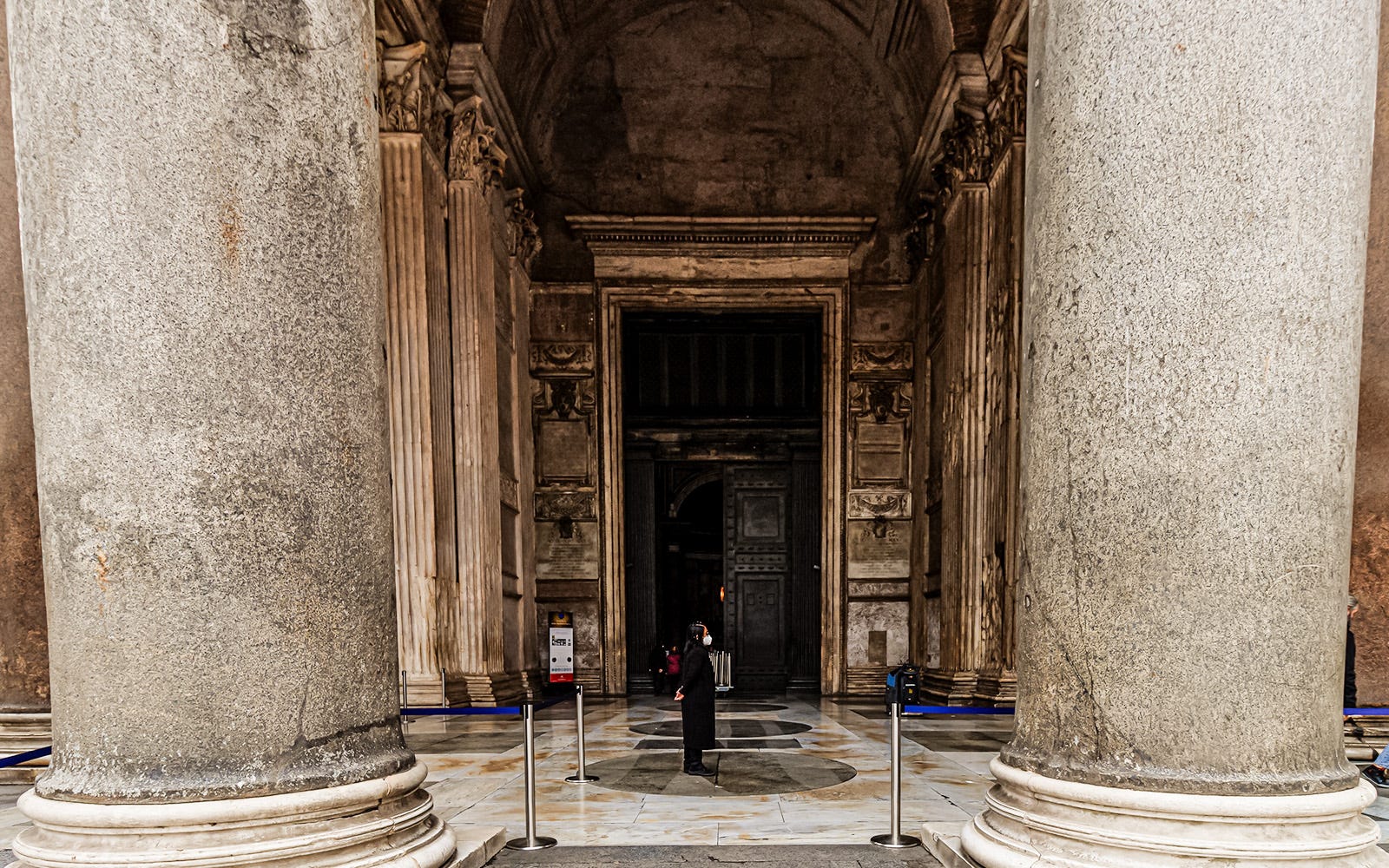
Everything changes.
The pediment lifts.
The entrance opens.
The whole front of the Pantheon breathes differently.
Instead, it feels compressed.
Lower than it should be.
The explanation is simple. The original columns never arrived in Rome as ordered.
Delayed, lost, broken — we don’t know. What did arrive from Egypt were shorter shafts.
And by then, Hadrian’s project was already moving forward.
Men didn’t stop.
They adjusted.
You can still see it.
If you enjoy details like this—the ones most people walk past—you can subscribe for more pieces like this.
Why the Pantheon Still Doesn’t Flood - Even After 2,000 Years of Rain
The Gouges on The Pantheon Doors
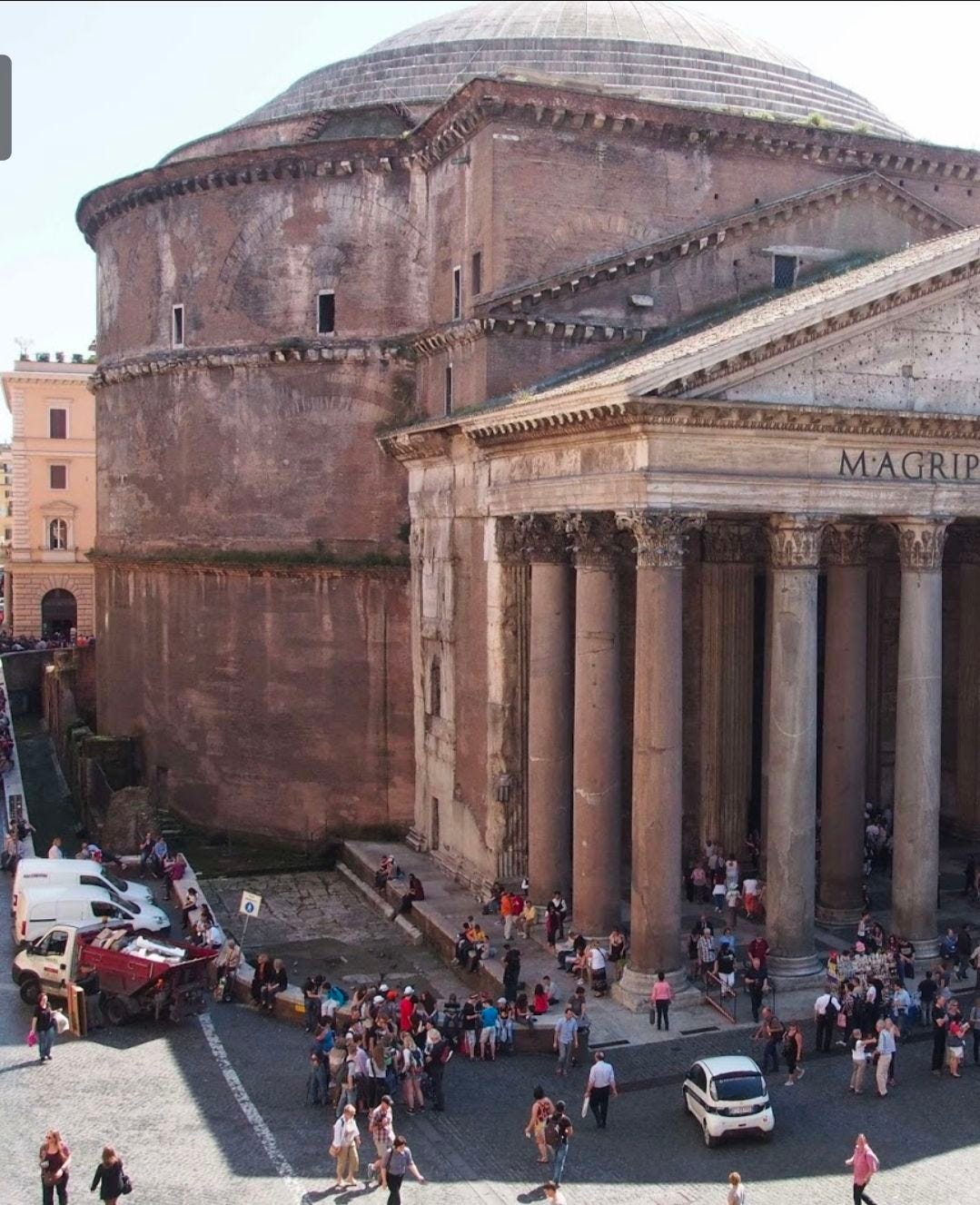
Look at the triangular pediment. The slope is slightly shallower than expected. The spacing between elements feels just a touch tight. Not enough to stand out immediately — but enough that your eye lingers.
You can also see on the left side of the photo above where the pediment should have risen, but never did.
You notice it more the longer you stay.
In the afternoon, when the portico falls into shadow, the effect deepens. Darkness gathers beneath the roofline. The columns feel heavier — almost overburdened by what they’ve held up for centuries.
The design has been pulled downward.
And yet — it works.
Millions pass through without hesitation. No one stops to question it. The Pantheon still anchors the entire space, still carries a quiet authority that doesn’t need explanation.
That’s the part that stays with you.
They didn’t scrap the project.
They didn’t wait for new stone.
Because “waiting” meant restarting an empire-wide supply chain.
It was a process.
The columns came from quarries in Egypt, likely around Aswan. Massive shafts of granite, cut by hand. Each one weighing roughly fifty tons.
Dragged across earth on wooden sledges. Ropes pulled tight. Men shouting in rhythm. Wood grinding against stone.
Loaded onto barges. The hollow knock of granite settling into place. The slow push into the Nile.
Then across the Mediterranean on heavy ships — hulls creaking, waves slapping against timber, the weight shifting below deck.
Lifted into place with cranes and pulleys. Ropes tightening, wooden frames creaking, a final dull thud as stone met stone.
It took years.
So they finished the Pantheon with what they had.
They adjusted the design proportions and let the structure find its balance.
What stands today isn’t the original plan.
It’s the solution.
A correction in stone that has lasted nearly two thousand years.
And after centuries of shifting light across that façade — morning glare, afternoon shadow, rain darkening the granite — it has settled into something that feels complete.
Admired by the world.
As if the mistake was never a mistake at all.
If details like this change the way you see a place, consider subscribing. There’s more where this came from.
What an interesting story. Thank you.