
Why the Pantheon Still Doesn’t Flood — Even After 2,000 Years of Rain
Rain falls straight through the oculus. Yet the floor never fills with water.

The marble steps of the Pantheon are worn smooth from centuries of feet.
When it rains, the stone carries a faint scent of wet dust and limestone.
For a moment, it’s easy to imagine the air filled with oil lamps and incense, the same scents Romans would have smelled two thousand years ago.
Moving inside, I look up at the oculus.
Something strange happens when you stand inside the Pantheon during a rainstorm.
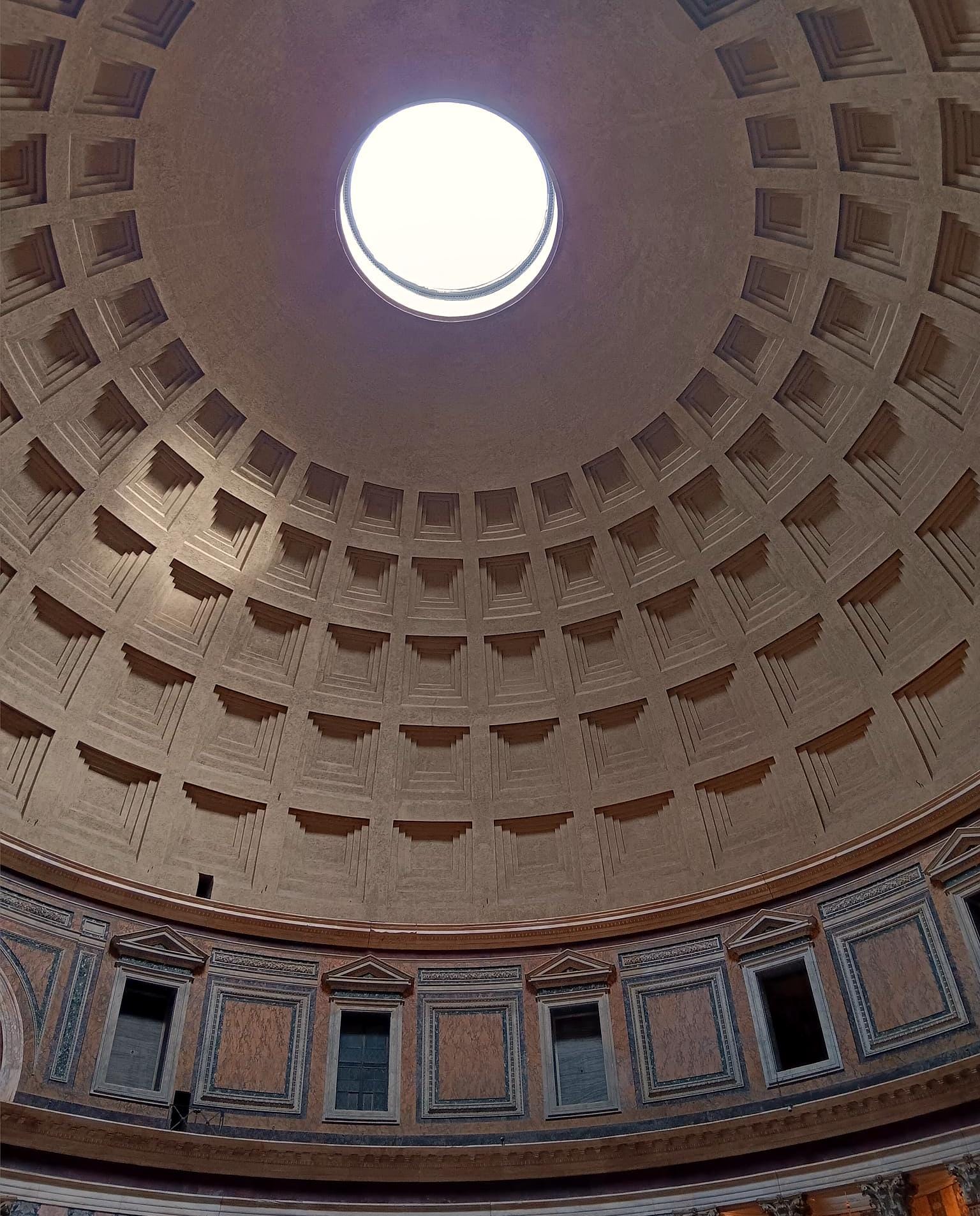
Rain falls directly into the cavernous interior.
High above, the center of the great dome opens to the sky. The circular opening — nearly thirty feet across — is called the oculus. It is the only source of direct light inside the Pantheon.
And it is completely open.
When it rains in Rome, the rain simply falls through the oculus.
Visitors often wonder: will the building flood?
It never does.
The Romans solved that problem almost two thousand years ago.
The marble floor is subtly sloped toward small drainage holes most visitors never notice. Water falling through the oculus flows slowly across the smooth floor and disappears through these drains, just as it would in an open courtyard.
The system has worked quietly since the building was completed around 125 AD under the emperor Hadrian.
The oculus serves more than one purpose. It allows sunlight to move dramatically through the interior during the day, creating a shifting beam of light that slowly travels across the walls and floor. It also removes weight from the very top of the enormous dome.
And that dome remains one of the great engineering achievements of the ancient world.
The Pantheon still holds the record as the largest unreinforced concrete dome ever built.
Roman builders carefully reduced the weight of the concrete as the dome rises. Near the base, heavier stone such as travertine was mixed into the concrete.
Higher in the dome, the mixture becomes lighter, incorporating volcanic materials and pumice brought from the volcanic regions near Naples.
A key ingredient was volcanic ash called pozzolana. When mixed with lime and water, it created an exceptionally durable concrete that can actually grow stronger over time as minerals slowly crystallize within it.
That durability is one reason the Pantheon’s dome still stands nearly two thousand years later.
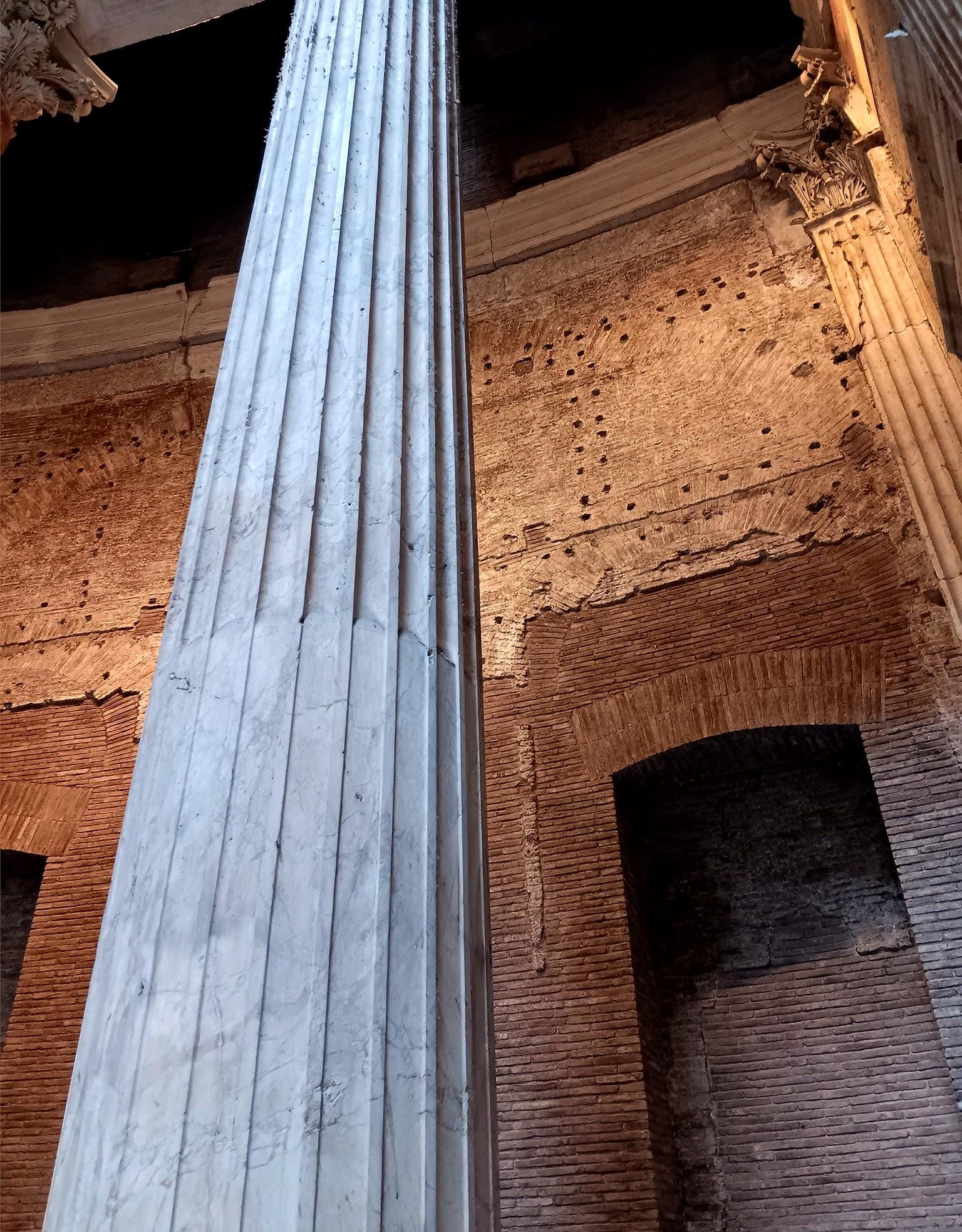
By the time the dome reaches the oculus, the concrete is surprisingly light.
The builders also carved five rings of square recesses — called coffers — into the ceiling. These are often believed to be decorative, but they also remove weight from the structure.
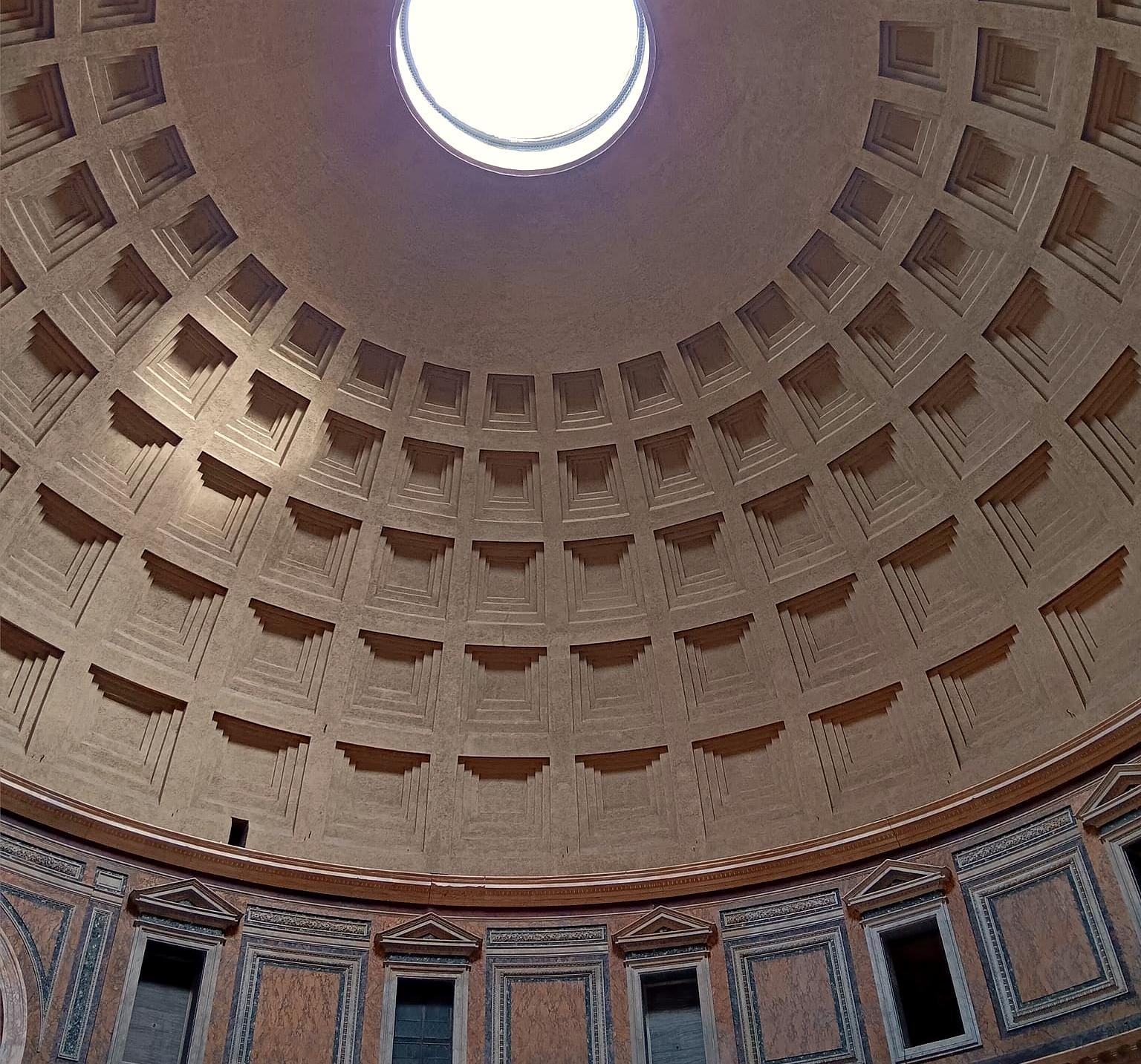
Originally, the coffers probably contained bronze rosettes or decorative plates.
Those were removed sometime during the Middle Ages when valuable metal was often scavenged from Roman buildings.
Every design choice worked toward the same goal: making the dome lighter as it rose.
Two millennia later, the magnificent result still stands. When we pass through the Pantheon doors and look up at the dome and oculus, we see nearly the same sight Romans saw almost two thousand years ago. Their leather sandals once crossed the same marble floor visitors walk today.
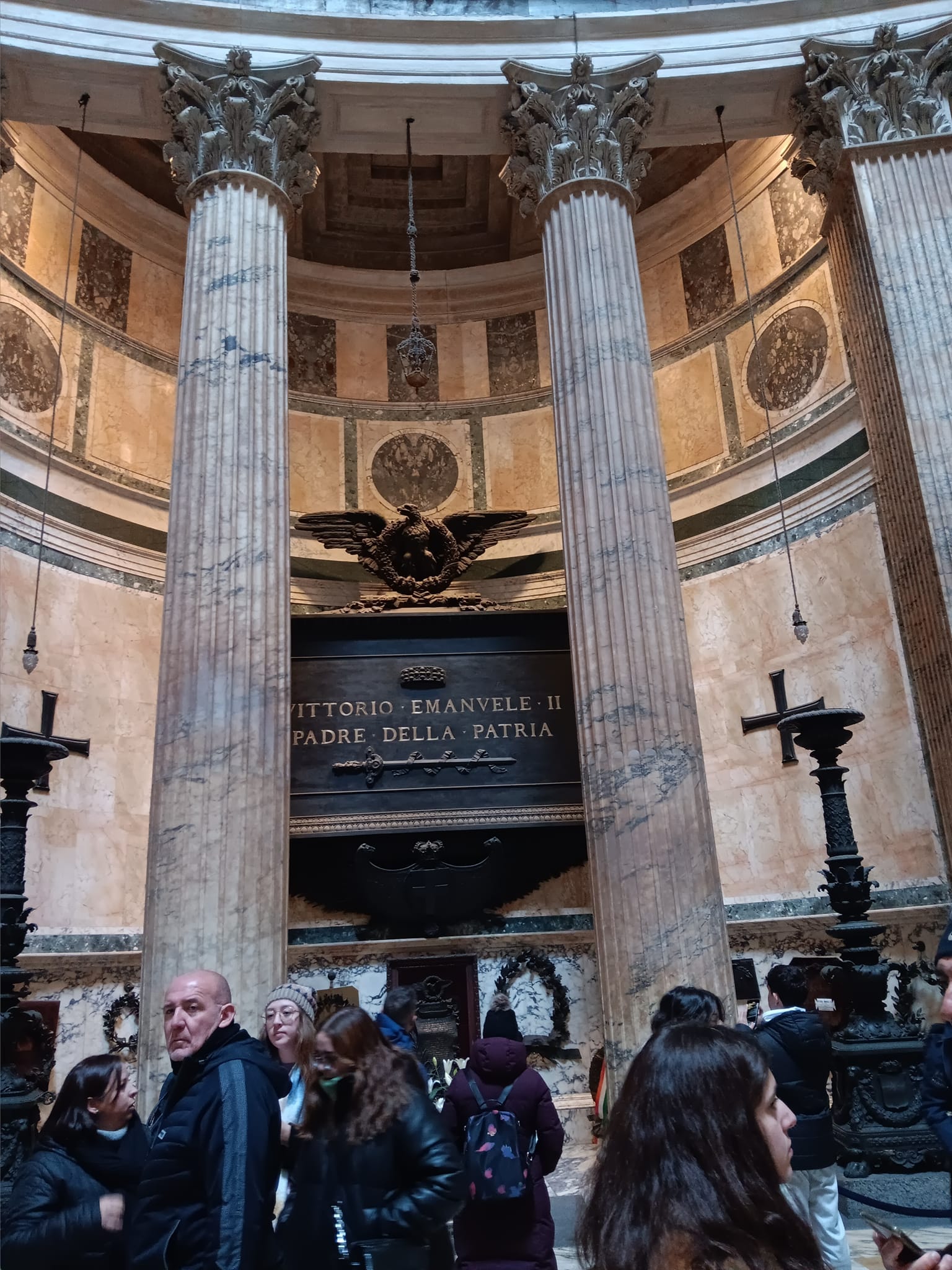
Most visitors today notice the vast interior, the beam of light from the oculus, and the quiet echo of footsteps on marble.
But occasionally, when rain falls on the ancient city, something unusual happens.
A few drops fall through the opening in the dome.
They strike the marble floor, roll slowly across the stone, and disappear into small drains cut by Roman engineers who had already solved the problem centuries ago.
Do you enjoy small historical observations from places like Rome, Pompeii, and Dalí’s studio? Consider subscribing and join me in noticing the small details of history most people walk past.
If you’ve been inside the Pantheon during rain, I’d love to hear what it looked like.