
Venice and the Islands of the Dead
Venice ran out of space—and pushed the bodies into the lagoon.

The Black Death tore through Venice and the rest of Europe in the 14th century. No one understood what it was or how it spread so fast.
By the time it passed, somewhere between 50,000 and 100,000 people in Venice were gone—nearly half the city.
What to do with all the bodies? They were marked by dark swellings and blackened skin, changing quickly in the damp air.
They believed the disease moved through bad air, and the bodies reeked of it.
So the city’s leaders pushed the dead outward.
Out of the narrow streets. Away from the living.
Into the surrounding lagoon.
Across the Venetian lagoon, entire islands became burial grounds. Not cemeteries with markers.
They were mass graves.
Thousands of black corpses dropped into the ground and covered as quickly as possible.
Bodies stacked on top of bodies.
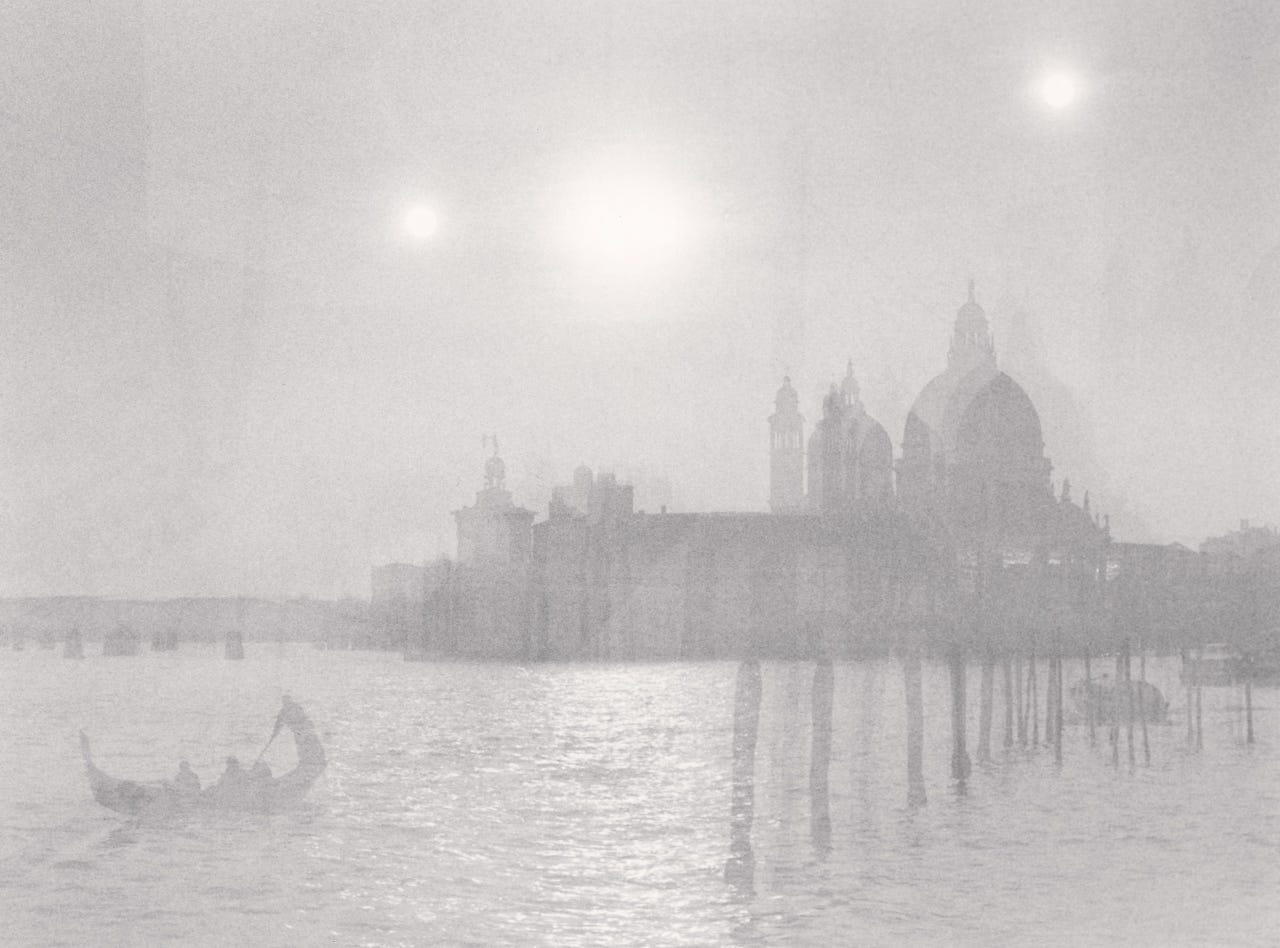
Some were burned, sending smoke and the scent of burning flesh into the damp air — thick, bitter, and unmistakable.
At dusk, smoke from the burning bodies hung low over the lagoon, pressing against the water before drifting out toward the open sea.
Others were covered in dirt and left, the smell of decay mixing with salt air and stagnant water.
If you find yourself slowing down for details like this, you’re exactly who Unpaid Observer is for. Subscribe free: 👉 https://unpaidobserver.substack.com/subscribe
Other Venice posts to enjoy:
Algae clung to the edges of the canals.
The tide moved slowly.
Not fast enough to carry everything away.
The lagoon itself swallowed some of the dead.
Water drifting outward.
Carrying what it could.
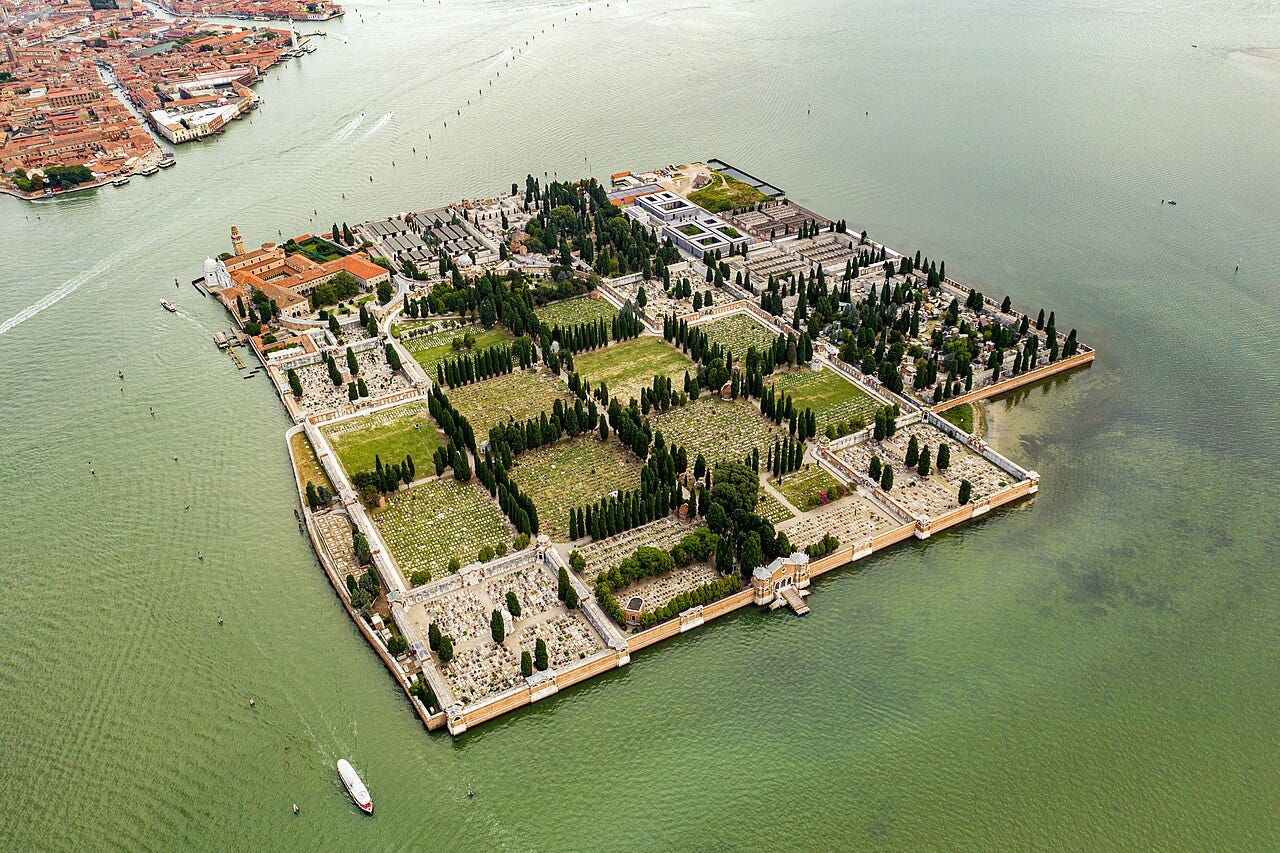
One of those islands remains: San Michele.
Today it appears orderly. Quiet.
Rows of graves.
Cypress trees.
Clean, gray stone marking the dead.
Sea air moves through it like any other place in Venice.
But it sits in the same lagoon that once received thousands of plague victims.
Other islands were not preserved.
Some were abandoned entirely.
Left with what had been placed there. They were never fully cleared, never rebuilt.
Stand at the edge of Venice and look out across the water.
It feels open and calm. Almost empty and peaceful.
A light breeze. Salt in the air. The faint scent of algae rising at low tide.
But much of what surrounds the city holds tens of thousands of bodies from the worst plague in its history.
Venice does not simply float on water.
It rests on a bleak portion of history that was quickly buried in plain sight of the city and forgotten.
If you’re drawn to the quiet details most people walk past—the ones that stay with you—subscribe to Unpaid Observer.