
They Broke Open the Tombs Along the Appian Way
First the valuables were taken. The stone was used later.

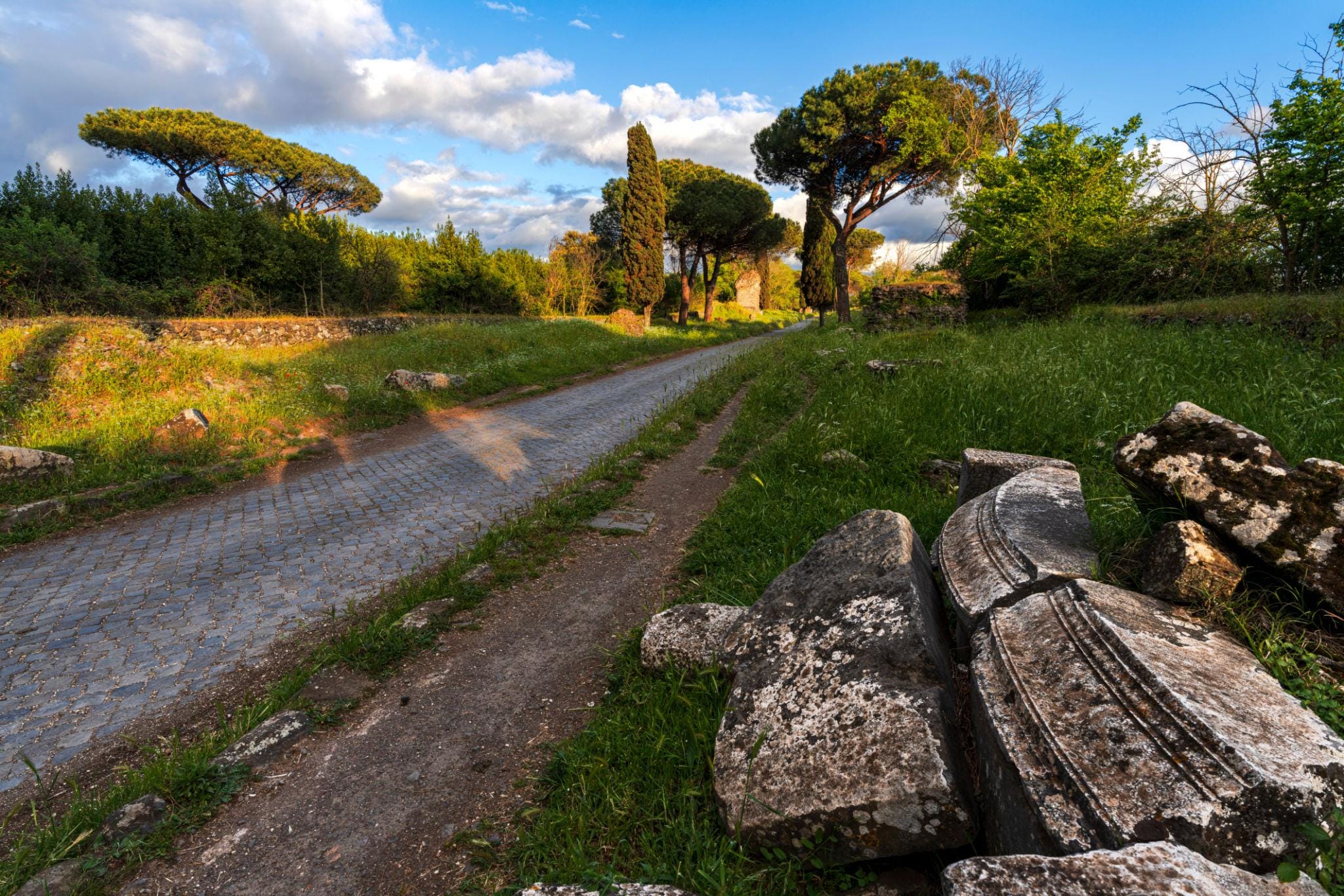
The tombs along the Appian Way were opened and stripped after the fall of the Roman Empire.
First, anything of value was taken — coins, jewelry, metal fittings.
This is a reader-supported publication. If you want more details like this, subscribe below.
You’ll get a free Rome report with the 10 critical historical details most people miss.
In ancient Rome, burials were placed outside the city, far from the Roman Forum and Pantheon, often along major roads like this one.
These tombs belonged to wealthier Romans, whose families could afford carved marble monuments in highly visible places. Their names, faces, and achievements were meant to be seen by everyone passing by.
By the time the tombs were opened, the bodies were gone or reduced to ash.
The marble itself became the target. It was too valuable to leave behind. Grave robbers—and later builders—pulled out inscriptions, reliefs, and entire carved blocks.
The pieces weren’t discarded. They were set into new walls and buildings.
Walk the Appian Way today, and you can still see them: fragments of gravestones set into walls, broken figures embedded in brick, names split across reused slabs.
The tombs were taken apart. The pieces are still here, built into the walls.
They Cut Tombs Apart to Build New Walls
The marble from Roman graves wasn’t reused as whole monuments.
It was broken apart.
Large tomb slabs were struck with hammers and split with iron wedges. Edges were trimmed with chisels until the pieces were small enough to carry and fit into new construction. Anything that couldn’t be used as-is was cut again.
The carvings didn’t matter.
Reliefs were turned sideways. Inscriptions were split across multiple pieces. Faces were broken off or buried into the wall. What had once been a name or a figure became just another block.
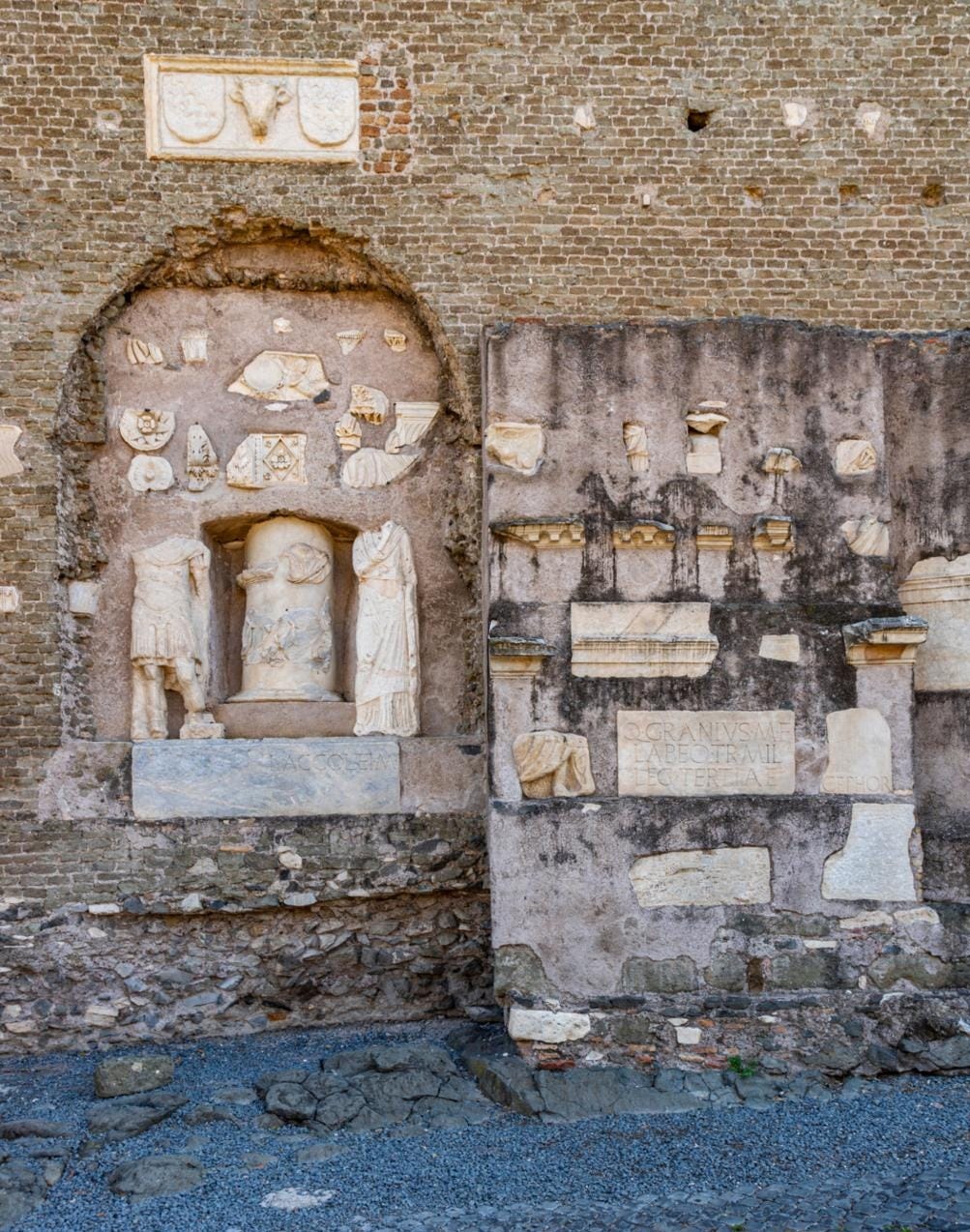
Then the pieces were set into place in new walls and buildings.
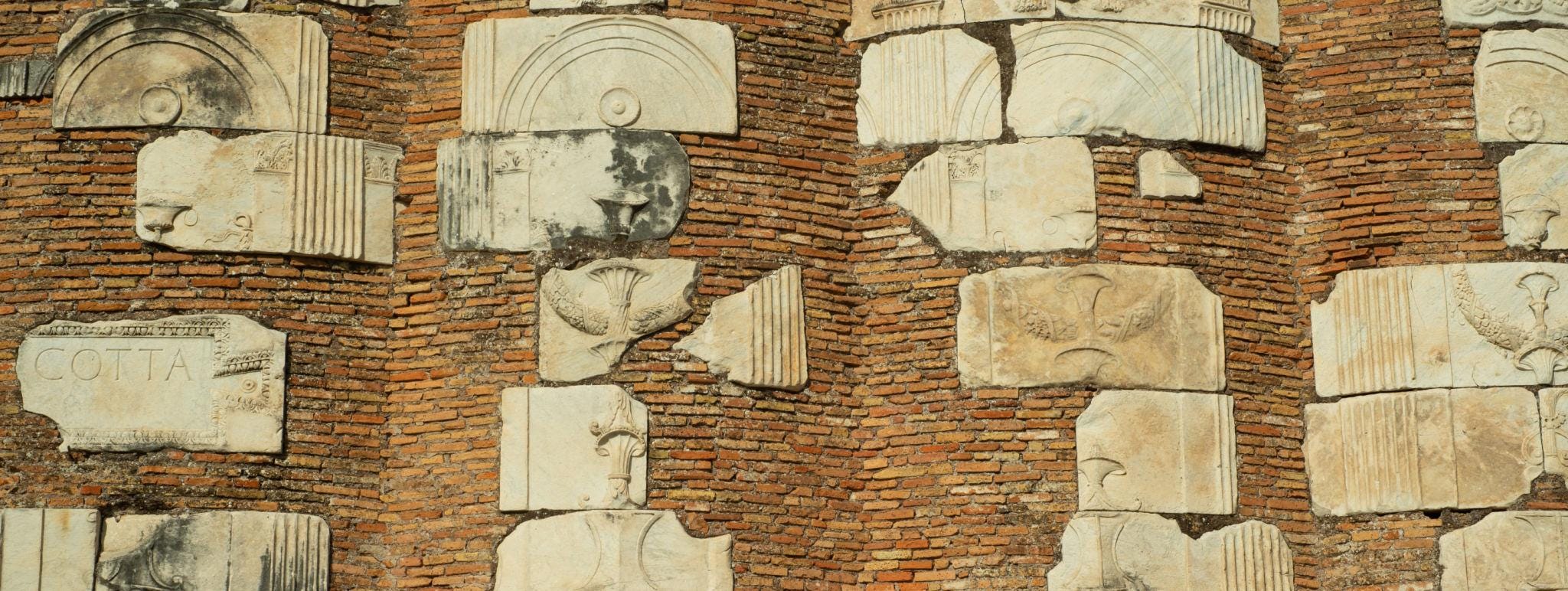
Rough brick walls went up, and marble fragments were pressed into them with mortar — filling gaps, reinforcing corners, or replacing missing stone. You can still see the contrast: smooth, white marble set against darker, uneven brick.
Nothing was matched. Pieces from different tombs ended up next to each other. Different sizes, different styles, different centuries—set into a single wall.
The result is uneven. A name cut off mid-word. A figure turned sideways to fit the space.
By the time this happened, the tombs had already been opened. Anything of value was gone.
What lines the Appian Way now isn’t a row of intact tombs. It’s what was left after they were broken apart.
Fragments of names. Pieces of figures. Cut stone set into later walls, with no concern for what it once meant.
The road is still there — stone blocks worn smooth, grooves cut by carts moving over them two thousand years ago.
So are the tombs.
Just in pieces.
Subscribe below to get more posts like this.
You’ll also get a free Rome report with the details most people miss.