
Why the Pantheon Is Below Street Level Today
How Rome slowly buried one of its most famous buildings


The Pantheon wasn’t built below street level.
Rome rose around it—burying the original ground.
The Pantheon in Rome wasn’t meant to feel this low.
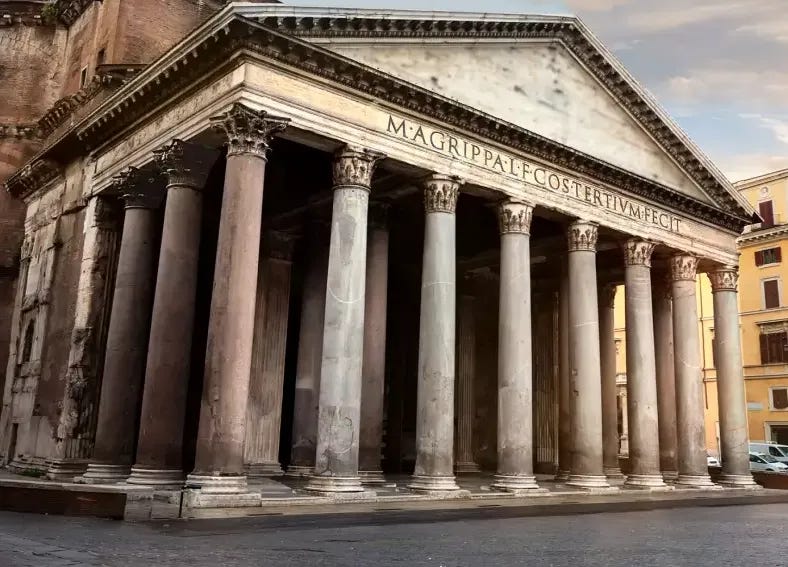
Today, you step up once or twice and walk inside. Then through the massive bronze doors, into cool air, muted echoes, and the open circle of the oculus above.
The bronze doors don’t quite sit where they once did — the ground has shifted around them.
The rise from the street is barely noticeable. Most people don’t think about it.
But it’s new.
The Pantheon once stood several feet higher above the city. The granite columns in front once stood higher above the approach.
Today, they are shorter than they were meant to feel.
In the early Roman Empire, you approached it by climbing a full flight of steps into a raised portico.
The entrance was meant to lift you — physically — before you crossed inside to the cavernous interior.
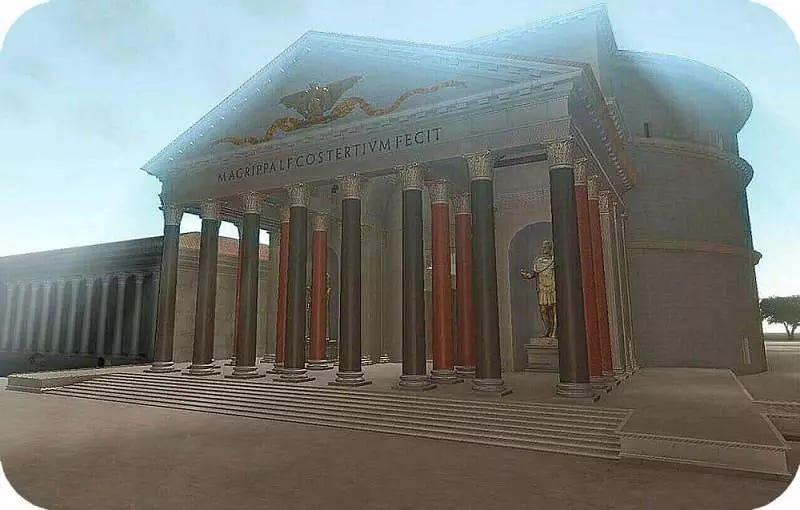
Built under Emperor Hadrian, the structure was engineered with precision—
meant to be approached and felt from below.
Time changed the city around it. Ground level changed.
Over nearly two thousand years, layers built up across Rome —flood sediment from the Tiber, collapsed buildings, broken stone reused and buried again.
Street after street rose — inches, then feet.
Parts of the Pantheon’s original base are now several feet below modern ground level — still visible if you walk around the side of the Pantheon.
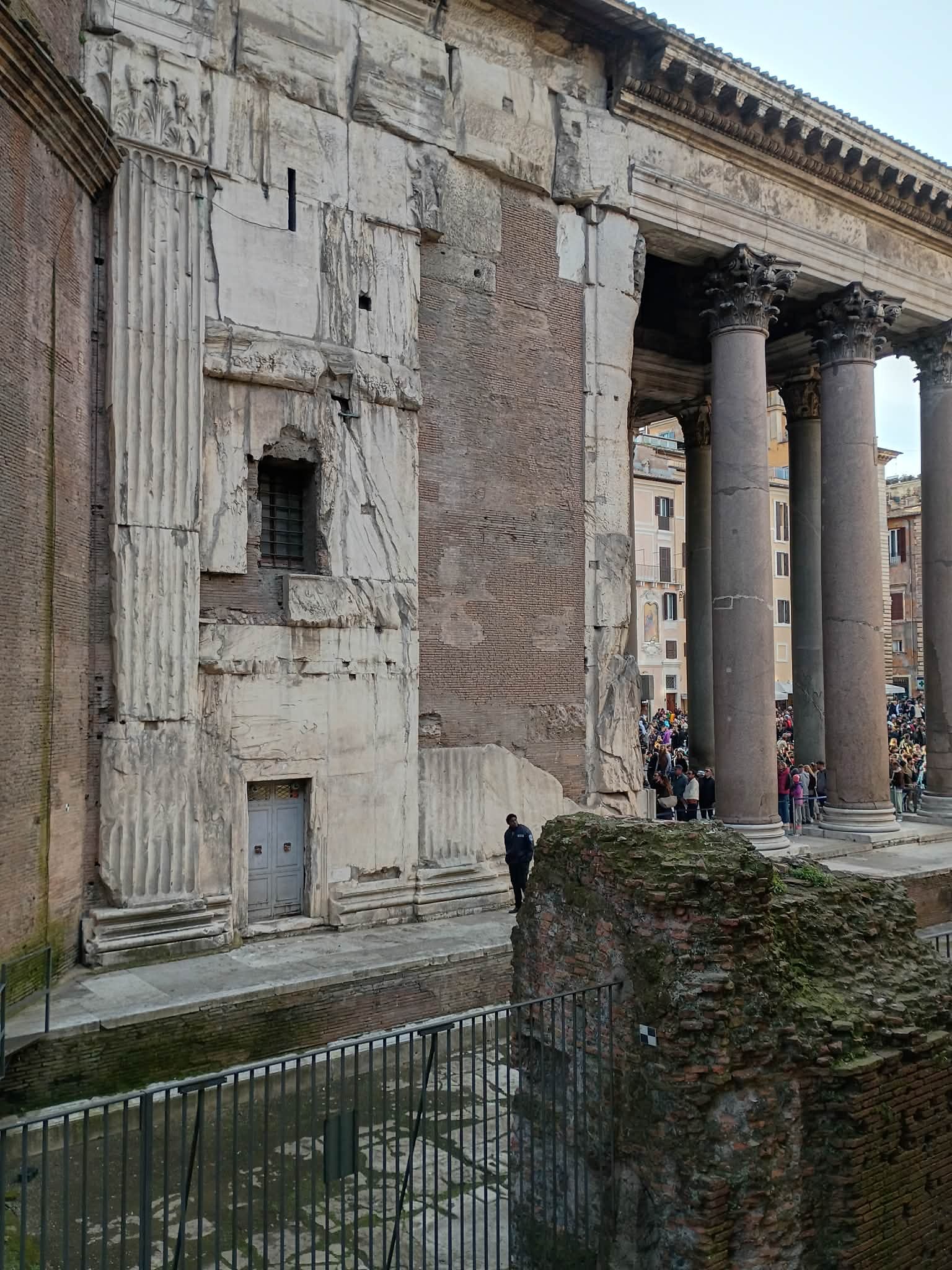
You can stand there today and look down at it.
Brick and marble, worn and exposed where it was never meant to be seen.
Another detail most miss:
The floor inside slopes gently toward hidden drains, designed to carry away rain that falls through the oculus. Even now, water still hits the marble and runs off as intended.
When it rains, water still falls straight through the oculus — just as it did two thousand years ago.
Each generation added a little more height outside. Inside, the building kept working exactly as it always had.
The result is subtle but real: what was once an elevated approach now feels level.
Walk around the side of the Pantheon, and the ground drops away.
You see it clearly then — the building standing where it always has,
while the city slowly buried its base.
Two thousand years ago, visitors in sandals climbed a full flight of steps to reach these doors.
Today, you barely notice the rise at all.
What feels level today was once meant to lift you.
If you notice things like this —
how a place slowly disappears without ever being gone —
Consider subscribing.
I write about details like this:
the ones still there, just slightly out of place,
waiting to be noticed.
Either way, I’m glad you were here.
** side Pantheon photo by Hank.