
There Are Two Starry Nights. You’ve Only Seen One.
One was painted inside an asylum. The other, standing on a riverbank at night.

Everyone knows Vincent van Gogh’s The Starry Night.
Or at least, they think they do.
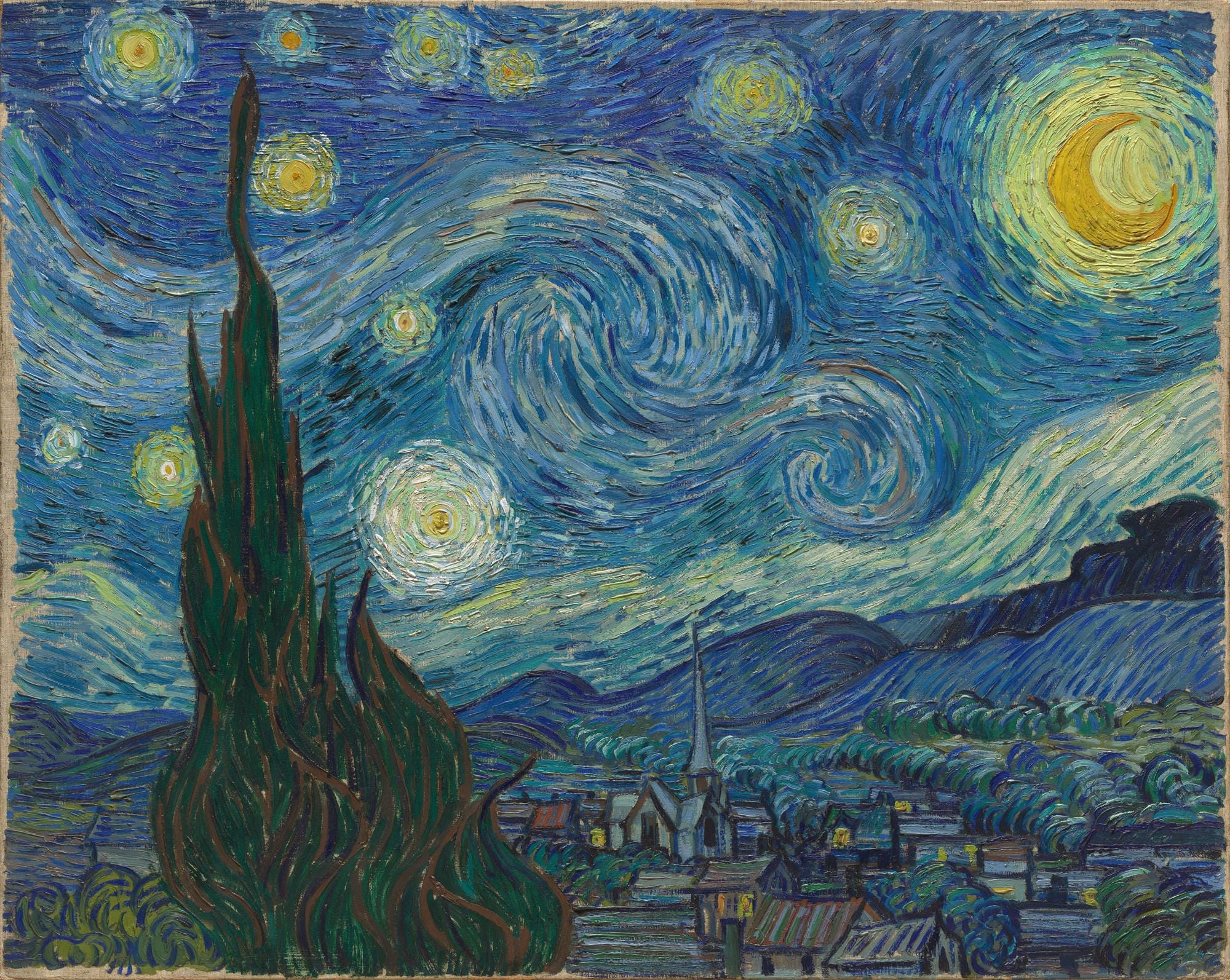
Van Gogh didn’t paint one Starry Night.
He painted two.
And almost no one knows the second.
The first is the one you know—
swirling sky, burning stars, a village below.
It’s been everywhere for decades.
I’ve been staring at it on my mousepad for years.
But in 2023, standing inside the Musée d’Orsay, I turned the corner —
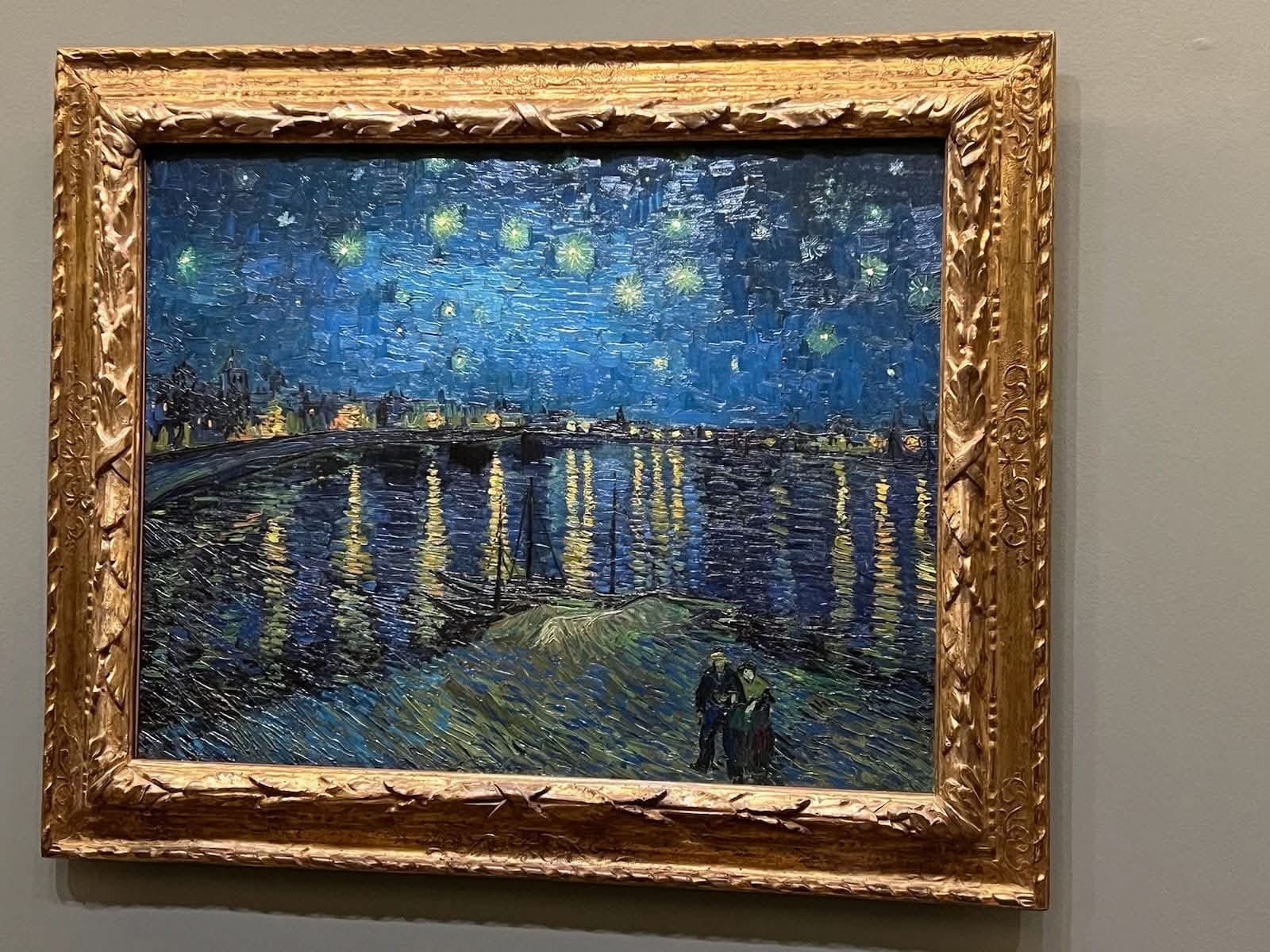
— and saw this.
Starry Night Over the Rhone (1888)
What’s different
The second is quieter.
No exploding sky.
No spirals pulling you upward.
Just a river at night —
and light sitting on the surface.
A couple walks along the bank.
Small and easy to miss.
The stars reflecting instead of moving.
When he painted it
Starry Night Over the Rhone came first.
1888 in Arles.
Van Gogh wasn’t inside an asylum yet.
He was outside — on the bank of the Rhône — painting the night directly.
He even wrote about it:
how hard it was to paint darkness without using black.
If this surprised you—
Tree Roots might hit even harder.
It may be the last thing Vincent van Gogh ever painted —
And for years, no one knew where it was.
The technique
Look closer, and it changes.
The famous Starry Night is thick, turbulent — paint pushed hard into the canvas.
This one is controlled with shorter strokes and a flatter surface.
The glow comes from contrast — yellow against deep blue — not motion.
It’s observation instead of chaos.
Why it matters
We remember the madness. The swirling sky. The distortion.
But in Starry Night Over the Rhône —
This is what he actually saw.
Gaslight breaking across the smooth water.
Stars motionless and eternal above it.
Two people walking under both.
He didn’t start with the storm.
He started with stillness.
One he painted standing on the edge of the water.
The other he painted from inside an asylum.
And it’s the one from the asylum that gets remembered.
Most people stop at what they recognize.
Subscribe for what they miss: