
Van Gogh’s Final Days — and What He Painted at the End
A chaotic painting with no horizon, no distance, no escape

Vincent van Gogh painted this in July 1890, in the final days of his life.
He died from a gunshot wound days later.
The painting is called Roots.
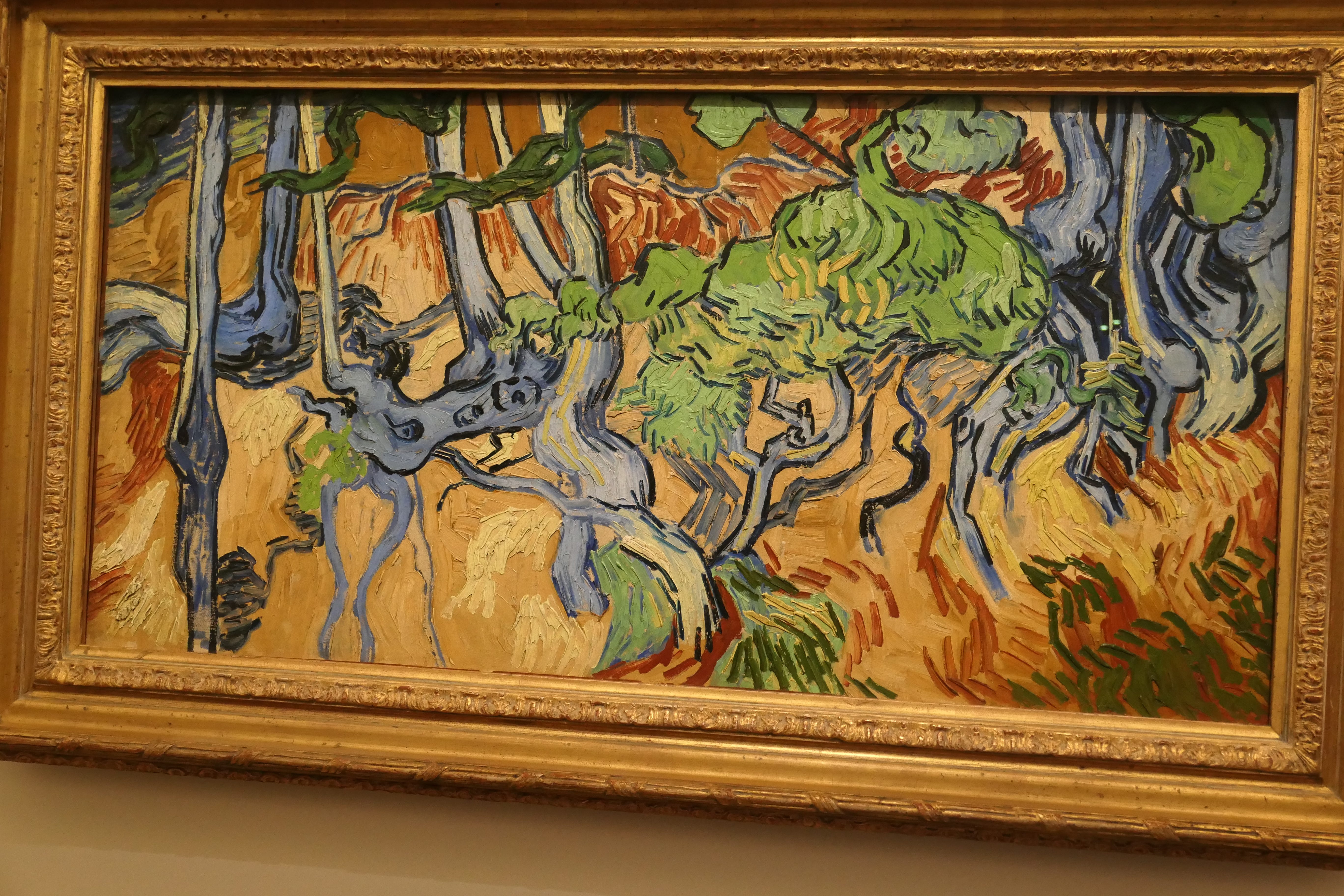
Roots departs dramatically from the master’s other works.
No horizon. No sky. No distance.
It doesn’t open out to an endless expanse. It closes in.
Only tangled roots. Compressed space. Fragmented. Close-up. Unresolved.
Roots is a clean break from his more familiar open fields, horizon lines, and balanced compositions.
He chose to paint this way in what may be one of his final works.
Some believe it reflects his deteriorating mental state in those last days.
Others see it as a technical study of color and form.
We don’t know what it means.
I do know that standing before it in the Van Gogh Museum was mesmerizing.
I could not look away for nearly fifteen minutes.
I write weekly about curious details like this from places most people walk past, like the tower in Venice isn’t the original. It collapsed in 1902 and was rebuilt. Subscribe for more.
We now know the place he likely used.
In 2020, researchers identified the actual tree roots and hillside where van Gogh probably painted this.
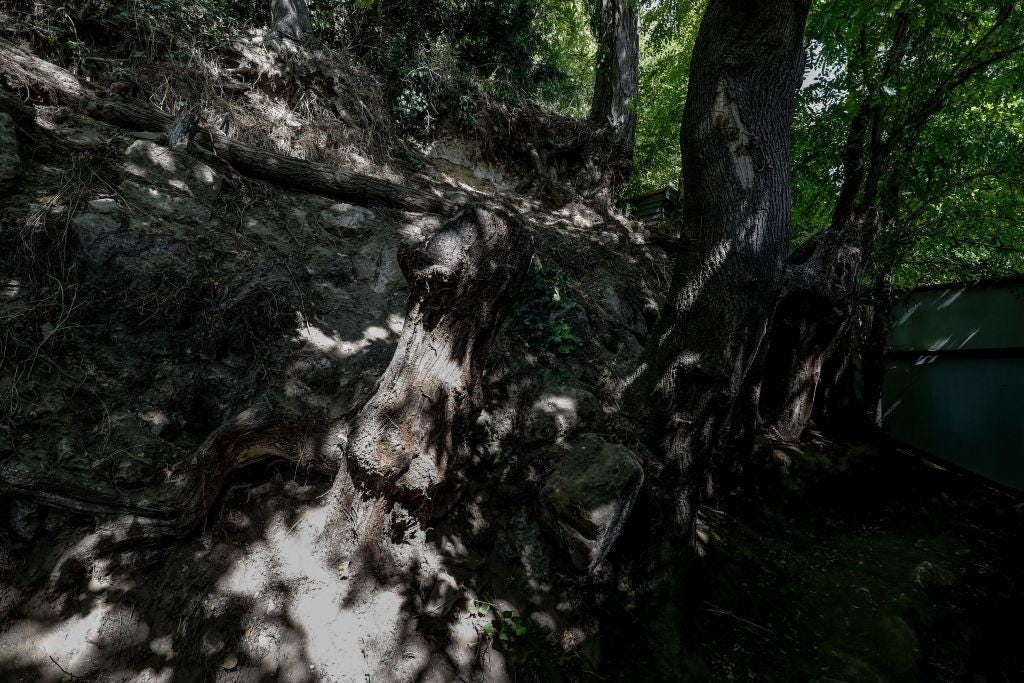
The site is in Auvers-sur-Oise, along a roadside slope.
The shapes of the exposed roots match the painting almost exactly.
The tree and root system are marked now.
You can walk up the slope and stand where van Gogh stood in his final days, and see what he saw.
Subscribe if you want more of this weekly. I write about little-known details of art and history that most people walk past.
Difficult to imagine that the master sold ONE painting in his lifetime.