
The Exact Spot Where Van Gogh Painted His Final Work Has Been Found
It’s not a field or a forest—it’s a roadside bank you can still stand in today.

For over a century, no one knew where this was painted.
Tree Roots
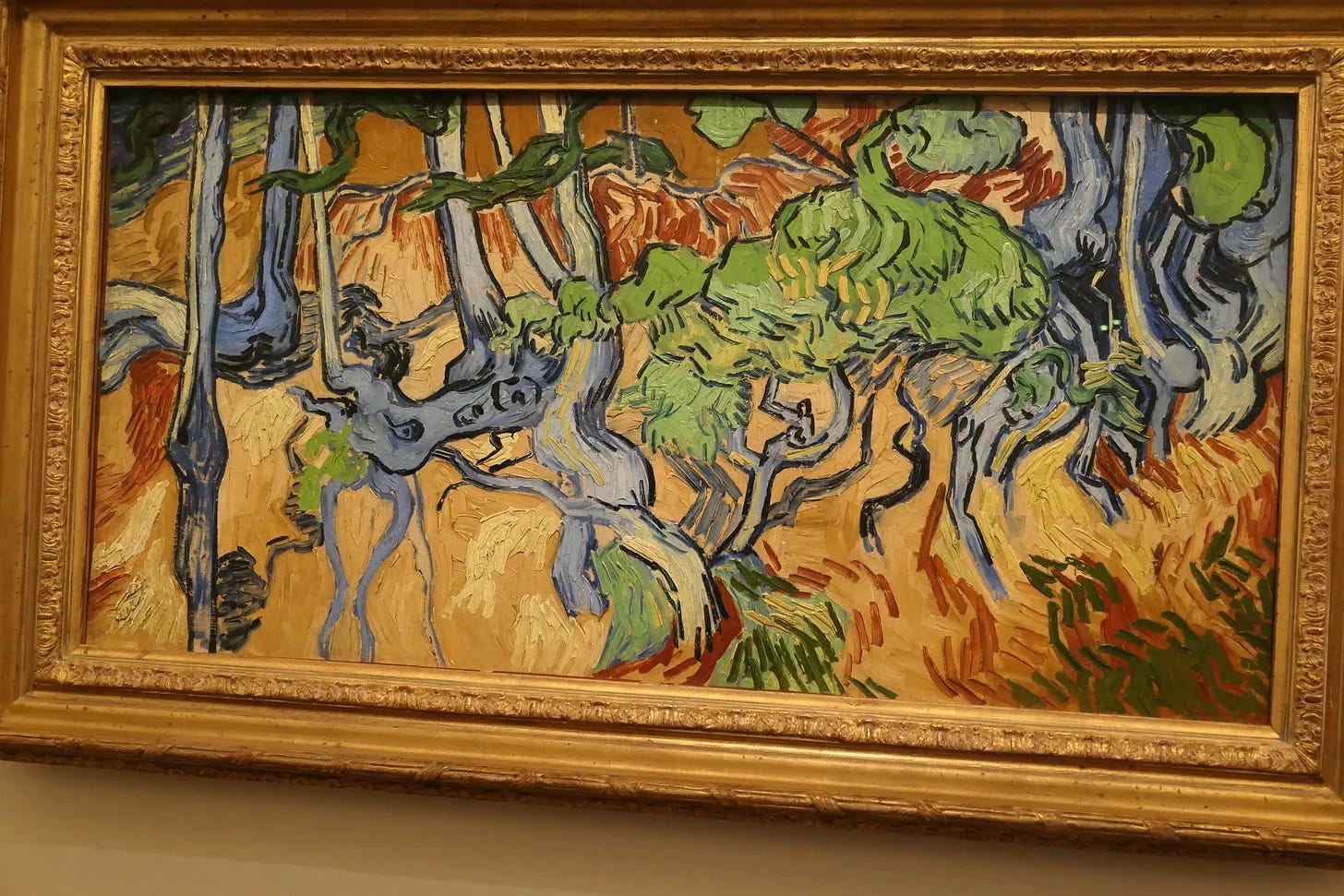
Painted in July 1890, just outside the village where he would die.
But where?
The exact hillside still exists. You can stand there today.
For decades, no one knew where it was.
The painting felt chaotic. Almost abstract.
It isn’t.
But what was the inspiration?
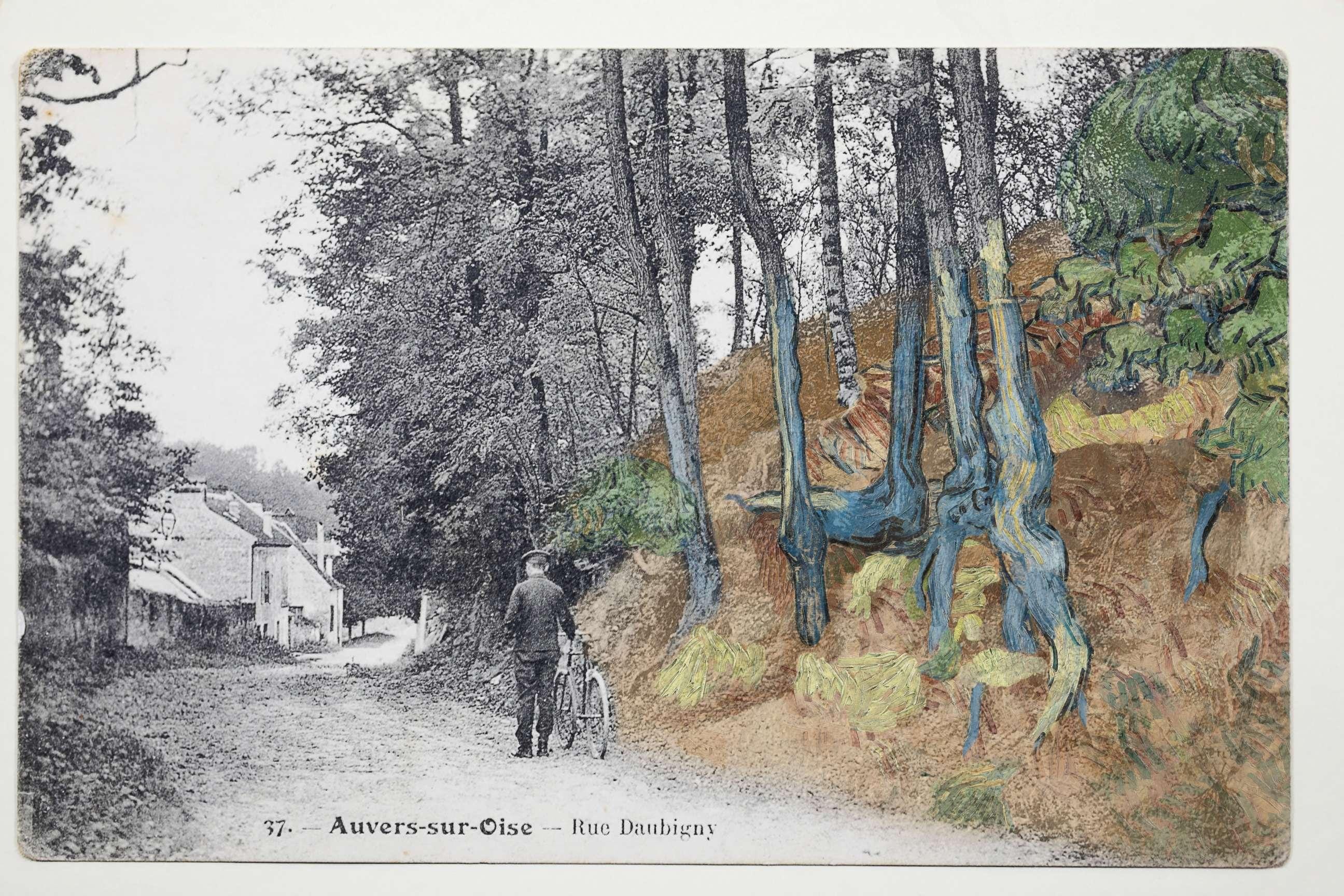
Then in 2020, Dutch researcher Wouter van der Veen found something unexpected.
A black-and-white postcard from around 1900.
You’ve seen paintings like this before.
You just didn’t see them.
Subscribe to Unpaid Observer for the details that change how you see them.
It showed a sloped hillside in France —
cut back from the road, with a tangle of exposed roots pushing out of the earth.
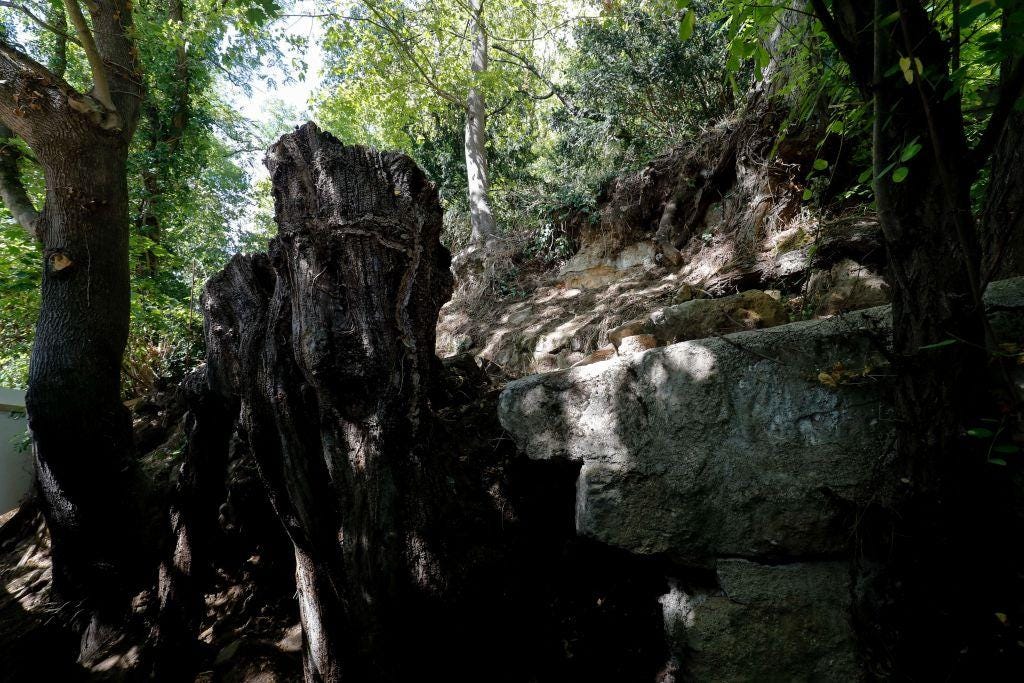
Not similar.
The same.
The angles matched.
The shapes matched.
Even the direction of the slope matched what van Gogh painted.
The roots weren’t random growth.
They were exposed by a man-made cut —
earth carved away in the 19th century to widen the road,
leaving the roots hanging in the open air.
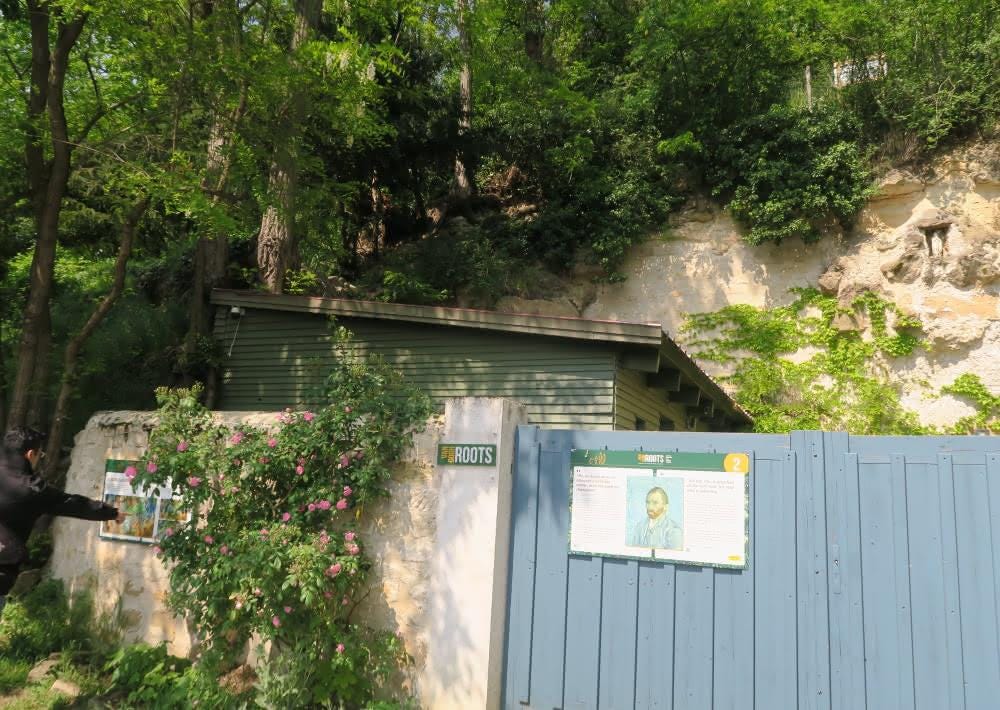
The location is in Auvers-sur-Oise,
the village where van Gogh spent the final weeks of his life.
Not deep in a forest.
Not out in a field.
A roadside embankment on Rue Daubigny.
Just outside town.
He painted it in broad daylight.
Thick paint.
Compressed strokes.
No open space.
No horizon.
No sky.
Just roots—twisting, overlapping, filling the entire frame.
Not a landscape.
A surface you can’t escape.
The roots are still there today.
Growing from the same slope.
Twisting out of the same cut earth he stood in front of.
Only a short walk from the inn where he was staying.
Which changes the painting.
It isn’t abstract.
It isn’t imagined.
It’s a real place on a roadside and a specific moment.
And very likely,
the last thing he ever chose to look at.
If you like learning the details, read more:
Paintings, ruins, and places you think you know — until you see the details.
Subscribe to Unpaid Observer.