

The Birth of Venus looks perfect.
It isn’t.
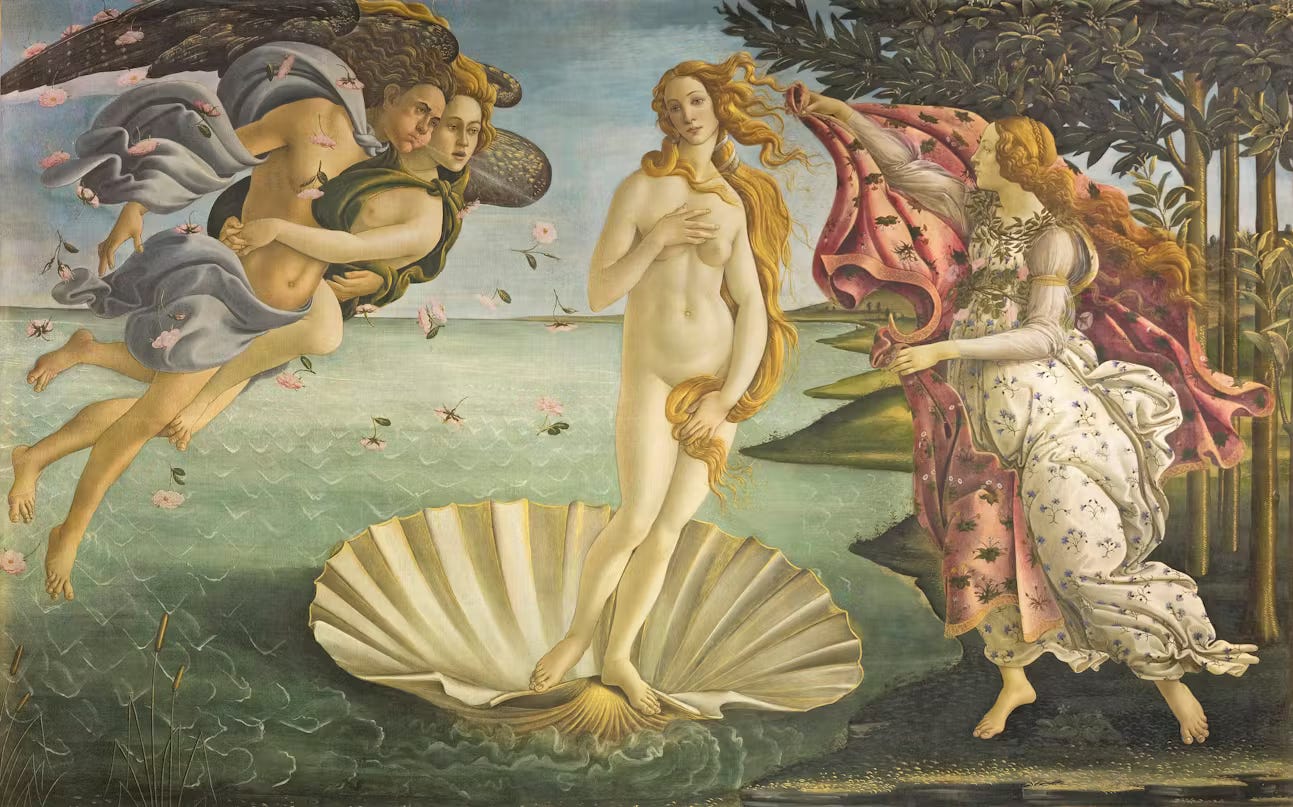
At first glance, everything holds together.
The pose feels balanced.
The figure feels graceful.
Nothing seems out of place.
Then you look closer.
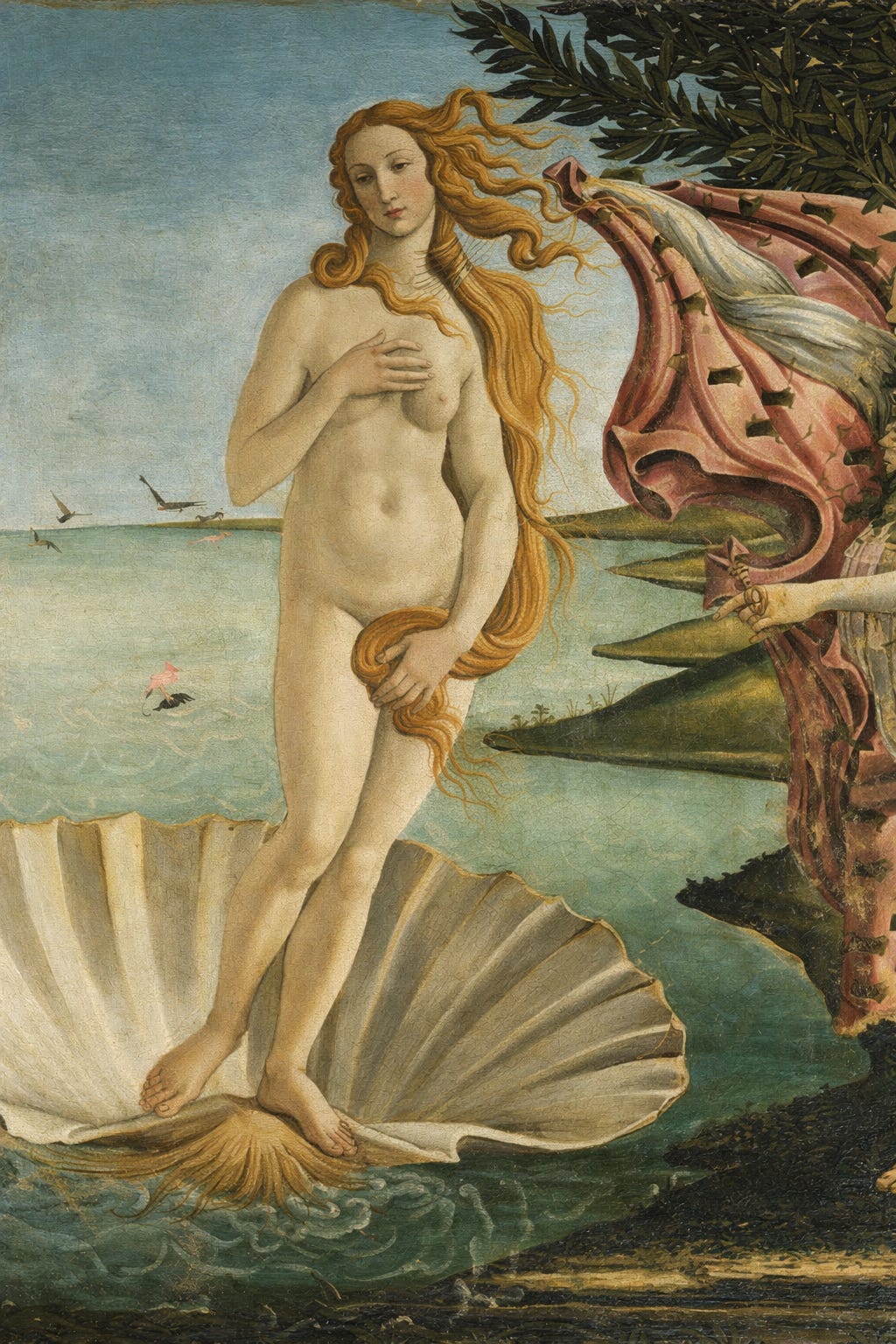
Her neck is unnaturally long.
Her shoulders don’t align with her torso.
Her left arm bends in a way that wouldn’t connect cleanly to the body.
Her stance couldn’t support her weight.
If this were a real person, she would fall.
Still —
Venus feels right.
Most people never notice details like this.
I write short pieces on the things hidden in plain sight—art, history, and places you thought you understood.
↓ Get them in your inbox
What Botticelli was actually doing
Sandro Botticelli understood anatomy.
He wasn’t trying to copy it.
By the time he painted The Birth of Venus around 1485, artists in Florence were already studying the human body with increasing precision.
But Botticelli chose something else.
This painting likely emerges from a Neoplatonic world—
where beauty wasn’t just physical.
It was something higher.
Something ideal.
Closer to the divine than any real body could be.
Why the distortion matters
Every “error” here has a purpose:
The elongated neck adds elegance and vertical flow
The shifting shoulders soften the rigidity of the torso
The impossible stance removes weight and tension
The proportions guide your eye, not your logic
He isn’t constructing a body.
He’s constructing a feeling.
And the setting reinforces it
Venus arrives not as a person, but as an event.
She stands on a shell, fully formed
The sea is calm
The figures around her show no surprise.
Nothing behaves like reality.
Because this isn’t a moment in time.
It’s an ideal concept of beauty made visible.
A Shift in Priorities
This is what makes the painting important.
It shows a moment in the Renaissance when artists stopped trying to simply copy the world — and started trying to improve it.
To refine it.
To elevate it.
To move beyond it.
The ideal of beauty.
The Birth of Venus is anatomically wrong.
But that isn’t a mistake.
It’s a decision.
The proportions don’t work.
The effect does.
If this changed how you see great art, there’s more like this. We value the details of art and history that most people walk past.
If you enjoyed this, other essays about hidden details of art: