
The Pantheon’s Doors Are 2,000 Years Old—And Still Work Perfectly
They weigh tons — but they don’t fight you. The reason is still visible today.

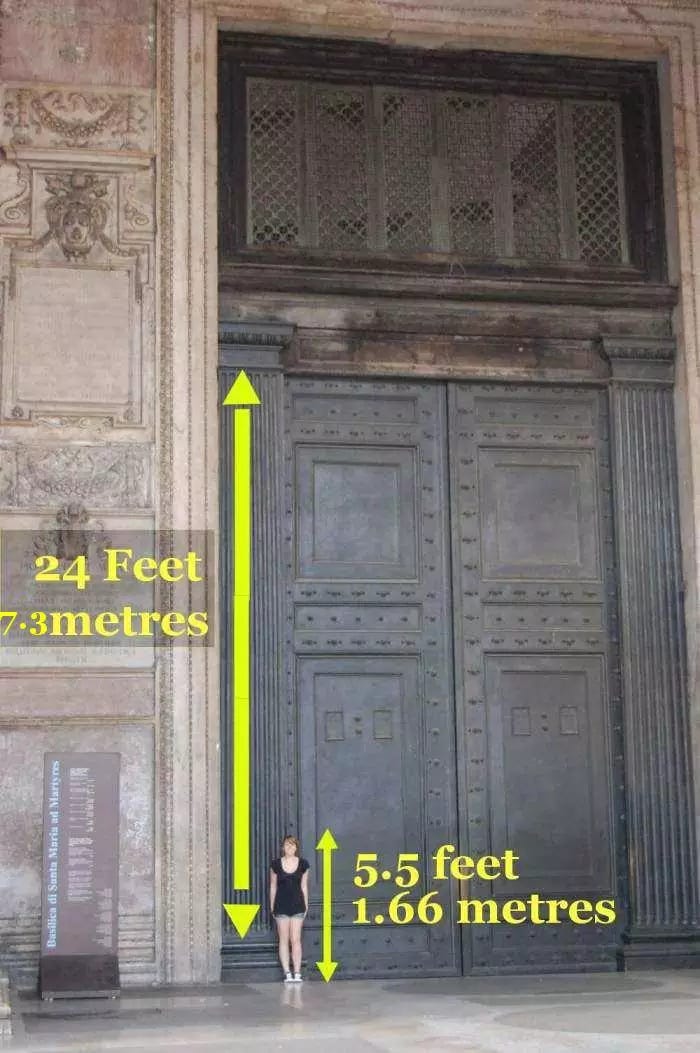
The Pantheon’s massive bronze doors still open smoothly—nearly 2,000 years later.
I run my hands over the smooth bronze doors of the Pantheon on a recent trip. The metal is cool, worn soft at hand height.
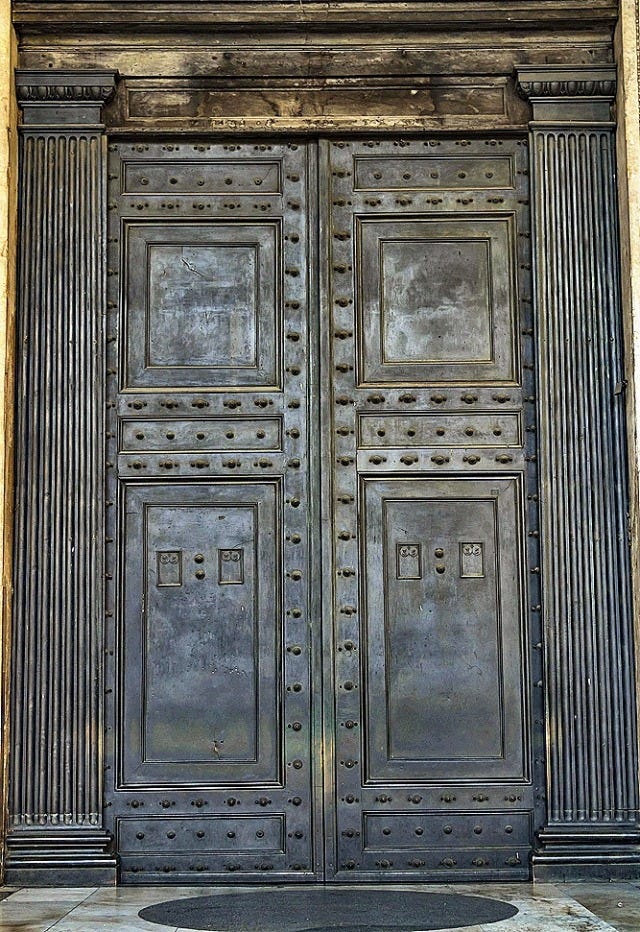
They stand 23 feet tall and weigh several tons. You assume they would be difficult to open and close.
It isn’t.
These doors don’t fight you. They pivot.
The ancient doors don’t rely on modern side-mounted hinges. Under Hadrian,
Roman engineers used vertical pins set into the threshold below and the lintel above.

Weight is carried vertically, not sideways. The load transfers directly into the surrounding stone structure of the Pantheon.
Once the doors begin to move, there’s a soft, muted sound — metal shifting against stone, but not grinding.
They rotate — balanced, controlled, almost impossibly smooth.
Friction is minimal.
The system relies on a rotating mass about a central axis rather than on resistance at a hinge.
It’s a simple idea, but executed at a scale that still feels improbable as I stand in front of the doors.
There are no hinges on the sides.
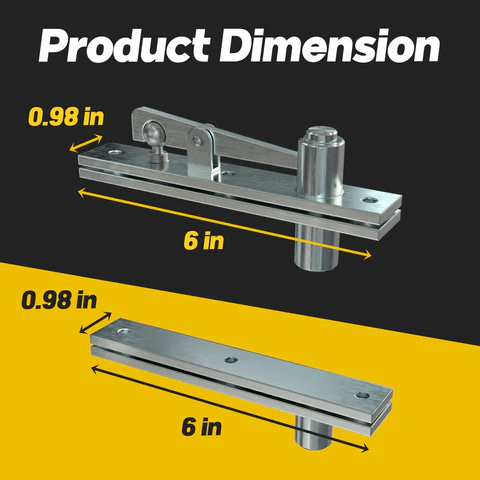
Instead, each door turns on a hidden bronze pivot, set into the stone above and below.
The entire weight rests on that point.
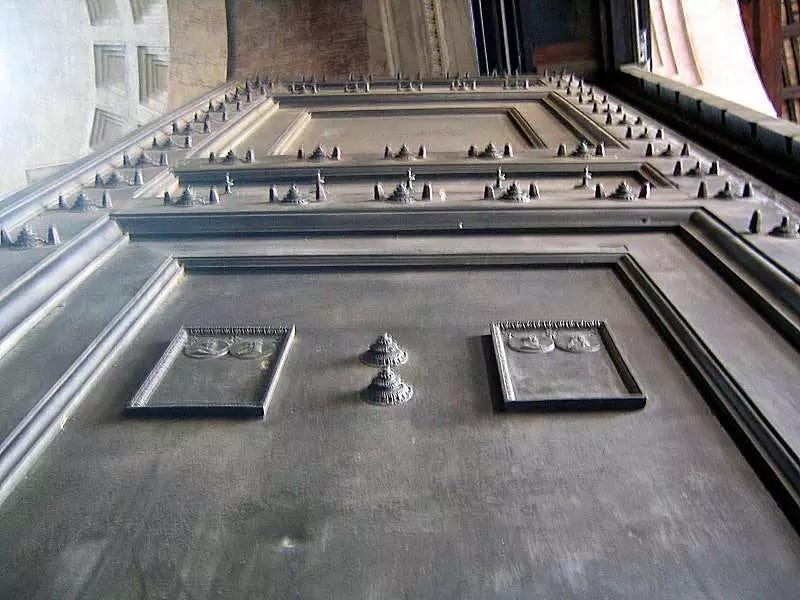
Over the centuries, the Pantheon doors were repaired, adjusted, and reinforced — particularly in the early modern period as the building transitioned fully into a church.
The bronze panels show subtle variations. Some fittings have been reworked.
The pivot system itself has likely been reset more than once to keep the alignment true.
But the core design and movement remain the same.
As I gaze at the doors in 2023, I see the original system continue to function — bronze turning on pins, weight carried into stone — just as it did under Hadrian.
Nearly two thousand years later, they still open this way.
Not easily because they are light, but because they were engineered by ancient engineers to move smoothly and quietly.
If you notice things like this—
how something built centuries ago still works without effort—
consider subscribing.
I write about details like this:
the quiet engineering, the overlooked design,
the parts that still do their job long after everything else changes.
Either way, I’m glad you were here.