
Venus Didn’t Ask
What a quiet room in the Louvre revealed about attention

Mona Lisa’s fame speaks for itself. Every morning, tourists hurry into the Louvre, make a beeline for the painting, raise their phones, take the photo, and leave. Most of the museum — nearly two million square feet — remains untouched.
I saw the Mona Lisa in a jostling crowd. The room pressed forward.
The Mona Lisa is fantastic. But she’s small, and far away. Even up close, she feels distant. It was loud. Phones held overhead. Voices cutting through the air. People wanted to confirm they’d been there. Attention felt thin and hurried. After a few minutes with two hundred strangers and the painting, I moved on.
Around a corner, then another, the noise dropped away.
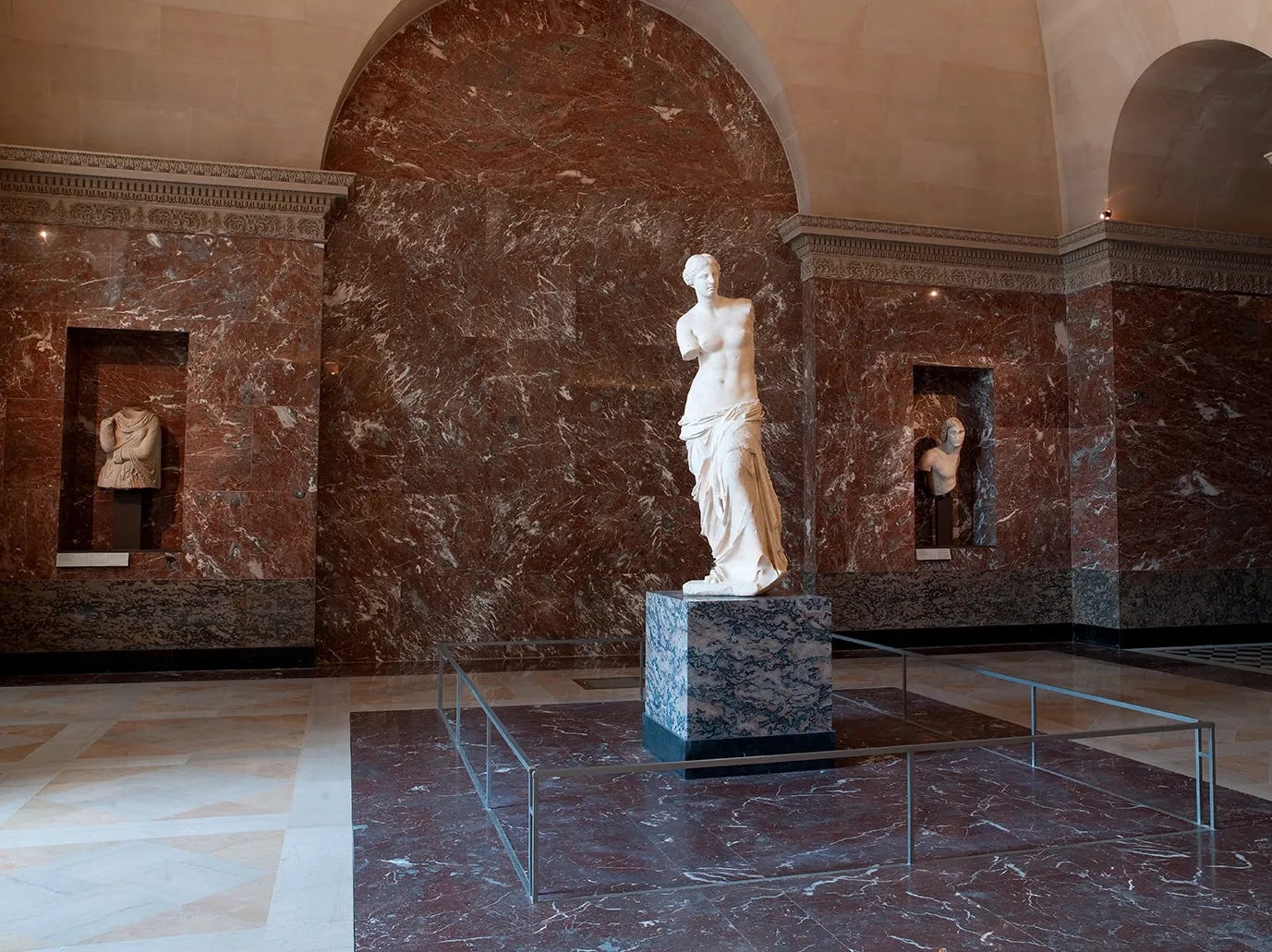
The room with the Venus de Milo was quiet. Spacious. Almost empty. A few people stood still. They didn’t raise their phones. They didn’t rush. They looked — and kept looking.
A radio murmured softly from a corner.
Venus didn’t ask for attention. She simply held it.
The sculpture is just over six feet tall, but it feels larger. It dominates with grace, felt not only in the eye, but in the bones. The echoes of the crowded room fade. Venus occupies the space completely. She competes with no one.
If this kind of noticing matters to you, you can subscribe here.