
The Volcanic Stone Beneath Your Feet in Rome
Slick black stone, worn smooth by centuries of passing feet.

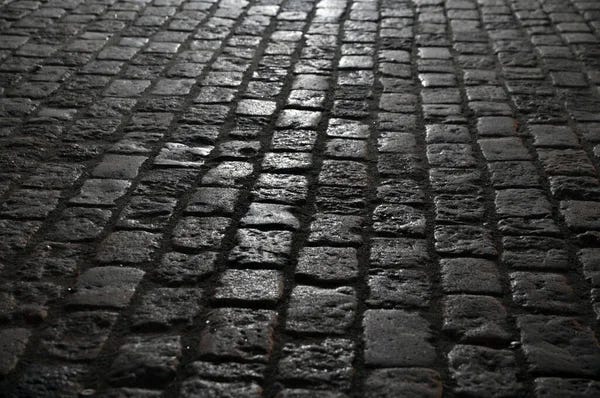
Black basalt, worn smooth by centuries of passing feet.
Once molten, now underfoot across Rome.
A light rain falls in Rome, and the stone underfoot turns slick and reflective. The black surface catches the light in patches, worn smooth by centuries of passing feet.
Most people never notice them.
These stones are everywhere—on side streets, around the Pantheon, near the Roman Forum—so common they almost disappear.
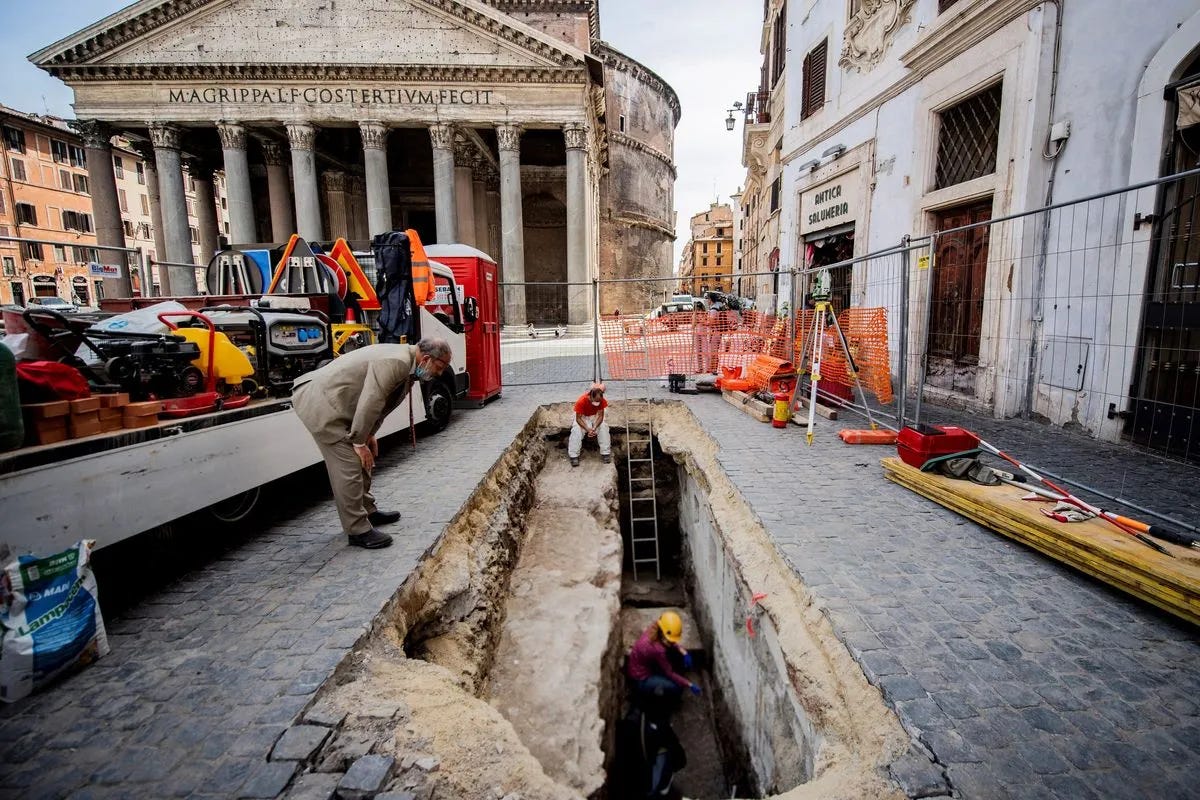
They line long stretches of the Appian Way.
Dark. Worn smooth in the middle. Higher at the edges.
I look closer at the wet surface.I didn’t realize ancient Rome made black bricks.
They didn’t. These aren’t bricks. They’re volcanic stone.
Most are basalt — formed from cooled lava near Naples, long before Rome existed.
Before the widespread use of brick, Romans cut, hauled, and laid them here 2,000 years ago. They still hold up to traffic today all over Rome.
Basalt is incredibly hard. It could withstand constant traffic — carts, horses, iron wheels — and centuries of weather.
The surface looks flat, but it isn’t. Roman engineers built a subtle curve into the road— slightly raised in the center, sloping outward. Rainwater runs off instead of pooling.
Many of these stones were set over layers of sand and gravel, part of a road system engineered in stages — built from the ground up for strength and drainage.
The result was a road system built to last. Rome needed roads that worked. Not just for trade — but for speed.
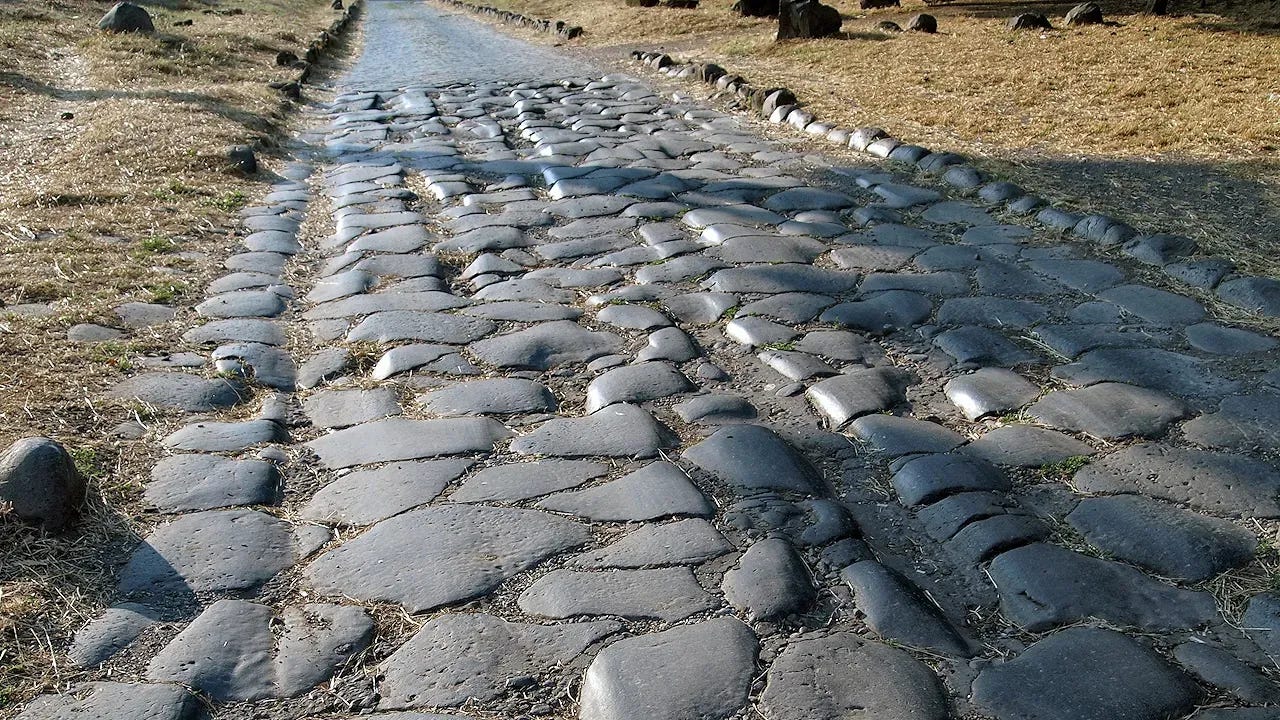
Soldiers, messages, supplies. Moving across distance, without delay.
More than two thousand years later, many of those same stones are still in place.
When you walk through Rome today, you’re often walking on the same volcanic rock
that carried people in the time of Augustus, Caesar, Cicero, Livy.
Shoes pass over the same wet stone in a winter shower— what Roman traders, soldiers, and laborers once saw underfoot.
Rainwater runs along the seams of the dark stones, just as it always has.
If you want more details like this—the ones most people walk past—subscribe.
I share hidden traces of the past that most don’t know.
It's hard to imagine that many of these stones are nearly 2,000 years old.