
The Summer I Took the Train to Ukraine Without a Visa
In the late 1990s, information traveled slowly. So did I.

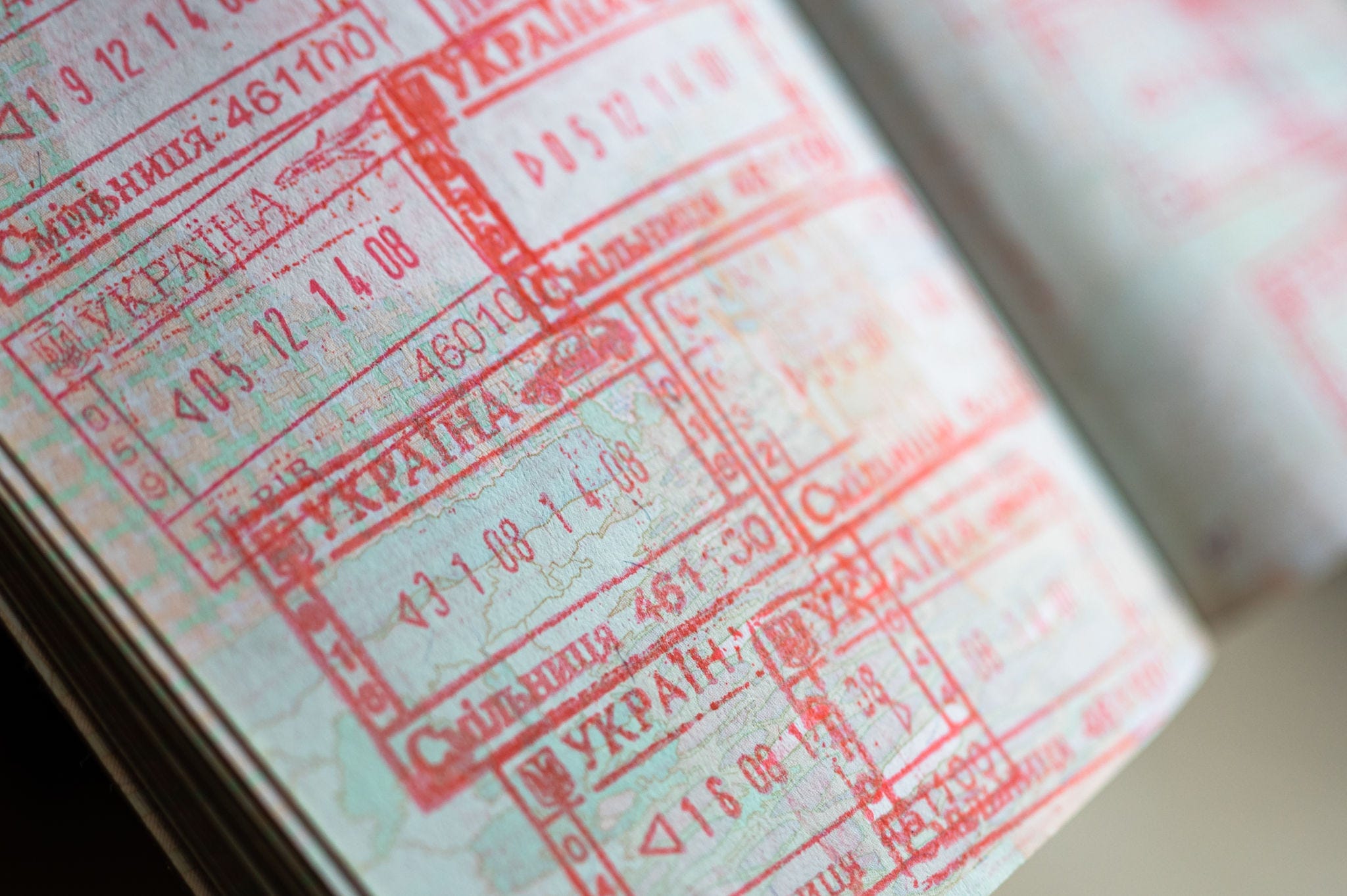
The train creaked to a stop near Kharkov, just before turning south toward Crimea.
Two men in green uniforms slid open the compartment door and held out their hands for our passports.
“Friend,” one said in perfect English. “Where is your visa?”
Visa? My fiancée and I glanced at each other.
The guard flipped through my passport again and pursed his lips. “You’re an American,” he said. “You need a visa to enter Ukraine.”
I was teaching English in Perm in the late 1990s, only a few years after the collapse of the Soviet Union. Ukraine was already independent, but the trains, routes, and habits still felt Soviet. It never occurred to me that crossing into Ukraine might require more than a ticket.
“I don’t have a visa.”
The guard shook his head firmly. “Then you both need to exit the train now.”
I looked at my fiancée. It was 7 a.m. The next train back to Perm wasn’t for twelve hours.
I really wanted to go to Ukraine.
I’d been in Russia long enough to know that “no” was not always the final answer. Ten minutes later, and two hundred dollars poorer, the train rolled into Ukraine.
The crisis behind us, I felt a brief sense of relief. But in the back of my mind, a question lingered: How was I going to get out of Ukraine in two weeks?
As the train left the city, it picked up speed and rolled through wheat and barley fields, pale gold and muted green. My mind drifted to the travel office in downtown Perm the week before. I had paid for two all-expenses-paid tickets for my fiancée and me — train fare, lodging, everything — for the 30-hour trip to Crimea. I had even splurged on a two-person compartment. The usual arrangement was four, which meant eating and sleeping beside strangers in a space barely large enough to turn around.
How had the clerks sold me a vacation in another country without mentioning a visa? To an American, that kind of omission would have been unthinkable. In post-Soviet Russia, it was unremarkable. Service was minimal. Responsibility was yours. At twenty-eight, I hadn’t learned that yet.
The next two weeks passed easily enough — swimming in the rocky Black Sea, eating massive red tomatoes that cost almost nothing, wandering onto buses headed toward places whose names I never quite learned. But as our time in Crimea wound down, a quiet unease settled in.
Getting out of Ukraine meant buying a train ticket back to Russia. Maybe the clerk wouldn’t notice the missing visa. The border guards almost certainly would. They would board the train, collect passports, and find the same blank page.
I tried not to think too hard about what happened next.
Before I knew it, it was time to return to Russia. We entered the hostel director’s office to retrieve our passports and check out.
She flipped through them quickly, then stopped.
When she realized I was an American without a visa, her mood shifted immediately — anger first, then something closer to alarm.
She barked something in Russian at my fiancée, who turned to me and said, “We need to leave now. She can’t have an unregistered foreigner here. She’ll call the police.”
We grabbed our passports and luggage and left the office without checking out. Outside, my unease sharpened into something heavier. We hailed a cab and headed straight for the train station in Feodosiya.
At the train station in Feodosiya, we tried to think our way around the problem. Long-distance trains meant border guards, passports, and questions.
We told ourselves there was another option. The elektrichka — the local commuter train. The kind people used for short hops and errands. We assumed no one would bother checking passports.
At the ticket window, that assumption collapsed quickly. The clerk asked for documents. When I handed over my passport, she paused, then shook her head.
I needed a visa to buy a ticket. And even if she sold me one, she said, Russian guards would check my passport at the border anyway.
The rules, it turned out, were still the rules.
My fiancée and I turned away from the ticket booth. My eyes drifted across the grimy train station. A babushka sat on a bench beneath a peeling schedule board, a sack of potatoes at her feet. She watched us for a moment, expressionless, then looked away.
For a moment, I wondered if this was where I would be stuck.
My fiancée had other ideas. She noticed two middle-aged men in leather jackets and caps lingering near the ticket booths. They weren’t in line. They weren’t waiting for anyone.
To me, they were just two men standing around. To her, they were something else.
She glanced at them once, then again. That was enough.
They noticed. A moment later, they walked over and asked in Russian, casually, as if we already knew each other, “What’s the problem?”
My fiancée explained our dilemma.
One of the men smirked. “Do you know what the Ukrainian government does with Americans who are in the country without a visa?”
He paused.
My heart skipped a beat.
“They put chains on you,” he said, “and send you to a road crew. Thirty days. Minimum.”
My fiancée asked if they could get us back into Russia without trains or border guards.
“Sure,” he said. “Anything is possible with enough American dollars.”
The price was three hundred dollars.
I agreed without hesitation.
The two men led us to their tiny Moskvich sedan. We crammed ourselves and our luggage into the back seat. I didn’t ask them to open the trunk.
They started driving, talking rapidly in Russian. I couldn’t follow a word of it.
My fiancée frowned, then turned to me.
“The driver wants to put you in the trunk and smuggle you across the border,” she said. “The other one thinks it’s too risky.”
Sweat rolled down my back. I asked what that meant for us.
She shook her head. “They’re still deciding.”
Then the other man said something quickly.
My fiancée translated. He knew someone who owned a patch of land near the border. There was a forest road that crossed into Russia. No guards.
We turned off the main road and followed a long, winding dirt track to a small wooden house — dark brown, weathered, and unpainted, with tiny windows. Two skinny dogs were tied near a leaning outhouse. The passenger went inside and returned a minute later.
“We drive through the pasture,” he said, pointing. “Then into the woods. There’s a road.”
For half an hour, we bounced along the worst excuse for a road I had ever seen. Branches scraped the car. The forest closed in. Then, suddenly, we reached a small clearing at the edge of the trees.
The driver smiled. “That’s it. You’re in Russia now.”
I wanted to believe him, but I couldn’t. It felt too easy. Too informal.
My fiancée squeezed my hand. “Joe,” she said, “we’re back in Russia.”
Fifteen minutes later, we were on smooth pavement heading toward Kursk. They dropped us off at the train station. I handed over another three hundred dollars.
I had never been so happy to be back in Russia.
This is a very interesting story. It even resembles a movie. I completely believe it, because it all happened during the 1990s, which I experienced in Russia, just like the author. ;-)