
These Stones Let Romans Walk Above the Streets of Pompeii
On a cold, rainy morning in Pompeii, I followed the same stepping stones ancient Romans once used to cross the city’s messy streets.

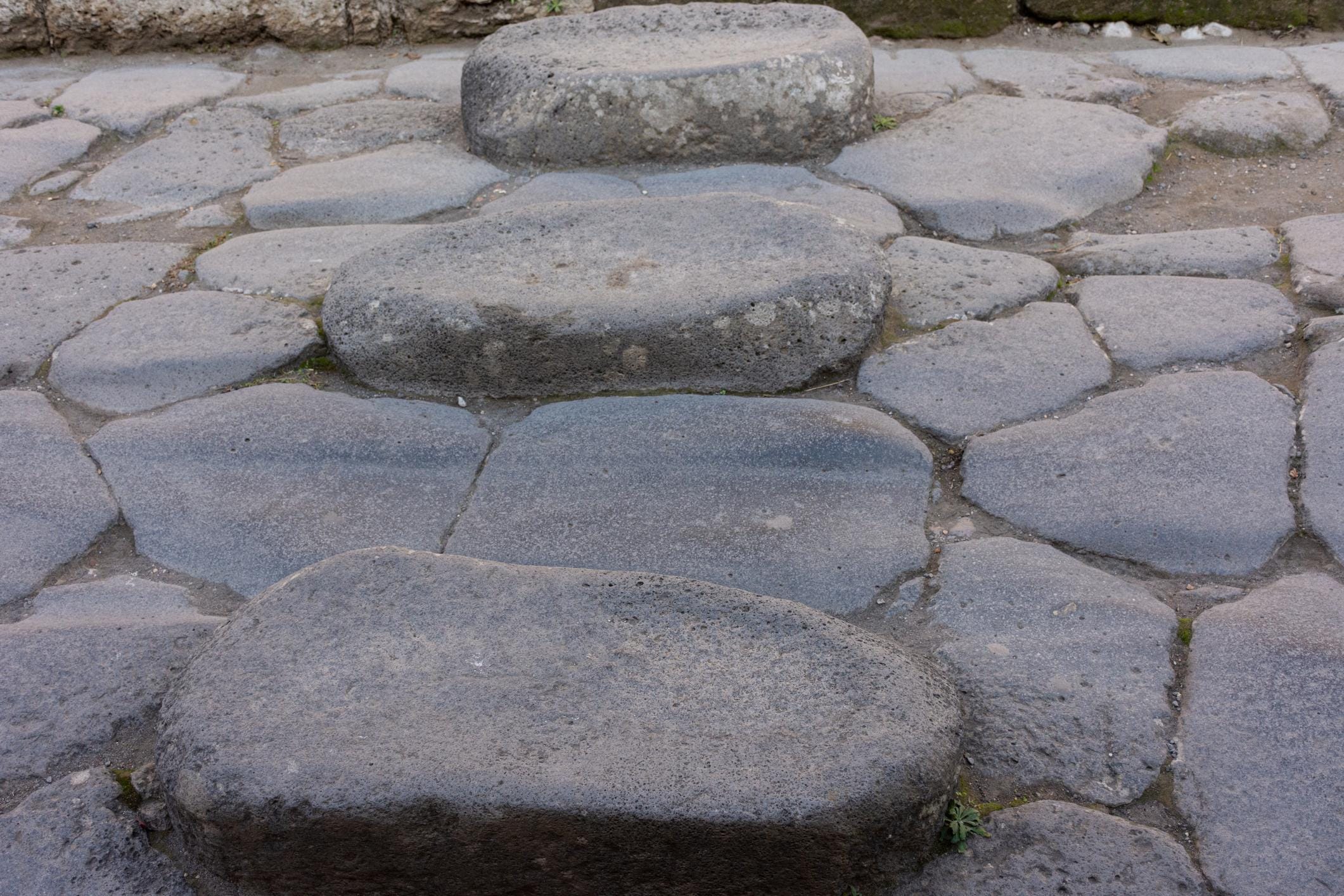
Stepping stones placed across Pompeii’s streets allowed pedestrians to cross above rainwater, animal waste, and sewage while carts still passed through the gaps between them.
I hustled along Pompeii’s main street one cold, rainy December morning. Low clouds hung over the ruins, and a steady drizzle made the ancient cobblestones slick and dark.
My shoes slipped more than once as I tried to keep my footing.
I had only thirty minutes before my tour group boarded the bus without me.
And I was determined to make it.
Nearly a kilometer away stood the Pompeii Amphitheater.
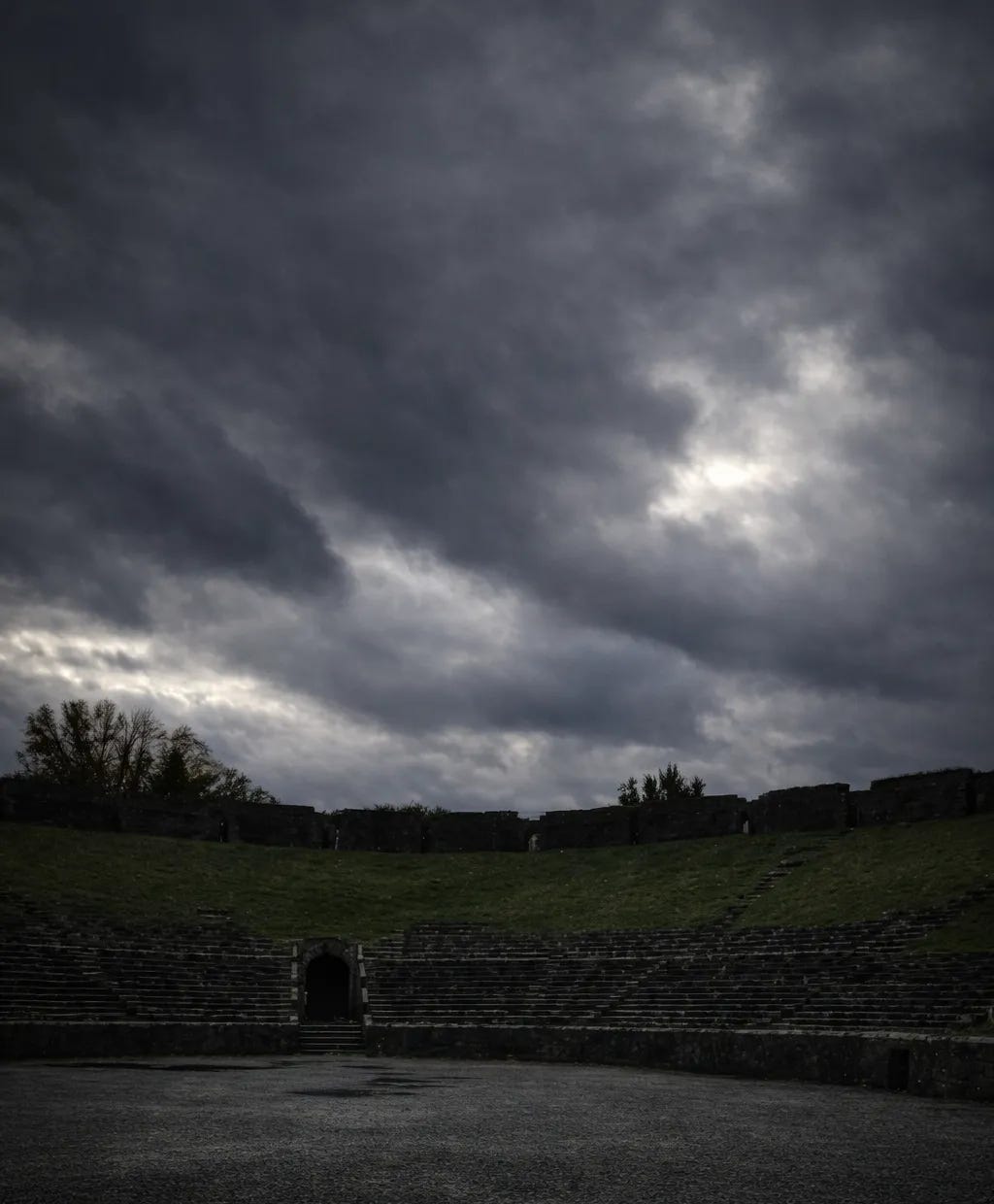
Pompeii’s amphitheater, built around 70 BC, is one of the oldest surviving Roman arenas —and the unlikely stage for Pink Floyd’s famous 1971 performance filmed among the silent ruins.
In 1971, Pink Floyd played there to gray stone, two curious local boys, and drifting dust during the filming of Pink Floyd: Live at Pompeii. It was the band’s legendary anti-Woodstock concert.
Any Pink Floyd fanatic who finds himself in Pompeii must make the pilgrimage.
As I hurried along the long stone street, something caught my eye.
Deep grooves cut into Pompeii’s paving stones.
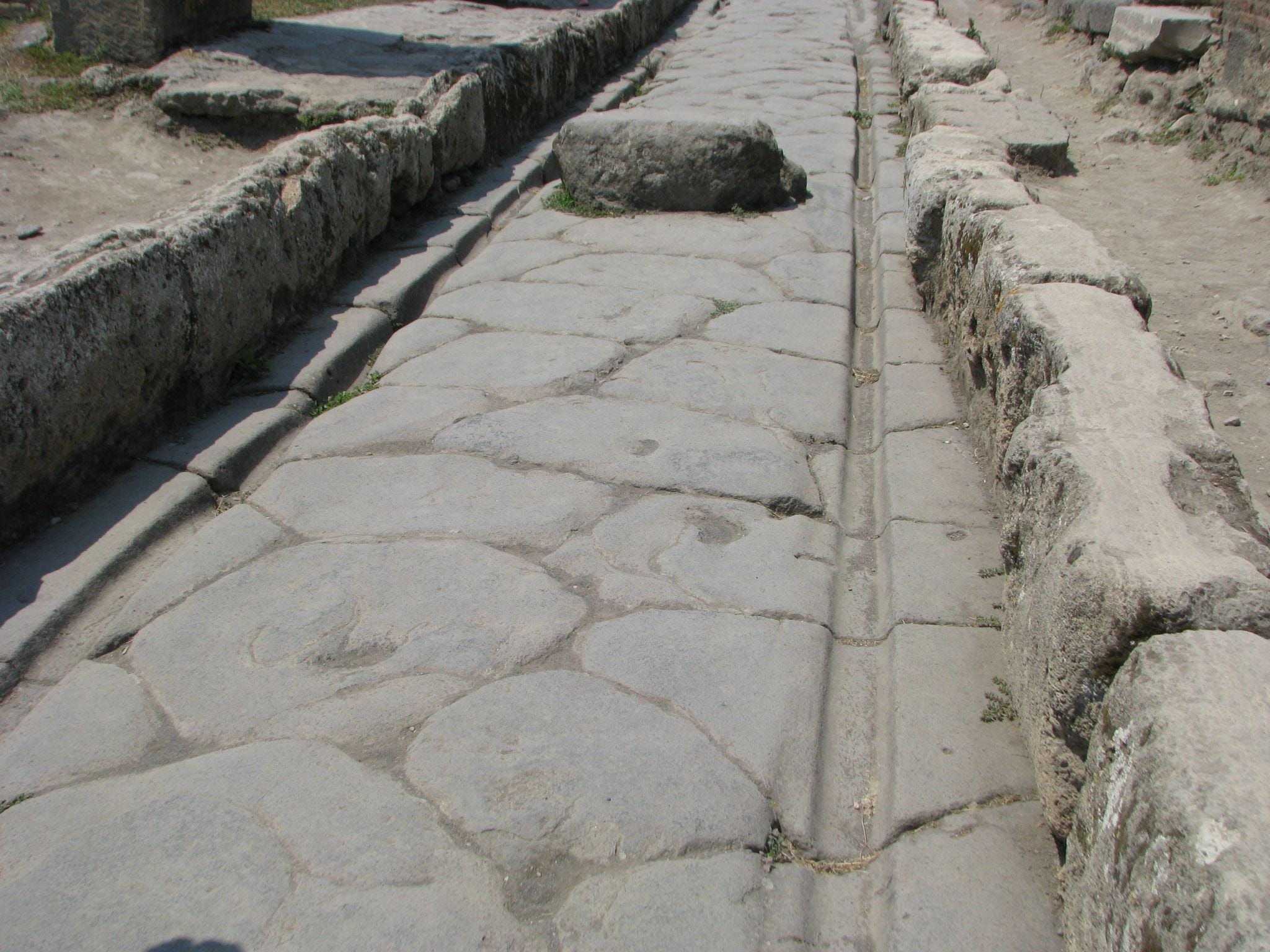
Deep grooves worn into Pompeii’s paving stones reveal centuries of cart traffic moving wine, grain, olive oil, and garum through the city.
The marks were unmistakable. Centuries of wooden cartwheels had worn them into the rock, grinding along the same narrow lanes day after day.
These streets once carried wagons loaded with wine amphorae, grain, olive oil, and garum — the pungent fish sauce Romans shipped across the Bay of Naples.
Then I noticed something else.
Large stone blocks rose from the middle of the road.
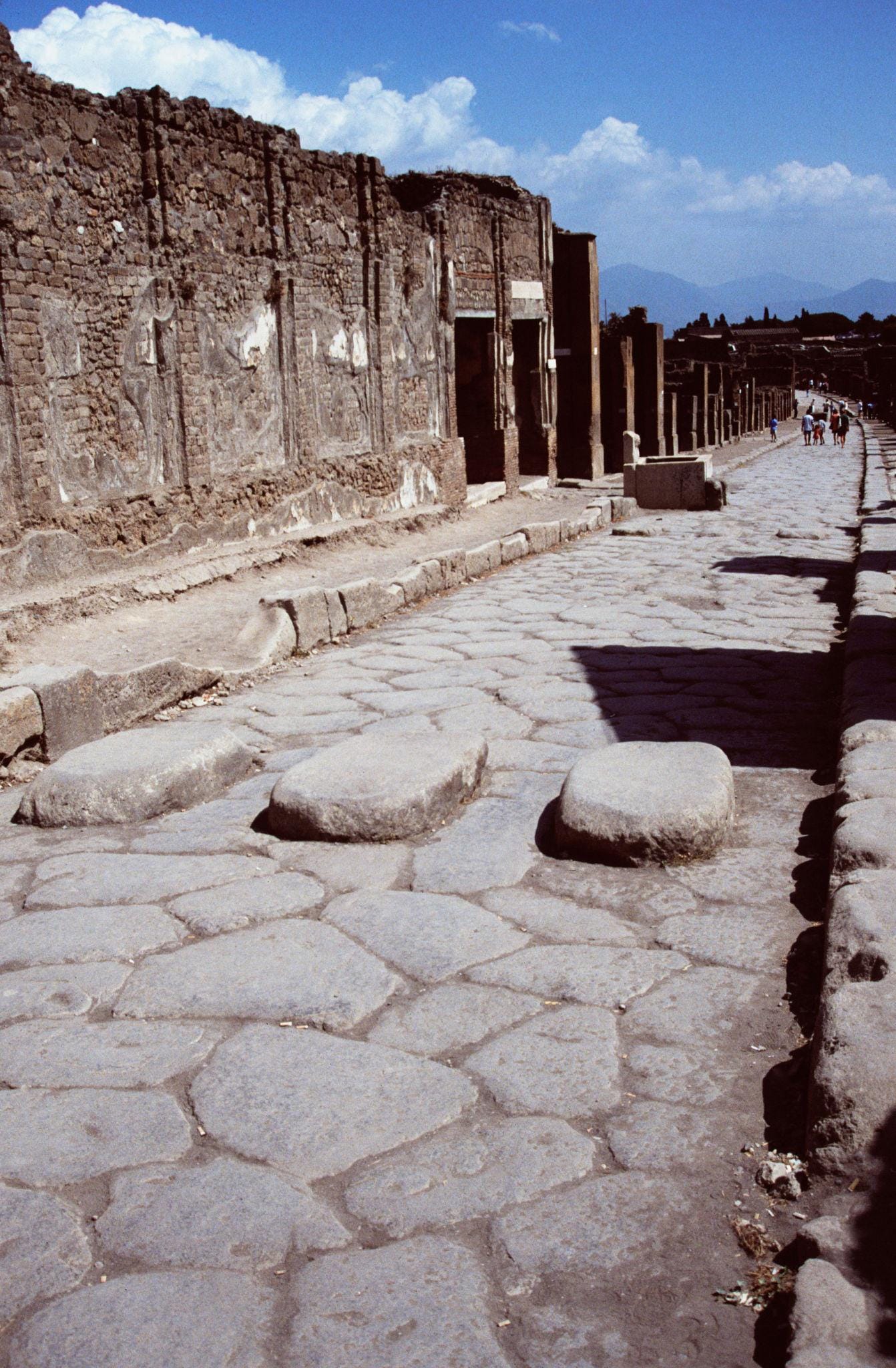
Pompeii’s famous stepping stones let residents cross the street without wading through the city’s muddy, sewage-filled roads.
Stepping stones.
Why were they placed right in the street?
Like many ancient cities, Pompeii had a constant problem with streets soaked by rainwater, animal manure, and human waste that flowed down shallow gutters along the road.
Pompeii was also a prosperous place. Its wealthy residents would not have appreciated splashing through filth in their expensive clothes.
Men of means wore bright white wool togas, some edged with a broad purple stripe that marked rank and status.
Others might appear in carefully folded palliums draped over fine tunics. Women wore elegant stolae fastened at the shoulders with pins, layered with colorful shawls and delicate jewelry.
No one dressed like that wanted mud and sewage on their sandals.
So Pompeii’s engineers solved the problem.
They set large stepping stones across the streets at intervals. Pedestrians could hop from one to another and cross safely above the muck, while carts still passed through the gaps between them.
Standing there in the rain, with water trickling between the stones and the smell of wet volcanic rock rising from the pavement, it was easy to imagine the scene two thousand years ago.
Pompeiians stepping lightly from stone to stone.
Trying to keep their feet dry.
Because on that cold morning in 2023…
I was doing exactly the same thing.
Read More Pompeii Stories
Pompeii is far larger—and far stranger—than most visitors expect.
If you enjoyed this story, you may also like:
The Day a Gladiator Game Turned Into a Riot in Pompeii – When a sporting event in 59 AD erupted into violence so severe Rome banned games in the city for ten years.
The Graffiti of Pompeii - What Romans Really Wrote on the Walls - Long before social media, Pompeii’s residents wrote love notes, insults and more on the town’s plaster walls.
Pompeii Is Much Bigger Than People Think – A walk through the streets of a Roman city frozen in time beneath Mount Vesuvius.
Pink Floyd or Pompeii? - I had to choose between staying with my tour group or going to see the famous Pompeii Amphitheater.
If you enjoy short stories about history, travel, and the strange details hiding in old places, consider subscribing.
New essays arrive regularly.