
The Rough Gray Material That Still Holds Up Rome
The rough gray material that built Rome—and still holds it up today.

Modern concrete often begins cracking within decades.
Roman concrete doesn’t.
It still holds up harbors, domes, and seawalls across the Mediterranean—
two thousand years later.
Rome’s greatness does not lie in its marble.
It lies in what’s beneath it.
Concrete.
You walk past the Temple of Saturn toward the Curia Julia.
Loose stones crunch under your shoes.
The air is warm. Dust rises from the ground.
The walls around you don’t look like much—
rough, gray, almost unfinished.
But they’re still here.
Two thousand years ago, Roman senators walked these same stones —
men like Julius Caesar and Cicero.
And much of what held their world together
is still holding.
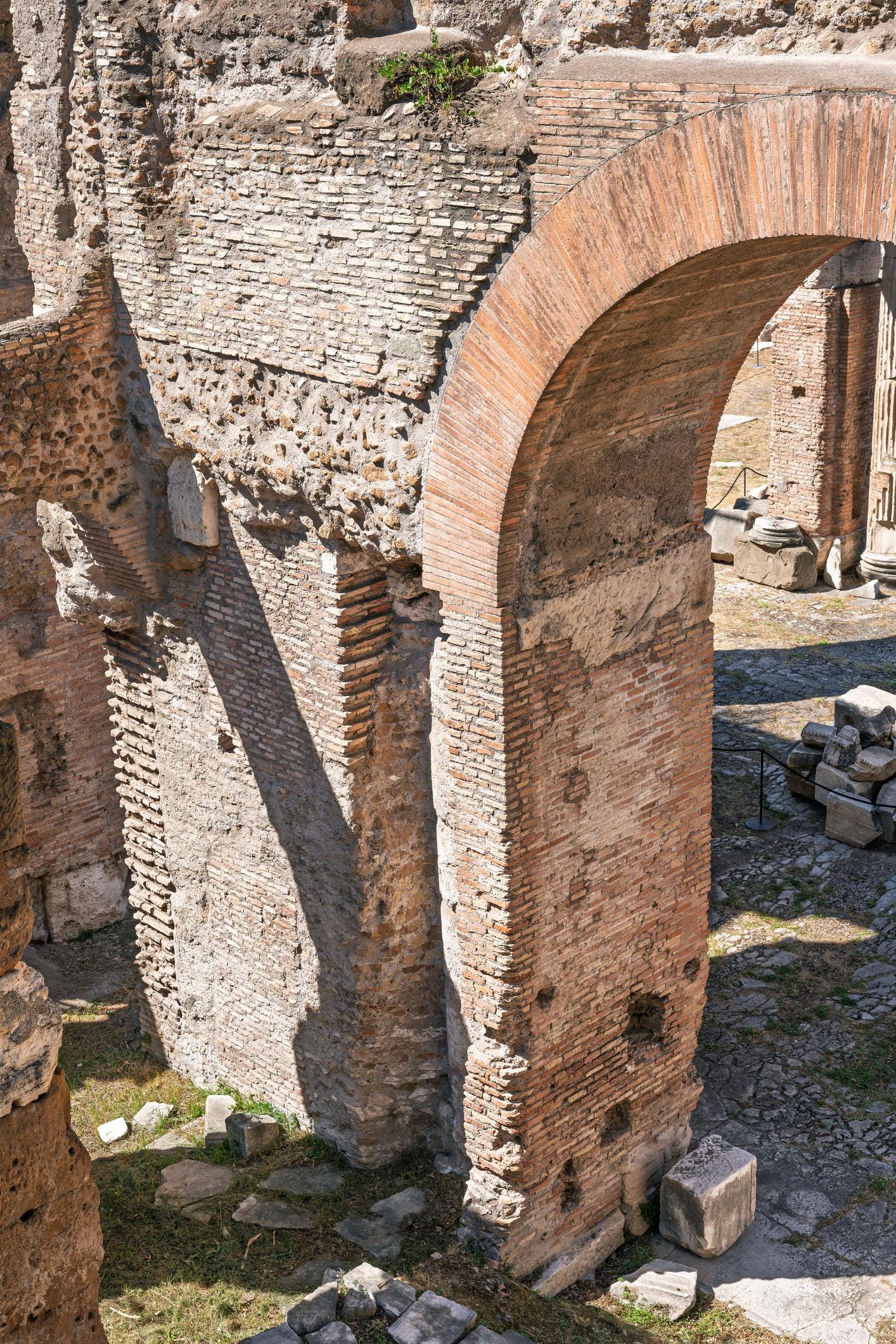
The surface is jagged. Broken bricks jut out at odd angles, their edges sharp. Small stones are locked in place like gravel frozen in old ice, some rough, others worn smooth.
It does not look impressive.
Yet this crude gray material built a Republic.
And then an Empire.
If you enjoy noticing small details like this in places where history still lingers, consider subscribing.
How the Romans Made Concrete
Roman concrete differed from modern cement. Its ingredients were simple:
Lime
Volcanic ash
Water
Broken bricks or chunks of stone
The vital ingredient was volcanic ash called pozzolana. This ash was abundant around the Bay of Naples near Pozzuoli.
Roman builders mixed lime with ash and water. A powerful chemical reaction began. The mixture hardened into a stone-like material that continued to strengthen over time.
This cement mixture was poured into wooden forms set between brick walls. Inside the forms, builders tossed in rubble — broken bricks, stones, and fragments of old buildings.
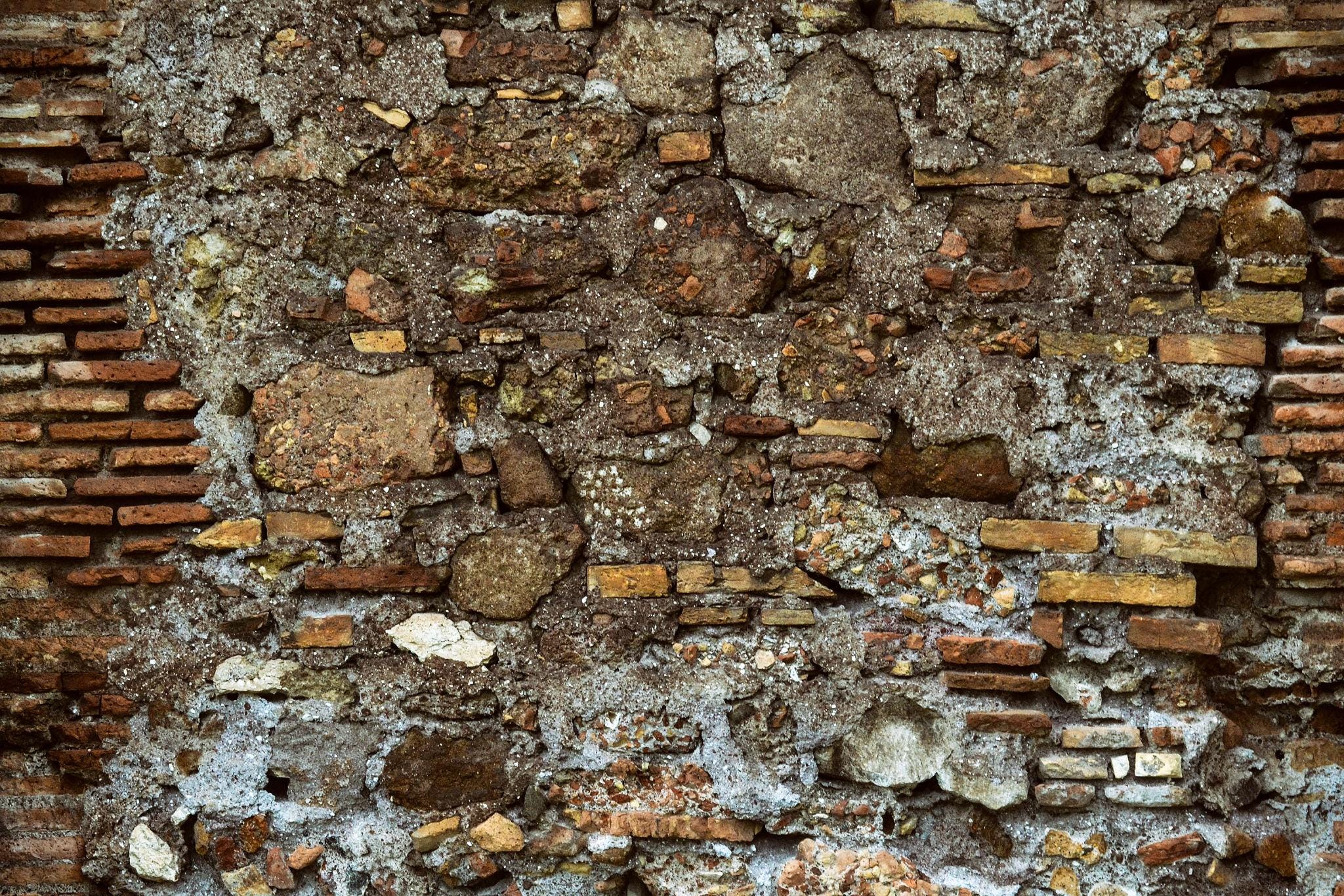
What resembles chaos inside Roman walls was actually careful engineering.
The rubble reduced weight.
The volcanic ash increased durability.
The lime bonded everything together.
The result was a building material strong enough to endure centuries.
Like the dome on the Pantheon - the largest unreinforced concrete dome in the world.
Look closely at many Roman walls, and the brick pattern appears careful and deliberate.
But those bricks are often only a thin skin.
Roman builders used triangular clay tiles pressed into wet concrete, creating a neat outer surface while the real wall hardened behind it.
The neat brickwork hides the rough gray core that actually holds the building up.
Roman concrete proved so durable that it was even used in seawater ports. When exposed to seawater, mineral crystals slowly form within the concrete, strengthening it even further.
That is why Roman harbor blocks still sit in Mediterranean ports today.
Romans probably never understood the chemistry.
But they understood the results.
The material is everywhere in Rome, including the Forum, once you know what to look for.
Palatine Hill
Behind the imperial palaces on Palatine Hill, many brick walls still stand tall after nearly two thousand years.
From the outside, elegance.
From the inside, rubble.
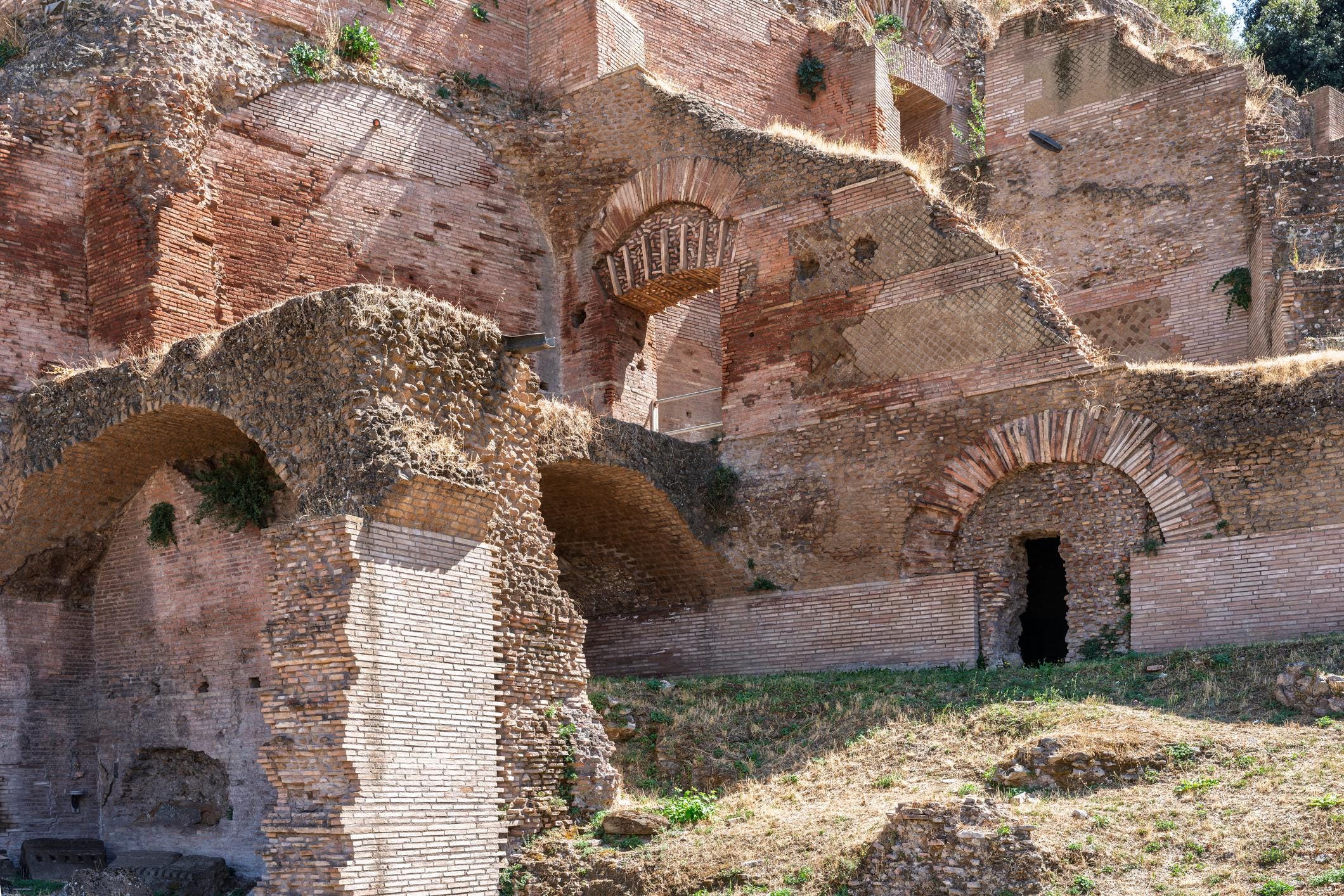
In several places, the brick facing has fallen away, exposing the real structure that gives these palaces their remarkable durability:
Chunks of stone
Broken brick
Volcanic ash mortar
It looks rough and chaotic.
But that rough core is where the strength of ancient Rome lies.
Colosseum Substructures
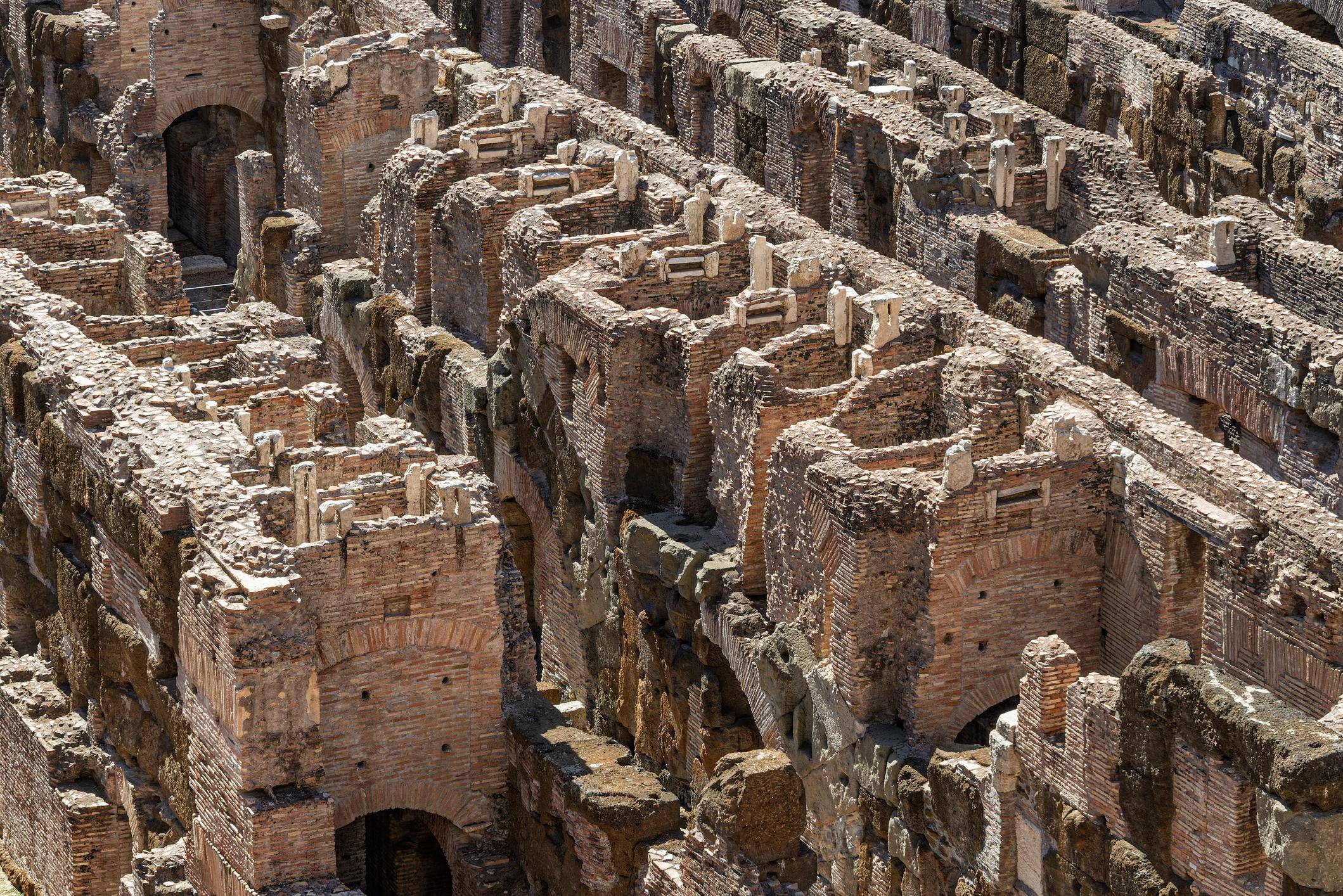
We see in the Colosseum how Roman master builders combined concrete, brick, and stone blocks.
The neat brick layers visible today are only the outer facing. Behind them lies solid poured concrete.
This hidden structure allowed engineers to build vast corridors and vaulted passageways beneath the arena floor.
These supports carried the weight of tens of thousands of cheering spectators above.
Rome created monumental architecture long before steel reinforcement existed.
The marble columns of Rome still draw our eyes.
But hidden behind many walls lies the rough gray concrete that allowed Roman buildings to stand for two thousand years.
Thanks for reading. If you enjoy essays exploring the hidden history of famous places, consider subscribing to Unpaid Observer to receive new pieces in your inbox.
One thing that still amazes researchers is that Roman concrete actually gets stronger over time, especially in seawater. Some Roman harbor structures have been sitting in the Mediterranean for nearly 2,000 years and are still intact.