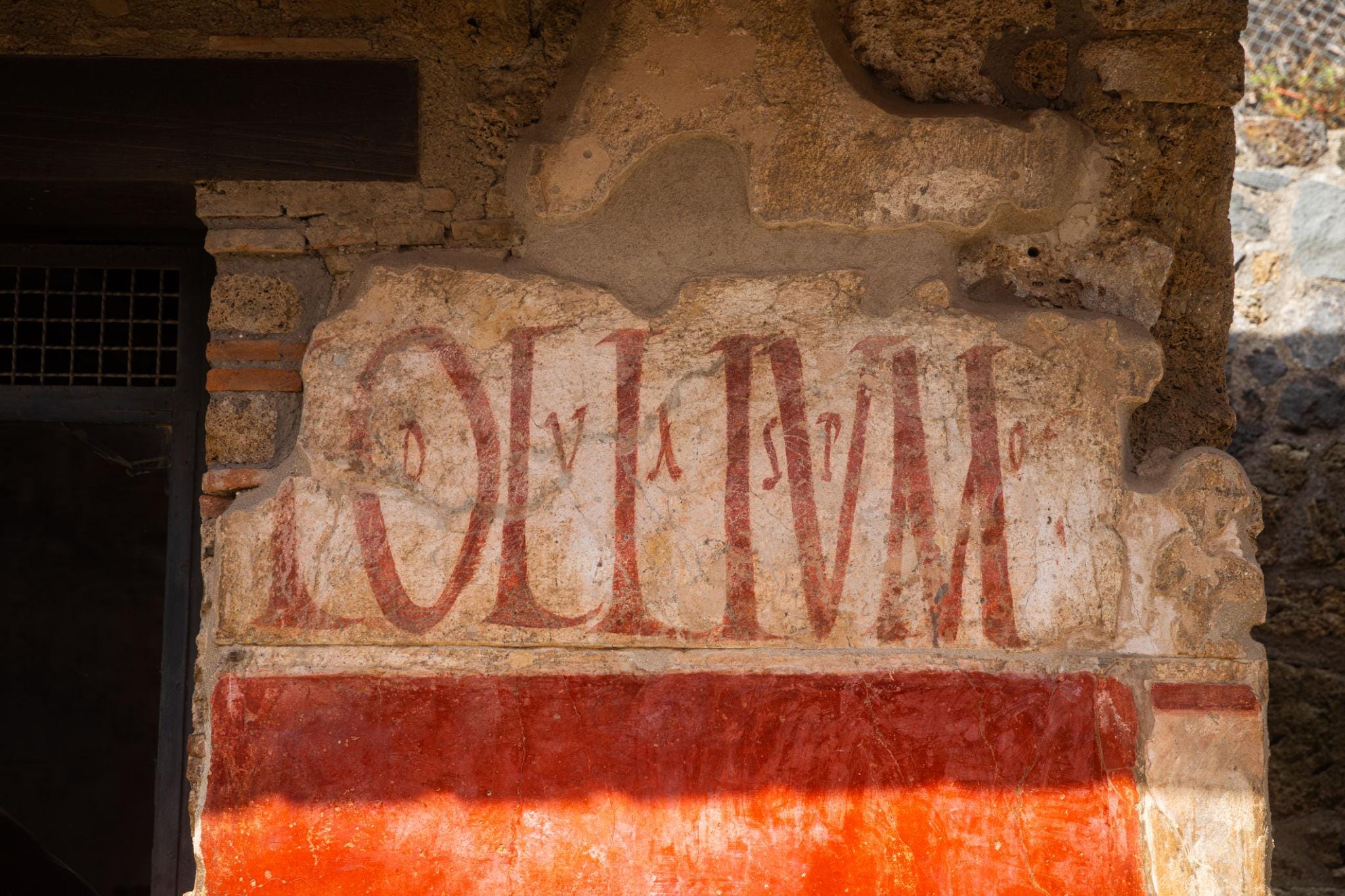
Painted lettering on a Pompeii wall. Alongside these official notices, thousands of residents also scratched their own graffiti into the plaster.
Walking through Pompeii today, it doesn’t take much imagination to picture the city on an ordinary day in 79 AD.
The streets would have echoed with sound.
Conversations drifting from open doorways. Laughter spilling from taverns serving conditum or spiced wine The clatter of carts over worn stone streets.
The smell of bread from bakeries. Garlic and olive oil.
And the sharp scent of garum — the fermented fish sauce Romans poured onto almost everything. Made by packing small fish, salt, and entrails into large casks, it fermented for weeks or months in the Mediterranean sun.
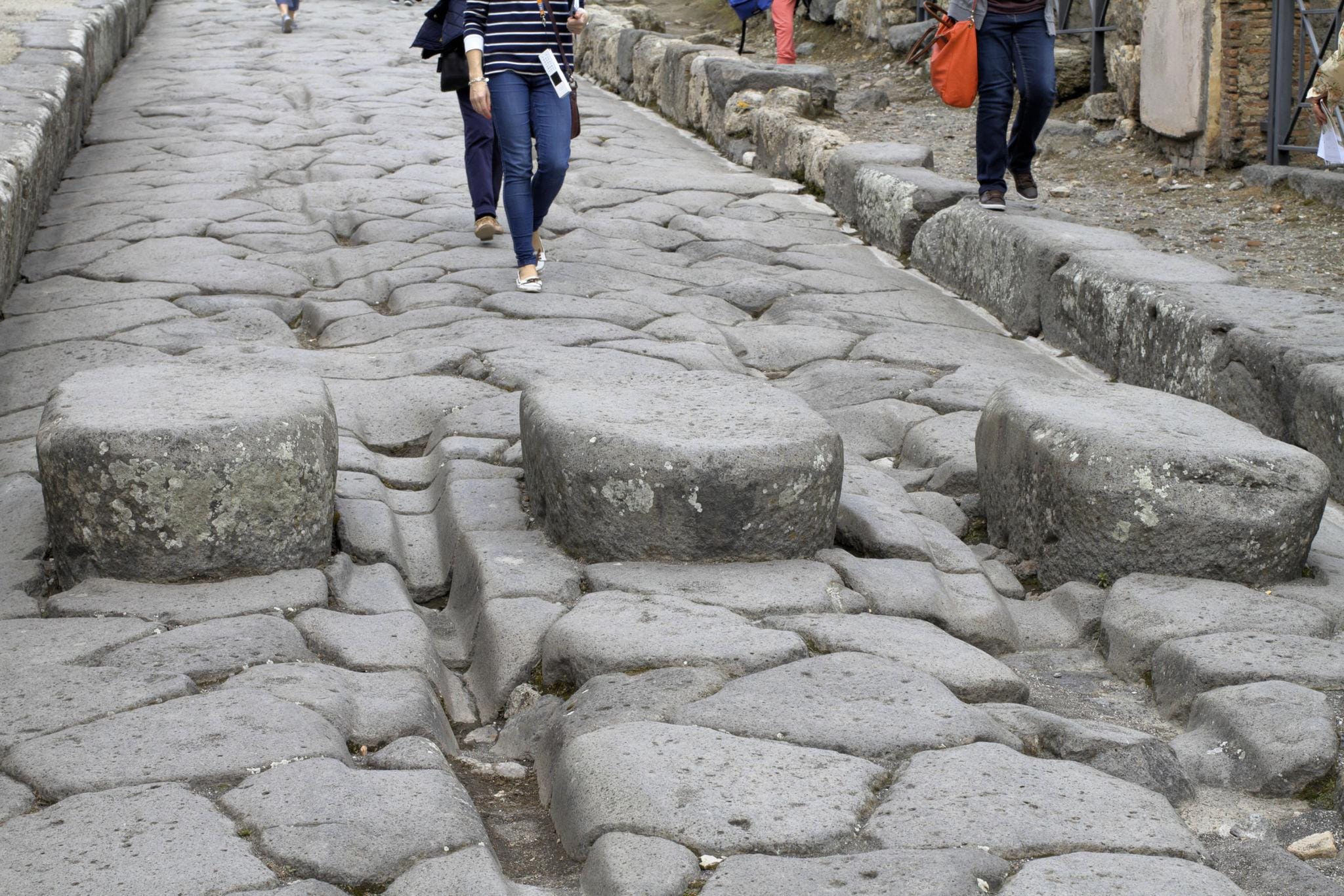
Pompeii’s stone streets still show the ruts carved by Roman carts nearly two thousand years ago.
Everywhere — people. Regular people.
At least 10,000 to 12,000 residents crowded Pompeii’s streets, along with traders, sailors, and travelers passing through the city’s gates.
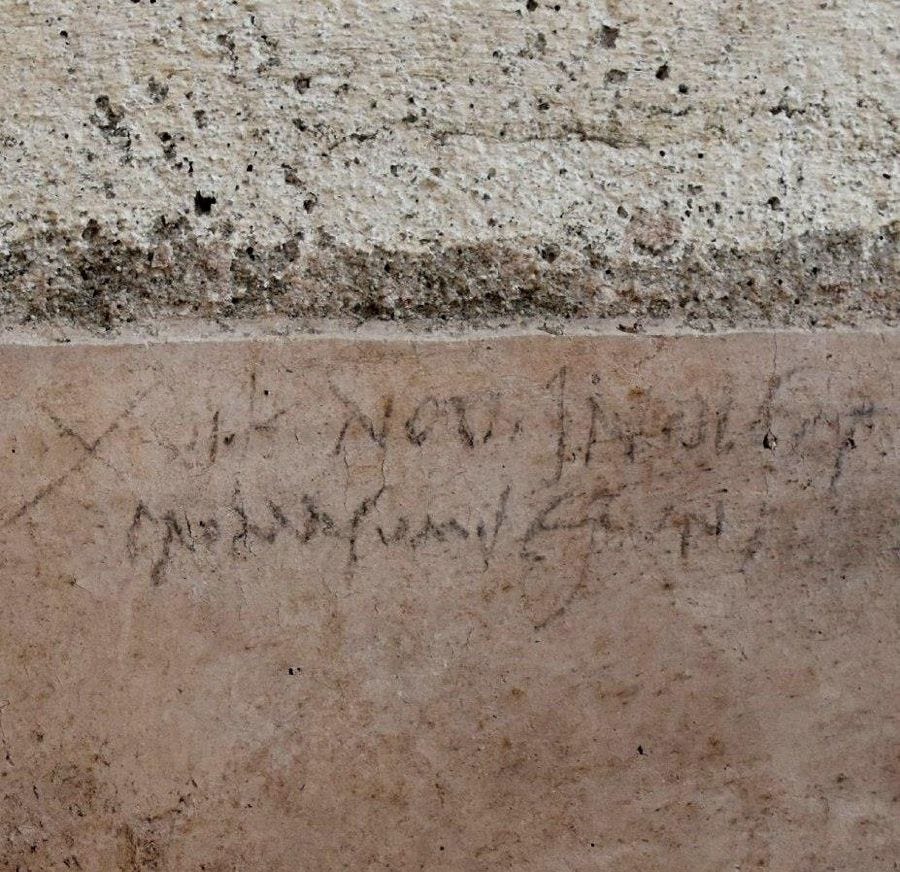
Look closely at the walls as you walk through Pompeii today. Scratched into the soft plaster are messages left by the city’s residents nearly two thousand years ago.
Thousands of them.
Some are advertisements or political slogans urging support for local candidates.
Others are jokes, insults, or declarations of love.
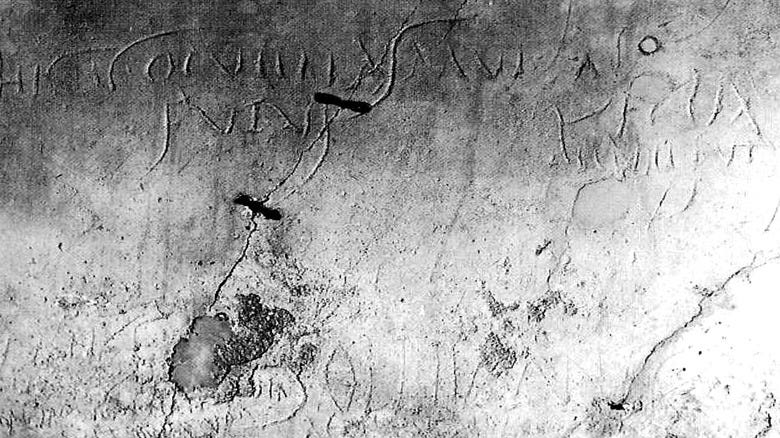
A Pompeii graffiti message accusing a man named Atimetus of getting someone pregnant. Many Pompeii inscriptions recorded personal gossip, insults, and romantic drama.
A few are blunt — and unmistakably sexual.
One inscription reads:
“Successus loves Iris, who does not care for him.”
Another is more direct:
“Weep, girls. My manhood has given you up.”
And one Pompeii resident left a message that would feel perfectly at home on a modern 7-11 restroom wall:
“Apollinaris, the doctor of Emperor Titus, had a good crap here.”
Elsewhere, graffiti praises favorite prostitutes, boasts about romantic victories, or simply announces that someone was there.
The ancient version of writing your name on a bathroom wall.
Some graffiti was even written while the plaster was still wet, which means it was likely done during construction or renovation. Ancient workers leaving notes on a freshly finished wall.
These messages were not written by poets or emperors.
They were scratched into plaster by ordinary Pompeiians: