
A Gladiator Game in Pompeii Turned Into a Riot
Before Rome’s great arenas, Pompeii’s crowds could turn violent.

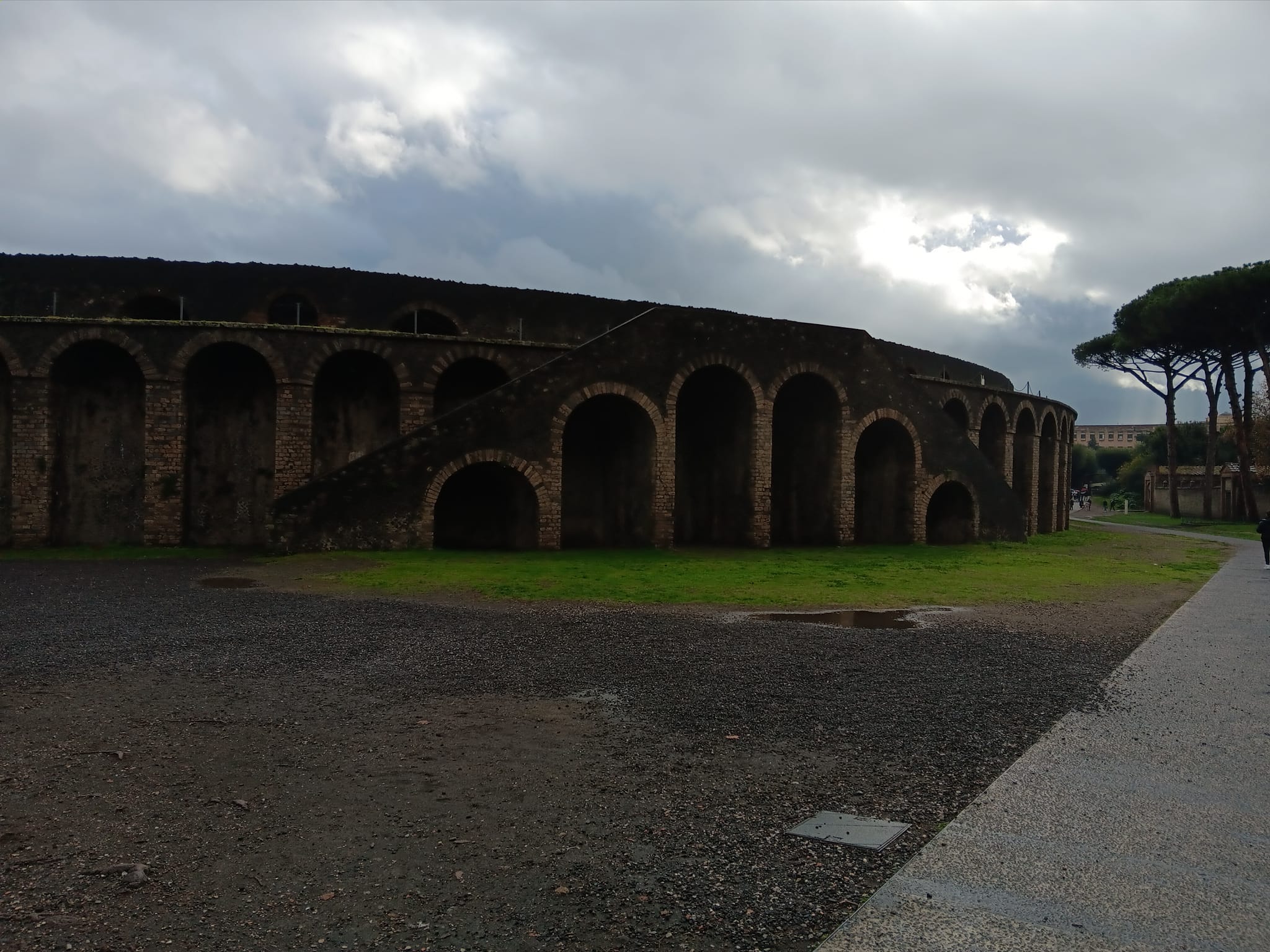
The Pompeii Amphitheatre, built around 70 BC — more than a century before the Colosseum.
It started as a game.
It didn’t stay one.
I stepped into the silent Pompeii Amphitheatre through a long tunnel, white gravel crunching under my shoes.
A few minutes earlier I had hurried across wet cobblestone streets, slipping past my tour group to see the place where Pink Floyd played to silent stone and two local boys during the filming of Pink Floyd: Live at Pompeii in 1971.
Standing in the center of the arena, I bent down and picked up a handful of gravel.
It was easy to imagine time rewinding.
Past Pink Floyd.
Past the tourists.
Back to a long afternoon in 59 AD, when a gladiator contest in this gray stone arena turned into one of the most violent stadium riots in the Roman world.
The people of Pompeii built this amphitheater around 70 BC, making it more than a century older than the Colosseum.
Nearly twenty thousand spectators once packed these stone tiers—more people than lived in Pompeii itself.
The arena would have been loud.
Shouting and chanting during the games.
When a gladiator was wounded, the crowd sometimes roared “Habet!” — He’s hit!
Vendors moved through the stands hawking wine, olives, bread, and nuts.
From the arena floor the spectators would have looked like a shifting patchwork of Roman clothing.
Men in short wool tunics, usually undyed off-white or light brown.
Wealthier citizens in white togas draped over their tunics.
Women in long stolas with colored shawls.
Children in shorter tunics running between the stone benches.
Bright colors would have appeared throughout the crowd—red, saffron yellow, and dark blue dyes were fashionable in Roman clothing.
Dust, wine, sweat, and the metallic smell of blood would have hung in the warm Campanian air.
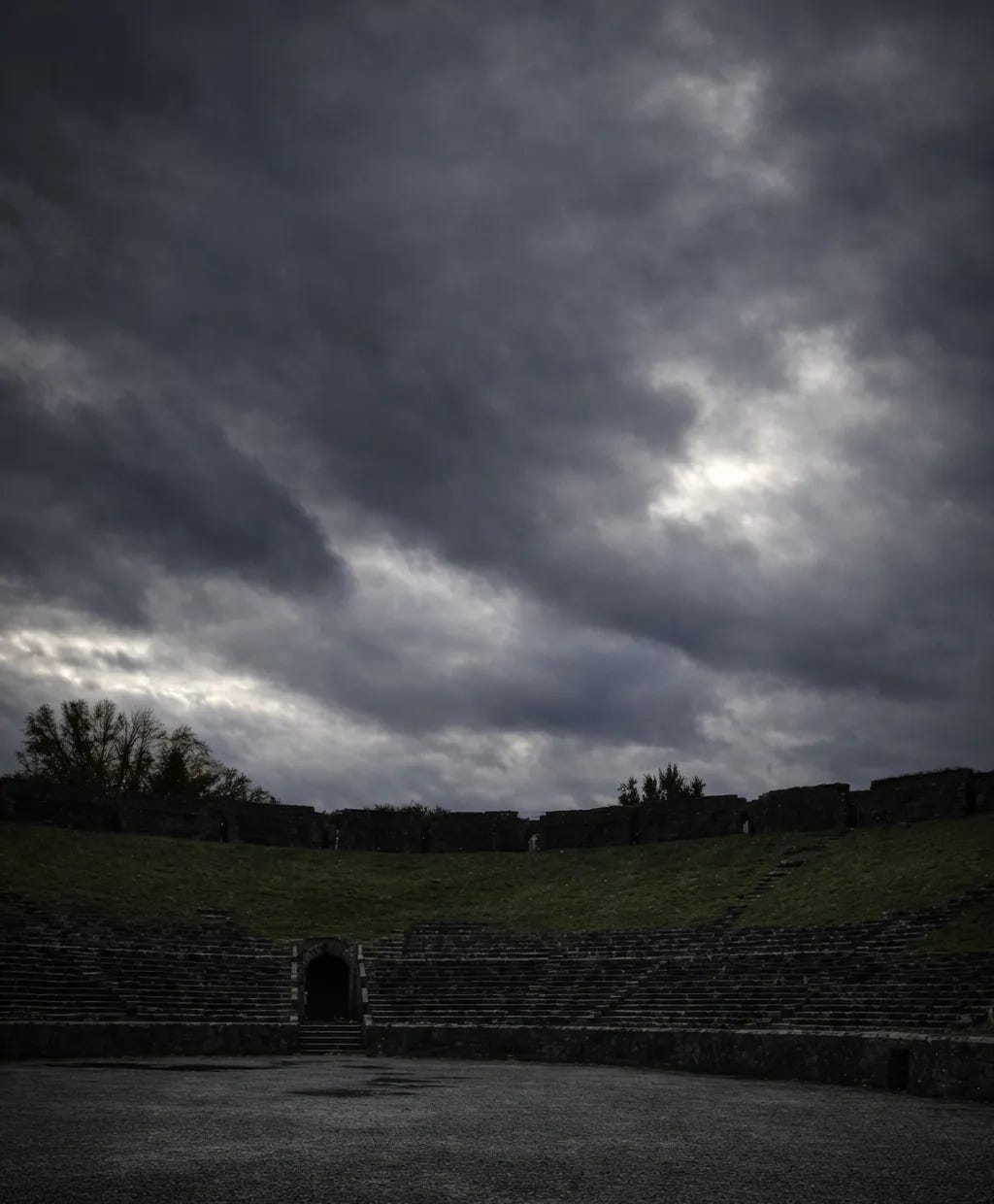
The arena today. Quiet stone tiers where nearly twenty thousand spectators once gathered.
Then, on one sultry afternoon in 59 AD, something in the crowd snapped.
Spectators from Pompeii had packed the amphitheater alongside visitors from the nearby town of Nuceria.
At first it was only insults.
Taunts shouted across the stone tiers.
Boasting and mockery.
But Roman crowds could turn ugly fast.
Soon stones flew.
Knives flashed.
Most of what happened here gets reduced to a line or two. There’s more like this if you want to follow along.
A fight erupted in the stands, spilling into the streets outside the arena.
The historian Tacitus wrote that many of the Nucerian visitors were badly wounded. Some returned home missing limbs.
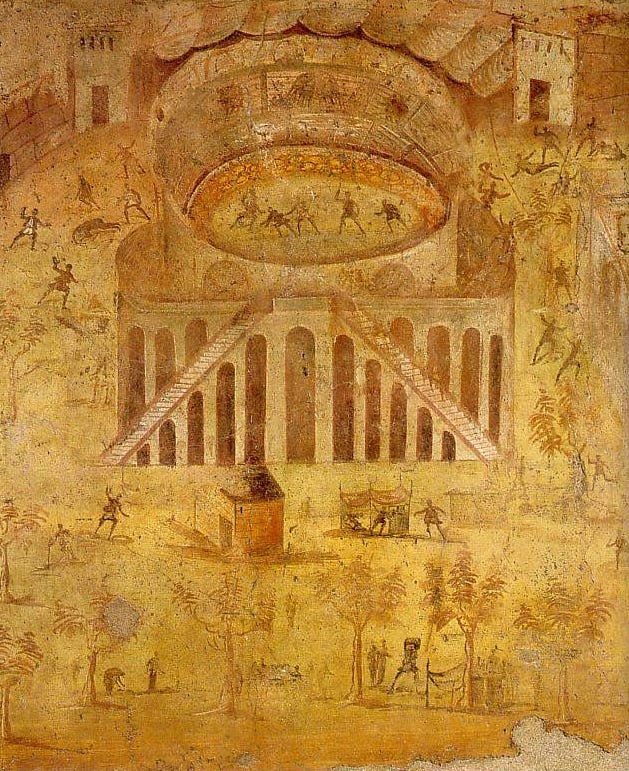
A fresco discovered in Pompeii showing the riot of 59 AD at the amphitheater.
The violence shocked Rome.
Even the emperor Nero became involved.
He came down hard on Pompeii.
Nero ordered a ten-year ban on games in the amphitheater.
The games’ sponsor, Livineius Regulus, was exiled from the city.
Today the amphitheater is hushed. Grass grows in the arena where blood once dripped into gravel and sand.
I stood there alone in the gray stone bowl.
Low clouds moved slowly over the silent stone tiers, now covered in moss.
It was hard to imagine twenty thousand shouting spectators, the crash of stones, and men fighting in the stands.
But for one bloody afternoon in 59 AD, this silent arena may have been the loudest place in Pompeii.
Read More Pompeii Stories
If you enjoyed this story from Pompeii, you might also like:
Pompeii Is Bigger Than You Think
A walk through the vast ruins of the buried Roman city — and why most visitors only see a fraction of it.
Pink Floyd or Pompeii?
Standing in the ancient amphitheater where Pink Floyd filmed their legendary 1971 concert.
Subscribe to The Unpaid Observer for short essays on history, travel, and the strange ways the past still echoes in places we can walk today.
If you’ve visited Pompeii, the amphitheater is one of the most powerful places in the city. You can almost hear the crowds.