
The Flame Rome Couldn’t Let Die
If it ever went out, Rome believed something had already begun to fall apart.

In the Roman Forum, a small flame was guarded for centuries.
If it ever went out, Rome believed something had gone wrong.
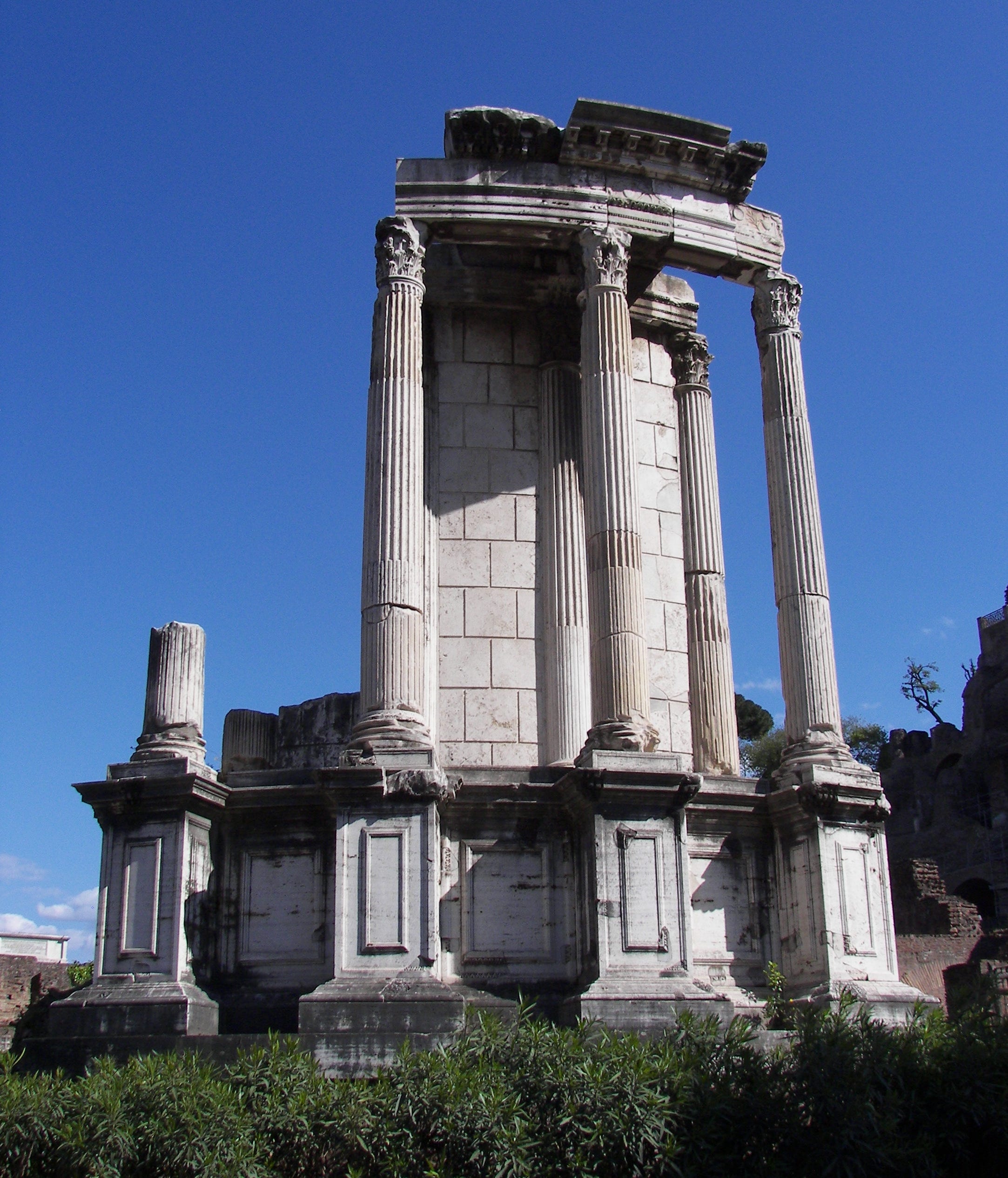
In the colorful Roman Forum, a small flame burned without end.
It didn’t look like much. Many passed it by.
But Rome believed the city's health and future depended on it.
The Temple of Vesta stood in the center of the Forum—quiet, almost overlooked.
Inside, a flame burned without end. Day after night. Year after year. It was meant to stay lit forever. The survival of Rome depended on it.
Vesta was the goddess of the hearth—the fire in every Roman home.
This was Rome’s hearth.
Outside, the Forum could be loud—trials, arguments, speeches, deals. Inside, something steadier.
The air would have been warm and dry from the constant flame. Smoke faint, but present. Years of ash clinging to the marble. A quiet, persistent heat.
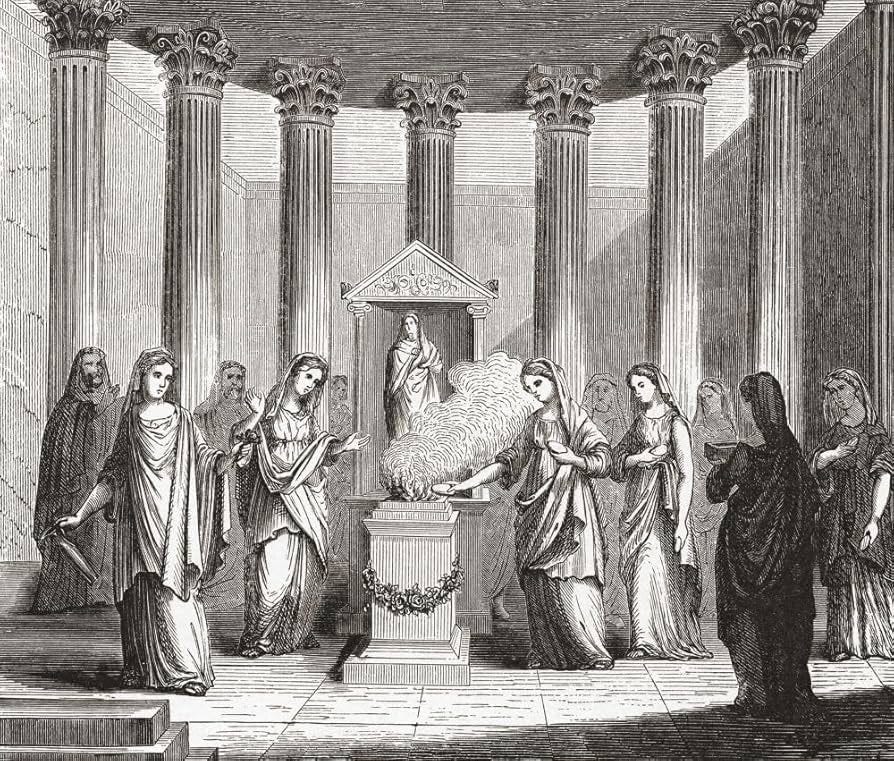
Six priestesses—the Vestal Virgins—tended the fire.
Chosen as children. Taken from their families. Sworn to thirty years of service.
They were selected by the Pontifex Maximus, the chief priest of Rome, in a formal public process.
They moved through the space in white, veiled robes. Deliberate. Watched. Known, but set apart.
Their duty was simple: Keep the flame alive.
Because the flame was not just a symbol. It was tied to the fate of Rome itself.
As long as it burned, the city was protected. Order held. Rome endured.
If it went out, something had failed.
Not just in the temple, but in the city.
It could be relit, but only using sacred methods, such as mirrors and sunlight.
Punishment for neglect could be severe. Failure was unthinkable.
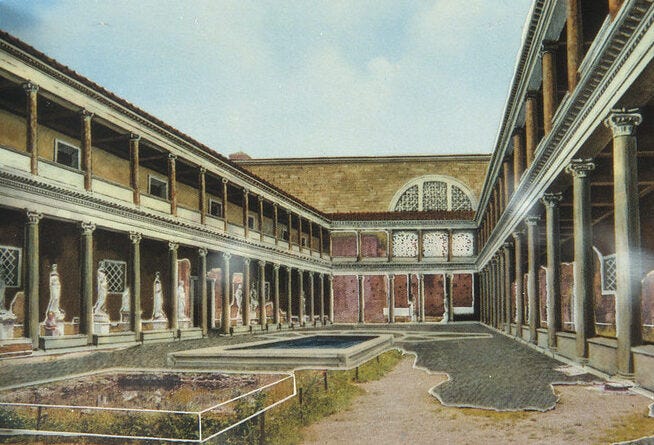
Just steps away, the House of the Vestals in co stood open to the sky—a quiet courtyard, pools of water, statues along its edges.
A different rhythm from the Forum. At night, the glow would have been visible from outside.
A constant light at the center of Rome. Never fully dark.
Today, the Temple of Vesta is easy to walk past.
A low circular foundation. A few slender columns, partially rebuilt.
Nothing that a crowd notices.
People move toward the larger ruins — the arches, the basilicas, the towering columns that photograph better.
You might glance at the fragmented remains without realizing what stood here.
Just steps away, the House of the Vestals still opens into a quiet courtyard — rectangular pools, worn stone, fragments of statues watching over an empty space.
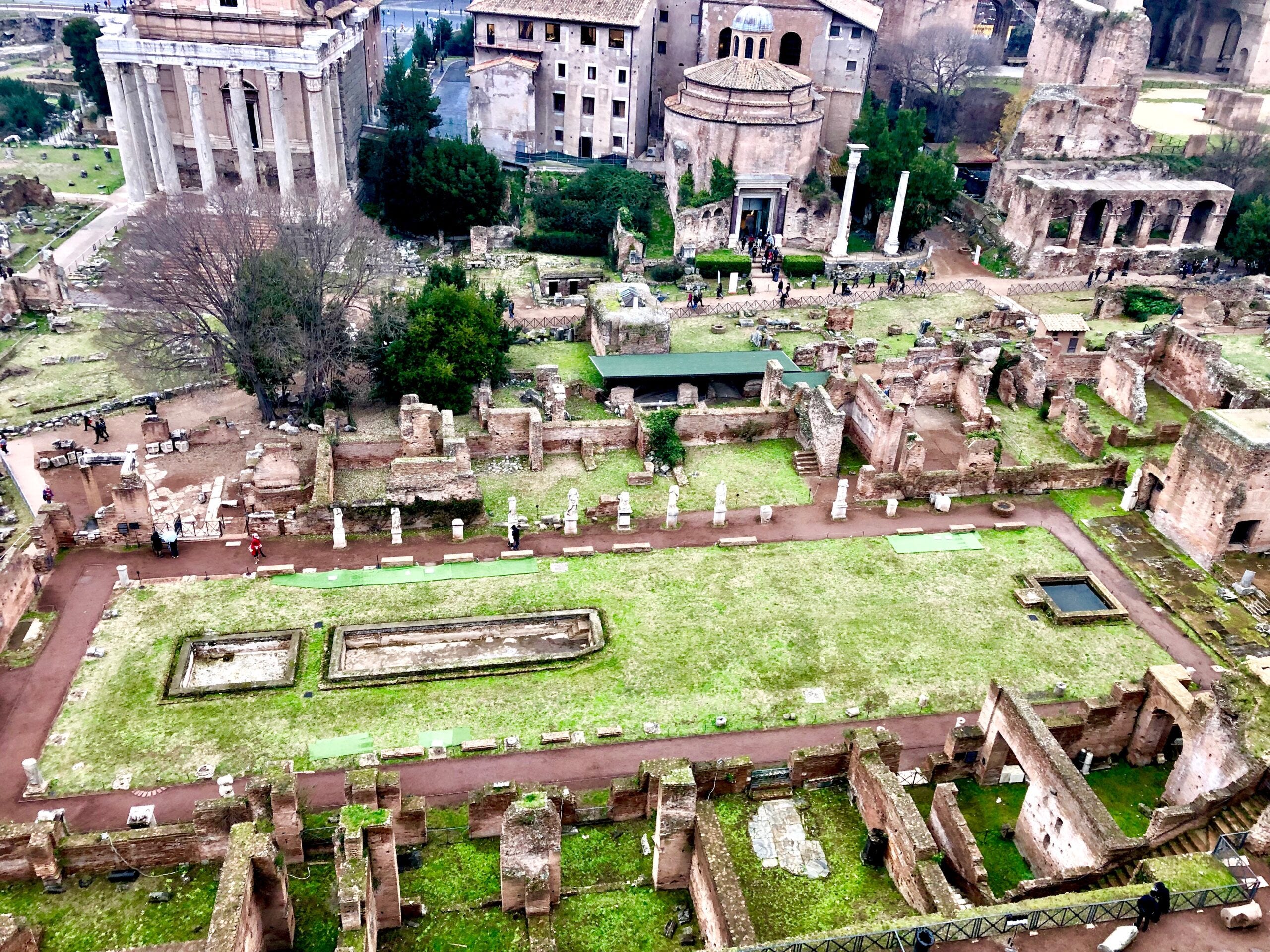
It feels separate from the rest of the Forum.
Slower. Quieter.
The air sits still there, warmer against the stone, lit by the summer sun.
Footsteps soften on the worn paths.
And if you pause—just for a moment—you can almost picture the glow that once filled this space.
A flame that never went out.
If you notice the details most people walk past, you’ll feel at home here.
I write about small things in old places—the ones that stay with you longer than the big ones.