
The Roman Forum Was Once Painted in Bright Colors — Not White Stone
Many temples in the Roman Forum were once painted in vivid reds, blues, and yellows — colors mostly erased by two thousand years of sun and rain.

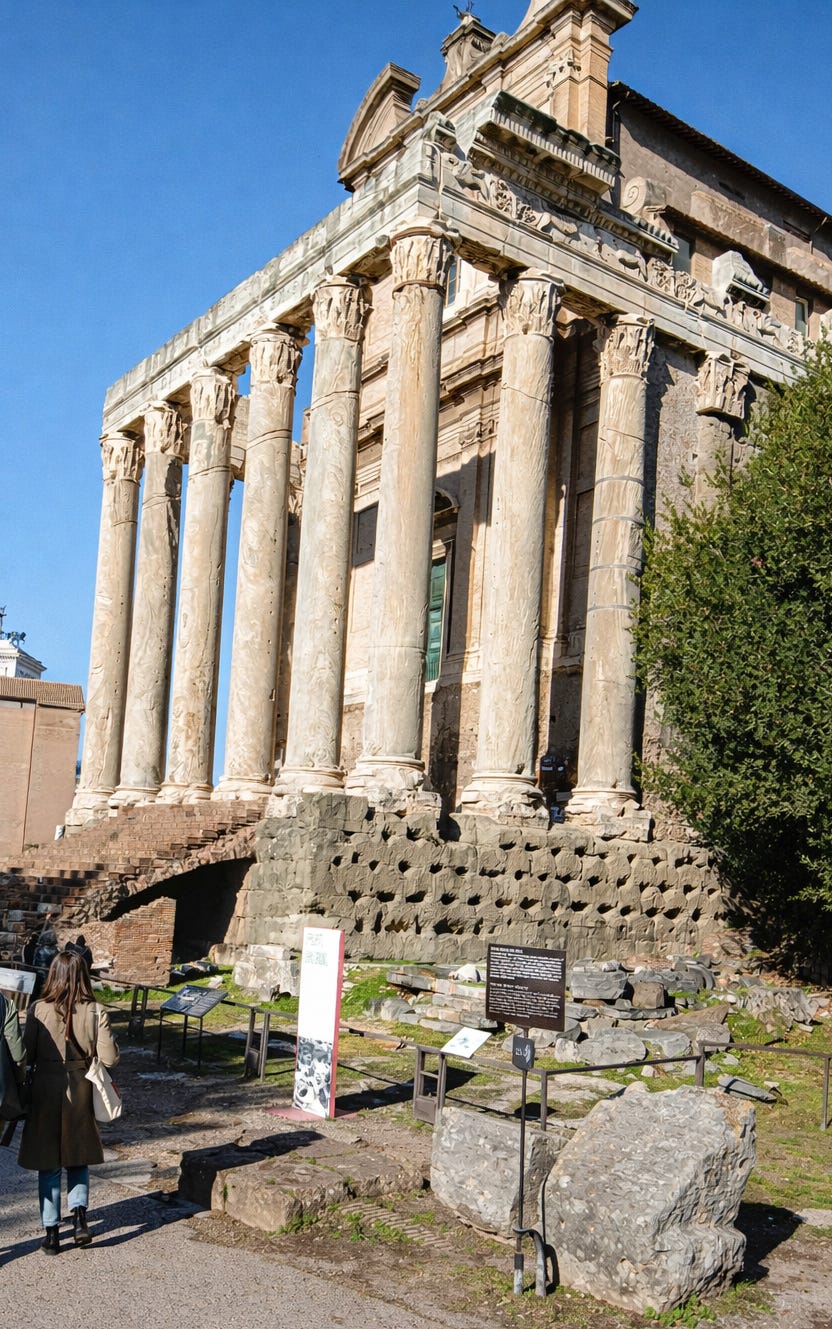
The Roman Forum today. The marble appears gray and white, but many buildings were once painted with vivid pigments.
I enter the Roman Forum through the Arch of Constantine and follow the gravel path down.
The Forum lies before me — magnificent, cracked marble ruins, glowing gray and white in the late afternoon sun.
Tourists weave past me. I stop and study the spectacular ruins lying ahead.
A trace of Italian perfume drifts from a young woman passing on my left.
For a moment, I imagine the smells of the Forum two thousand years ago.
Garum — fermented fish sauce from market stalls. A mixture of anchovies and sun-fermented brine. Romans poured it on nearly everything.
Cooking smoke from food stalls. Grilled sausages. Roasted meats. Lentil and chickpea stews simmering in clay pots.
Temple incense drifting through the air — frankincense and myrrh.
And of course, the smell of horses and cattle. Manure ground into the stone streets by feet, carts, and hooves.
I walk farther into the Forum, stopping beside several ruined columns lit by the sinking sun.
Today, we think of ancient Rome as a city of gray and white marble.
As if the Romans lived in a world of monochrome stone and marble.
But that isn’t what the Forum looked like.
The buildings were not just white and gray.
Many columns, temples, and statues were painted with bright pigments.
Red.
Blue.
Green.
Yellow.
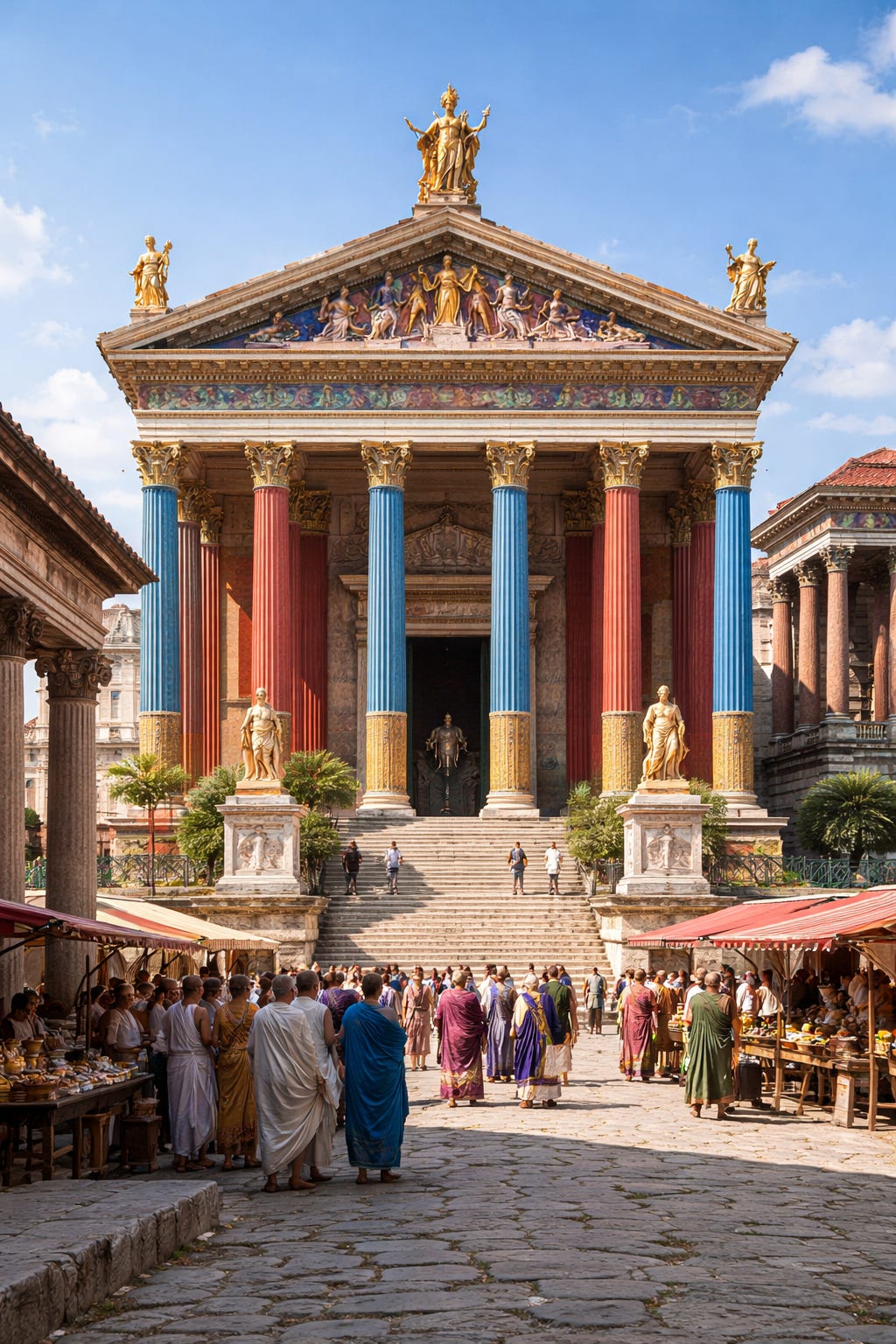
Many temples in the Roman Forum were once painted with vivid pigments. Most color faded after two thousand years of sun and rain.
The Rome we imagine — gray marble and silent ruins — never really existed.
The real city was painted in color.
Archaeologists are still discovering traces of those pigments today: cinnabar red, Egyptian blue, yellow ochre, microscopic flecks clinging to marble that now looks bare.
Egyptian Blue
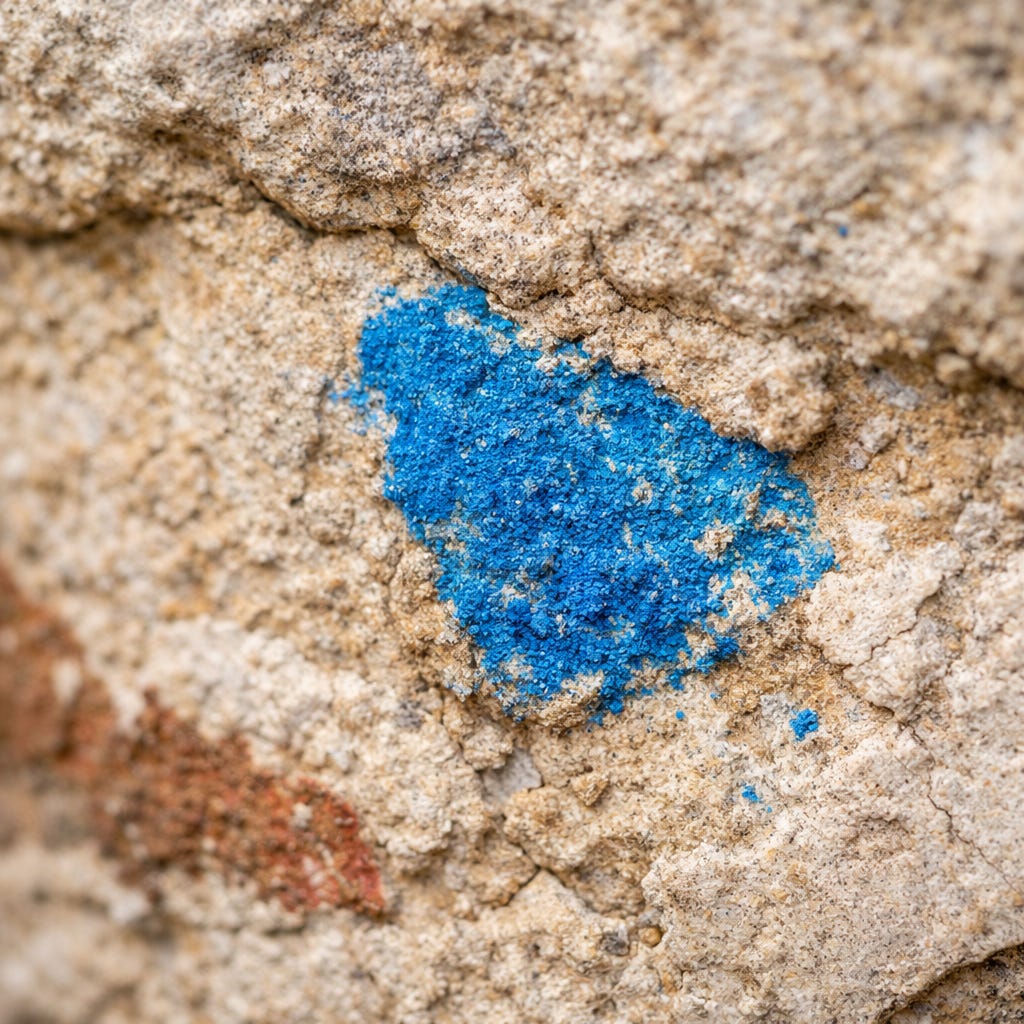
Egyptian blue pigment was one of the most prized colors in the ancient Roman world.
Some of these colors required surprising effort to produce. Egyptian blue, one of the most prized pigments in the ancient world, was not a natural stone at all.
Roman craftsmen made it by heating sand, copper minerals, limestone, and soda together in high-temperature kilns.The result: a vivid blue powder that workers mixed into paint and applied to temples, statues, and walls across the city.
Producing the pigment required skill, fuel, and time, which meant color itself carried value.
In places like Pompeii, the colors survived far more vividly.
Deep crimson walls, bright blues, warm yellows. Temples and statues across Rome were once painted in similar shades. Columns highlighted with color. Sculptures detailed with pigment. In sunlight, the Forum would not have looked like a field of pale stone.
It would have burst with color.
Almost alive.
Standing in the Forum today, the colors are gone.
It is easy to forget how much labor went into them.
But if you look closely at the marble, the ancient city once buried still whispers what it once was.
Not gray.
Not white.
But alive with color.
Like a faint trace of Italian perfume drifting through the ruins, the past is still here.
If you stop long enough to notice.
More in the Rome Series: see all essays about the Roman Forum, the Pantheon Oculus, and the Pantheon doors.
Subscribe for more short essays exploring the hidden details of famous places and the echoes of history they hold.
And it wasn’t just buildings.
Roman statues were painted as well....skin tones, hair color, even eye pupils.
Most of that pigment disappeared over the centuries, which is why we assume the ancient world loved bare white marble.