
The Old Wells of Venice Are Still in Use
Most people walk right past them - and never realize what they are.

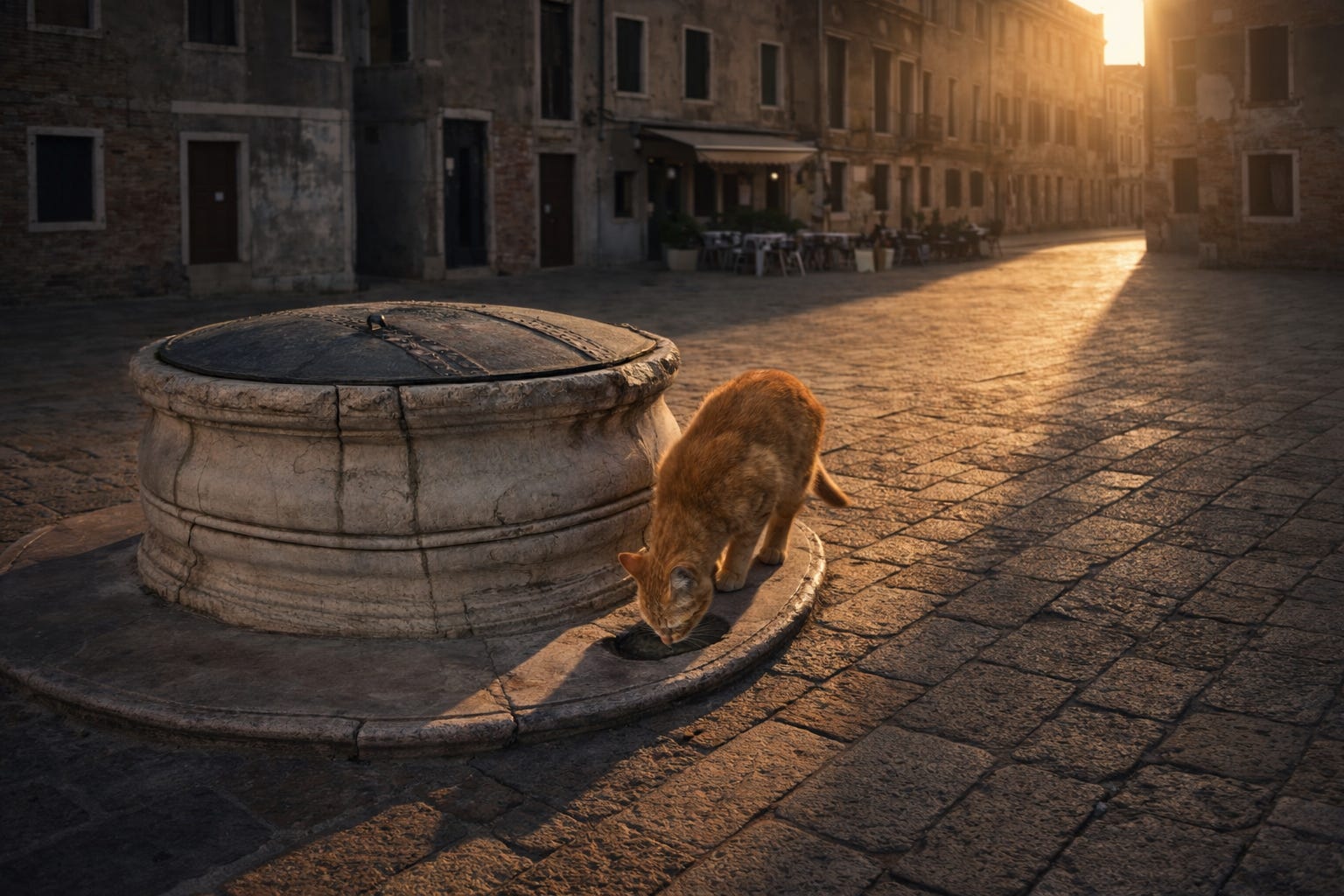
I step into a small Venetian plaza moments after sunrise, before the city stirs.
The cobblestones beneath my sandals are worn smooth, shifting slightly underfoot. Buildings press in on all sides, their colors softened by centuries of sun, wind, and rain — faded reds, pale yellows, chipped plaster. The morning light is just beginning to touch them.
The air carries a faint mix of espresso and brackish water — the lagoon rising from the wood pilings beneath the city, softened by the cool dampness of the stone.
In the center sits a stone well — quiet, easy to overlook. Carved from dense Istrian stone, its surface is worn smooth by centuries of hands, buckets, and passing water.
At first, it just looks like worn stone.
Then you notice the water — and the cats that gather around it.
For centuries, they were the city’s primary source of fresh water. Rain fell into the square, filtering through layers of sand beneath the stones before collecting in a cistern below. The carved wellhead protected it. Wooden buckets were lowered daily. Lives depended on it.
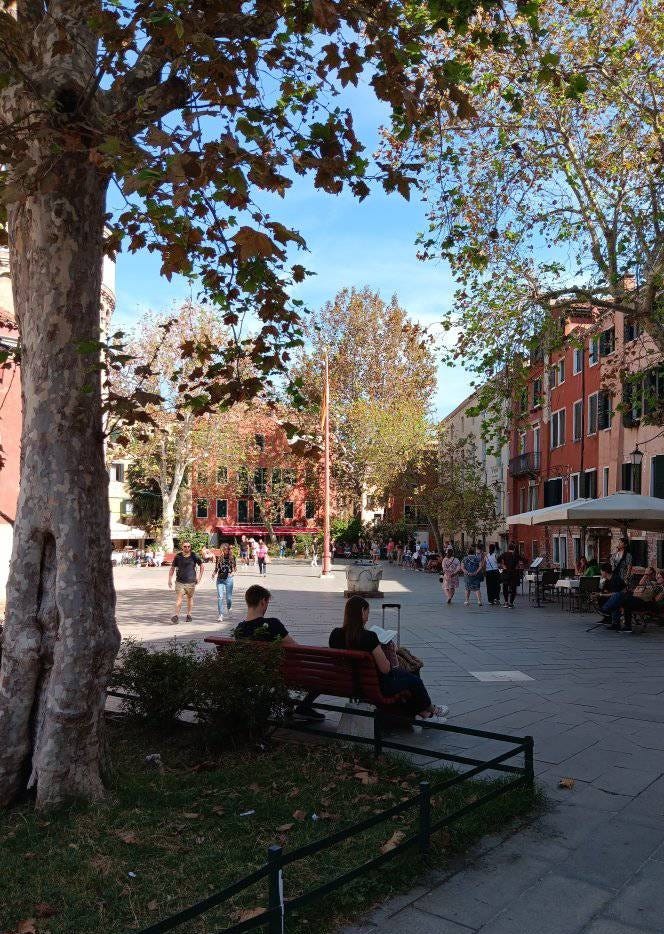
Standing in the plaza in the early morning, with the sun just peeking over the brightly colored buildings, I hear almost nothing. No rushing water. No crowd.
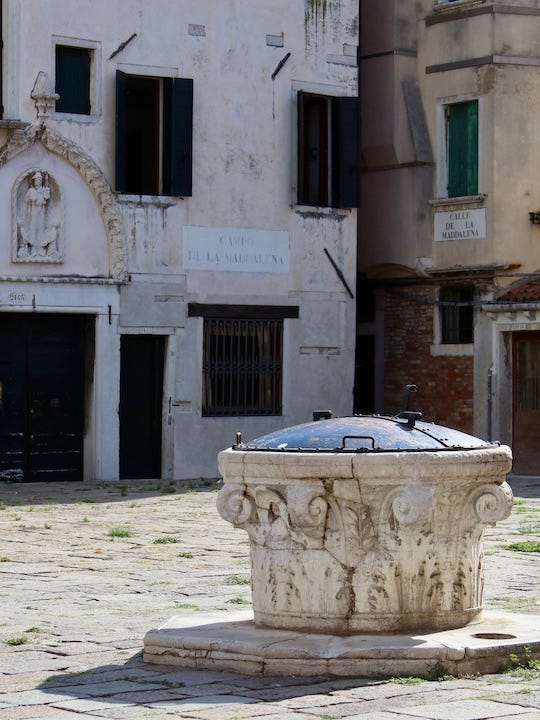
Just silence.
The stone at the base of the well dips slightly, worn down by centuries of use. Water gathers there in a shallow, uneven pool — easy to miss unless you’re looking.
Cats know it.
And always have.
No one points them out. No sign explains the cats’ presence. But they’re here, moving along the edges of the square, padding silently between shadow and light, pausing near the stone.
I stop.
At the base of the well, a cat laps quietly from the shallow pool, its tongue quick and precise. It doesn’t look up. No one disturbs it.
For centuries, Venice depended on cats more than most people realize.
A dense trading city — grain, ships, narrow passages — was an ideal place for rats. And where rats thrived, disease followed. Cats kept that balance. They weren’t simply pets.
They were part of the system.
No one says the wells were built for them.
But the worn stone, the pooled water, the quiet tolerance of their presence — it’s hard to believe any of it is entirely accidental.
Once you see it, you start to understand how the city actually worked — not just in grand buildings and famous canals, but in small, practical details.
A shallow dip in stone.
A bit of water.
A cat that still knows exactly where to find it.
More pieces like this → Unpaid Observer
I write about the details most people walk past.
Subscribe here:
The best part is how ordinary it feels—like it’s always been this way.