

Walking the cobblestone streets of Pompeii today, it might be hard to imagine the smell of fresh bread floating through the streets of this ghost town.
Two thousand years ago, the mouth-watering fragrance of wood smoke and warm bread likely drifted through the narrow alleys and streets of this ancient community.
Clouds of ground wheat flour probably hung in the air as well.
Bakeries were scattered throughout Pompeii. Archaeologists have identified at least 30 bakeries in the city — a remarkable number for a town with roughly 10,000–12,000 residents.
Bread was a daily staple for the rich, the poor, and everyone in between.
What Bread in Pompeii Cost
Prices varied, but historians believe a common loaf cost one or two asses. The as was a small Roman bronze coin used for everyday purchases.
These coins were heavy and substantial in a rough, callused Roman hand — heavier than most modern coins. They often bore the emperor’s face on one side and temples or gods on the other.
Their edges were worn smooth from years of passing from hand to hand, and they might still be warm from a small leather pouch or purse.
A typical Roman soldier or laborer might earn one denarius per day — about sixteen asses.
Bakers ground grain each day on large stone mills shaped like hourglasses. Some of these mills still stand in Pompeii today — massive gray stones worn smooth from years of grinding wheat into flour.
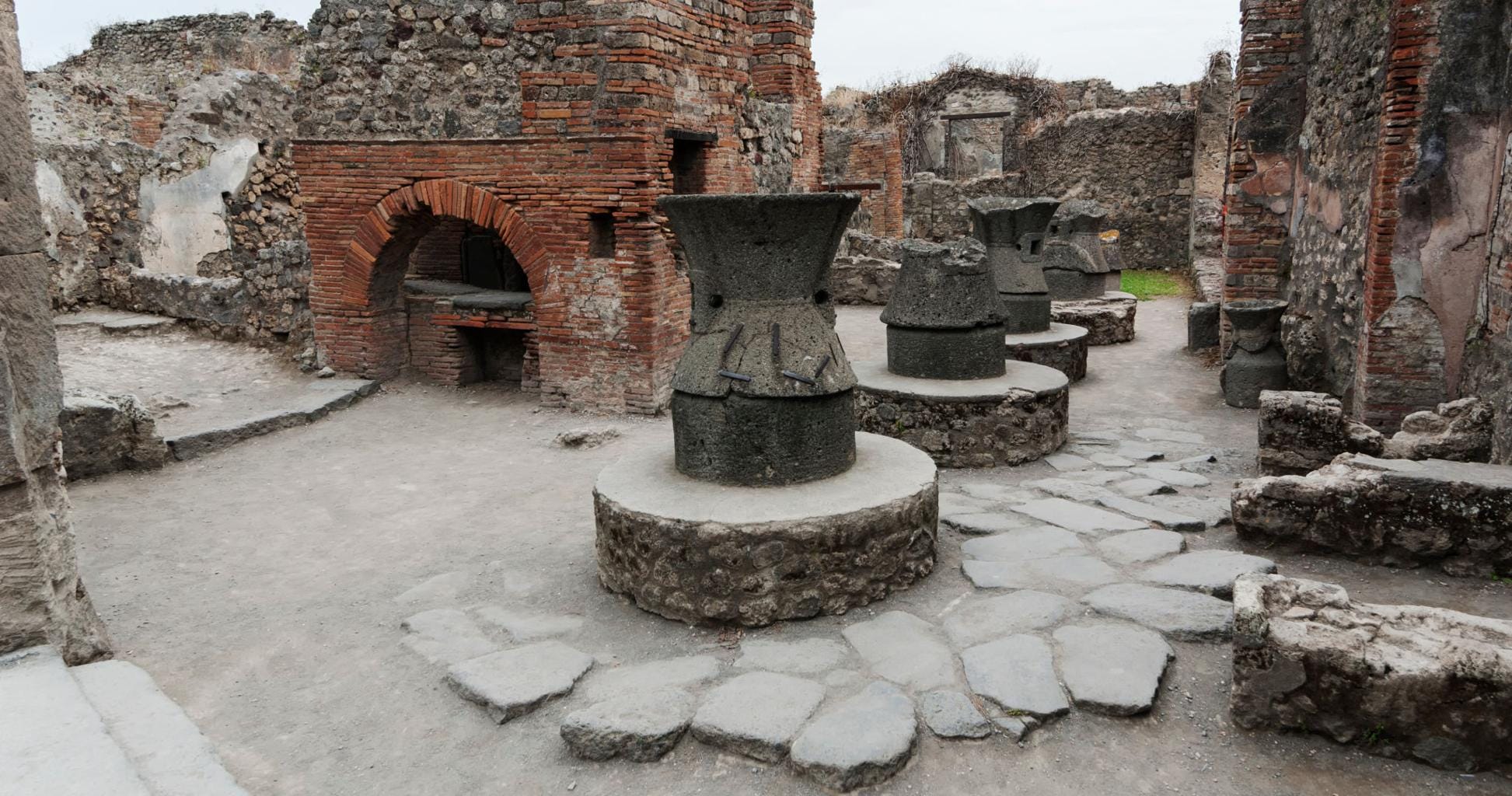
The mills were usually powered by donkeys or mules, and sometimes by slaves. The animals walked in slow circles for hours, steadily turning the heavy stone and crushing grain into powder.
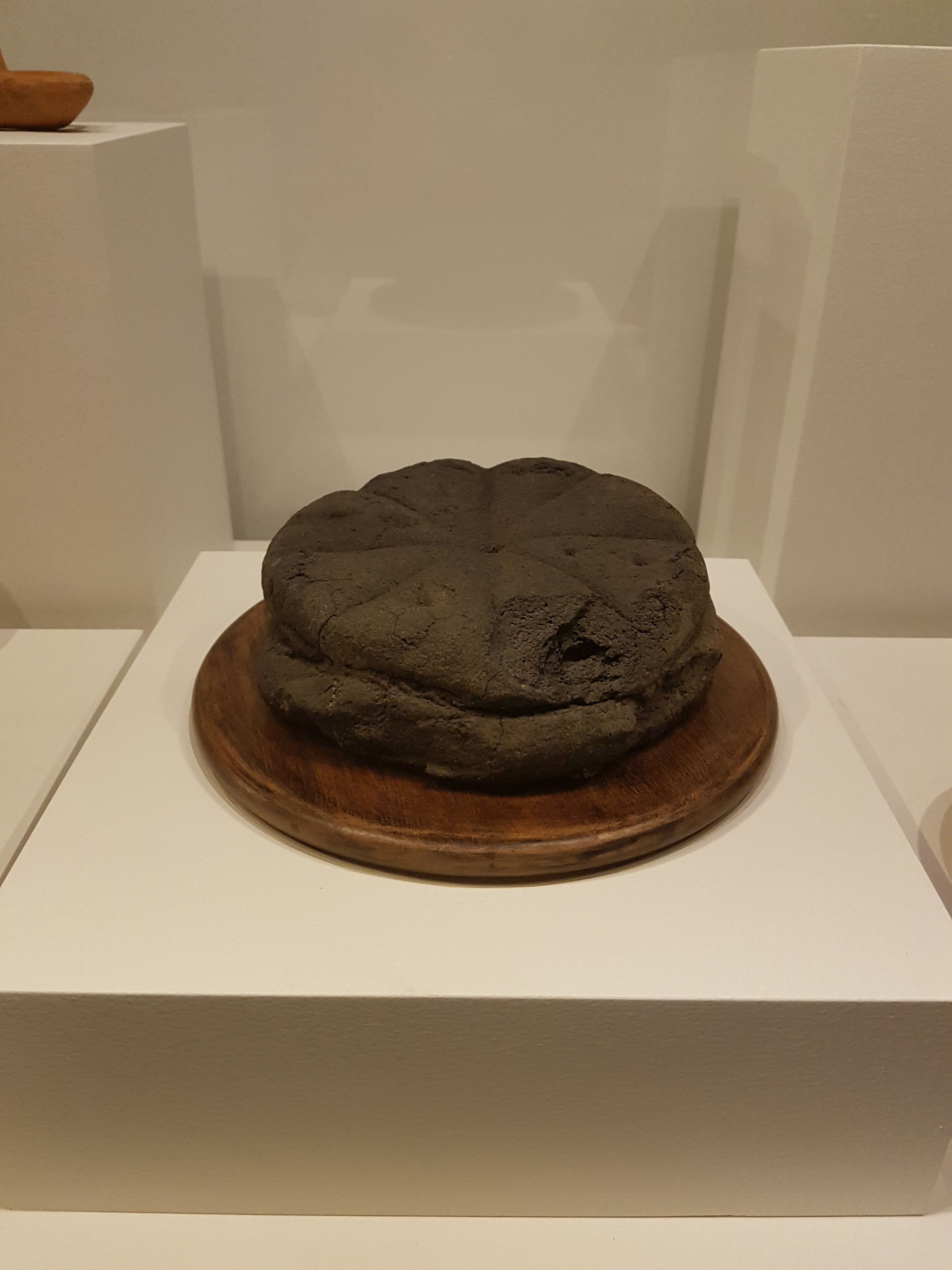
Pompeii bread had a distinctive shape. One of the most fascinating discoveries in the city has been carbonized loaves of bread, preserved when ash and debris buried Pompeii during the eruption of Mount Vesuvius in 79 AD.
The loaves were round and divided into eight wedges. Bakers tied the dough with string before baking so the bread could be easily separated once it was finished.
After baking, the loaves were removed from the ovens with long wooden paddles. Bakers often stamped the bread with seals identifying the bakery.
These stamps helped ensure:
proper delivery
bakery branding
accountability for quality
One loaf discovered in Pompeii carries the stamp:
“Celer, slave of Quintus Granius Verus.”
Bread ovens still survive in the preserved city. Many bakeries had large brick ovens where loaves baked over wood fires.
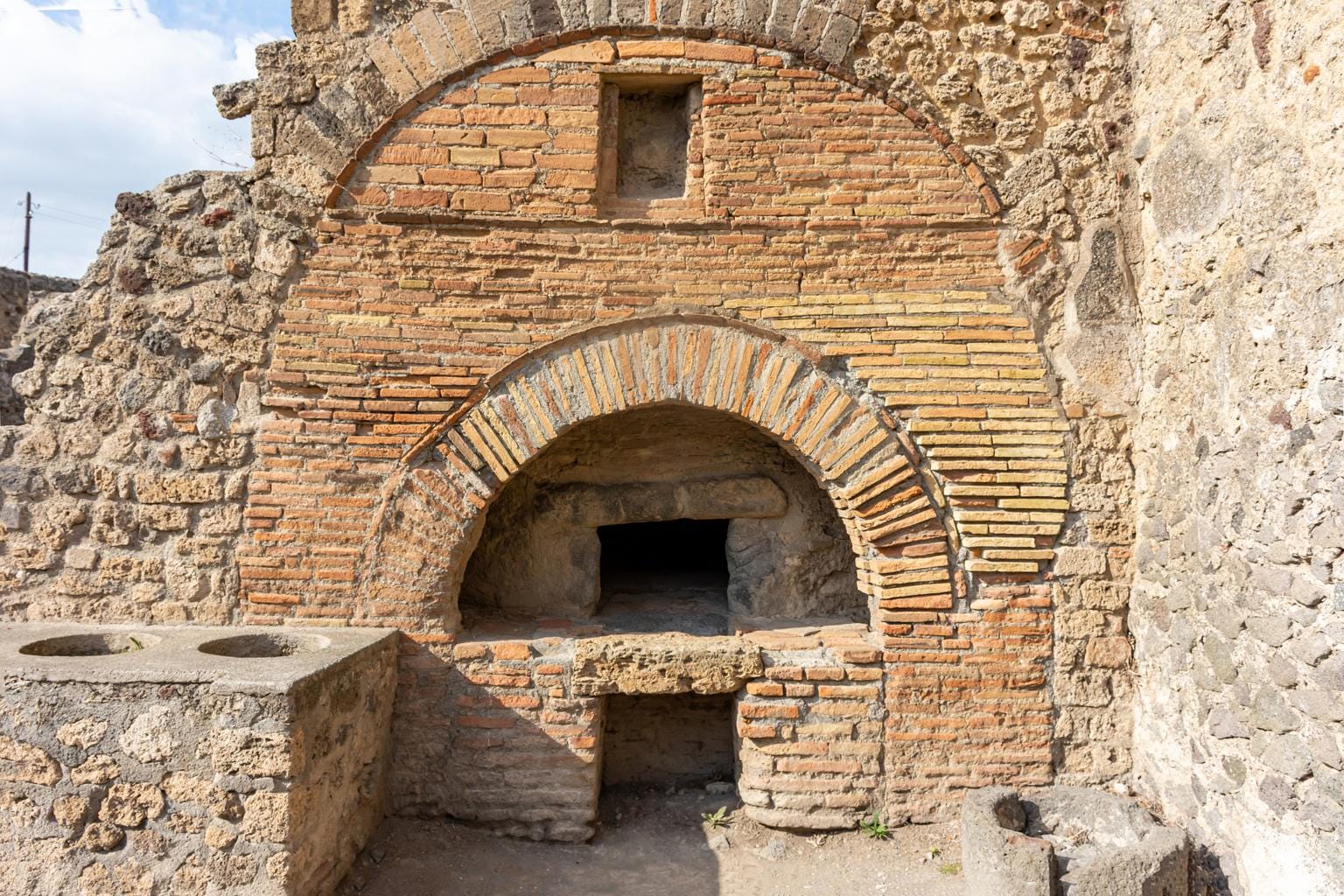
In one Pompeii bakery, archaeologists discovered dozens of loaves still sitting inside the oven.
The baker had likely just finished a batch when Mount Vesuvius erupted, sending a massive plume of ash and smoke high into the sky above the Bay of Naples.
Nearly two thousand years later, those loaves still survive — blackened, but unmistakably bread.
Enjoy exploring daily life in the ancient world?
Subscribe to Unpaid Observer for more short essays on Pompeii, Rome, and the small details of everyday life in the past.
This is fascinating!
They were still in the ovens when Pompeii was buried. Burned, but intact — you’re looking at a moment that never got finished.