
The 192-Meter Olympic Race Was Won Before the Finish Line in Olympia
Not at the Finish Line — But by a Judge Watching from the Side

In ancient Olympia, the 192-meter race wasn’t decided at the finish line.
A judge standing to the side chose the winner before the runners even stopped.
You walk into the original Olympic stadium in Ancient Olympia —
silence, dust, and a warm breeze.
Through the white and gray stone passage set into the hillside long ago,
into the open light— as runners once did. On foot. Naked. Coated in oil.
Silent today.
But two thousand years ago —
a roaring mass of thousands,
clothed in simple tunics and cloaks.
Waiting to see who would wear the olive wreath —
the fastest man.
They came from across the Greek world — on foot, by horse —
and entered through this same arch.
Free Greek men, gathering every four years under a sacred truce.
Spartans. Athenians. Men from Elis and nearby Pisa.
Warm, sandy soil shifts under your feet.
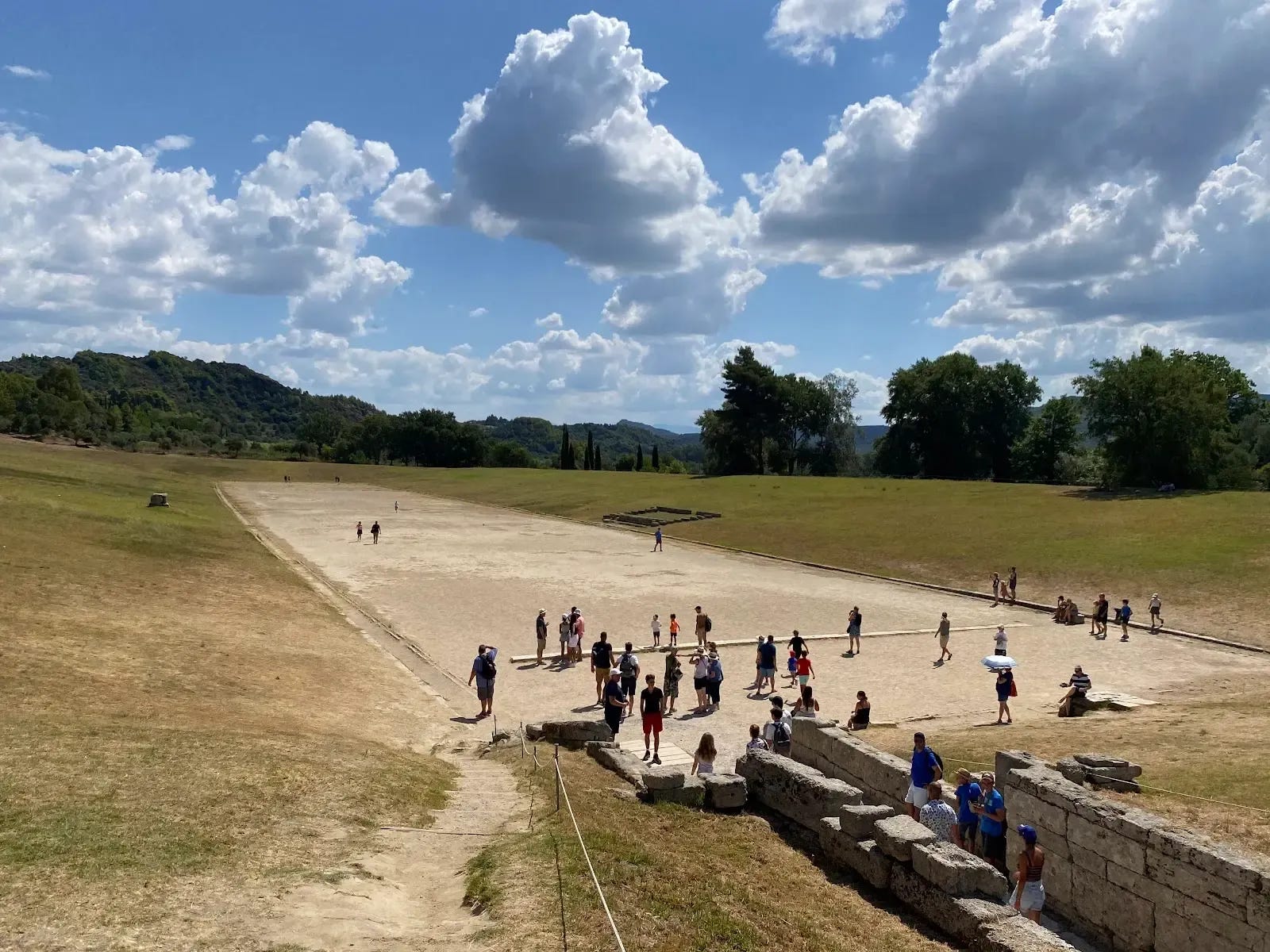
The race was 192 meters - one length of the track.
A stadion.
The runners were naked and coated in oil to hold off the dust,
to catch the sun.
But the race wasn’t decided on the sandy track.
It was decided from the side.
On the right bank, a judge stood in a simple stone space.
He would have been from Elis — the city that administered the Games.
From above, you can still make it out —
a small break in the line of the track.
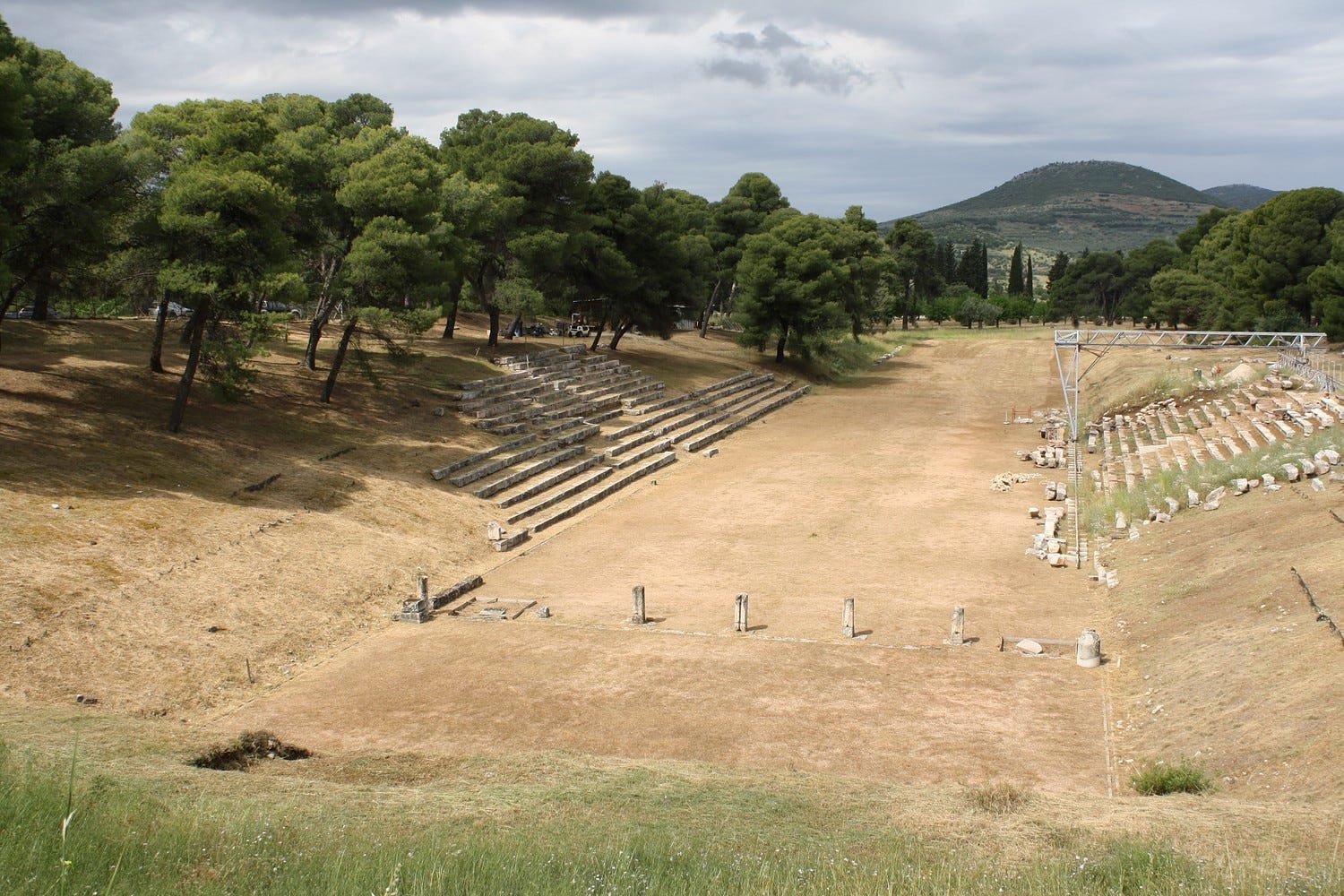
The box is low to the ground. Gray stone. Easy to miss.
Its remains are still there.
Usually unnoticed by visitors.
Not elevated. No drama.
Sticking out of the soil just enough to be seen.
Stand there, and the view changes.
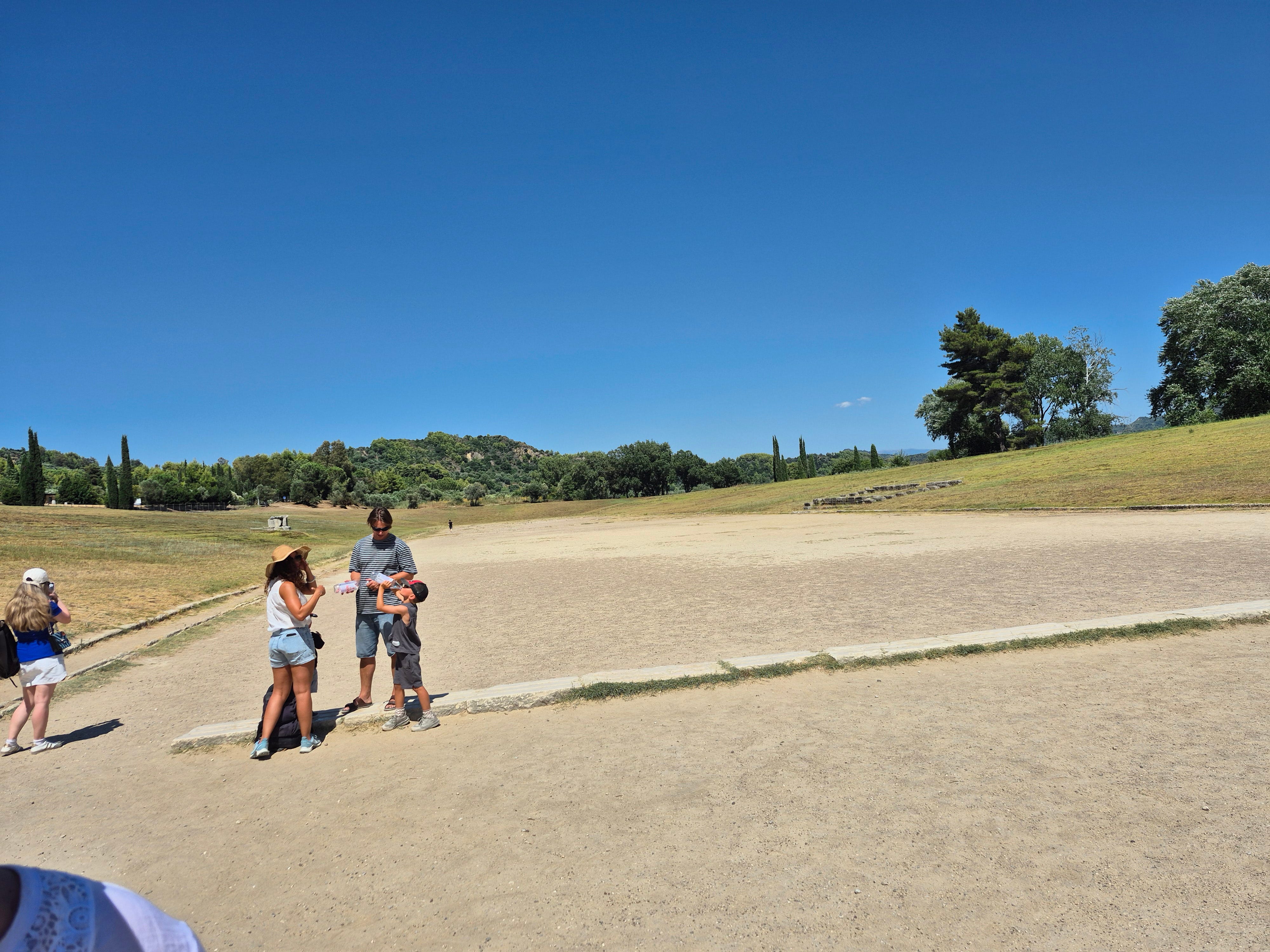
You don’t see one runner.
You see all of them at once—
to your left.
The start at the grooved stone line.
Bare toes pressed into rough cut channels.
Bodies leaning forward.
Tension in arms and legs.
Sweat and oil catching the light.
A rope held them.
Their chests pressed against it.
Then — released.
The runners burst forward.
Dust rising off the ground.
The stride.
Feet striking dry earth.
Breath tightening in the heat.
The finish.
No line.
Just a moment decided by the judge in a simple stone box.
The winner didn’t receive money.
Just an olive wreath, cut from a sacred tree nearby.
No clock.
No second look.
A decision, made instantly.
You can stand in the center of the stadium and never notice where this happened.
I show you small details in old places—the ones most people walk past. Subscribe today.
The judge’s box is still there — just small enough to ignore.
But every race ended there.
At that small break in the stone.Now —
only wind and dust move through the quiet stadium.
Going to Greece, Rome, Venice, or Pompeii?
I’ll show you what most people miss.
Subscribe: unpaidobserver.substack.com
I ran the 192 meter track against a couple of kids. I won : ). Quite an experience to run where men did 2,000 years ago, coated in oil under a hot sun.