
Pompeii’s Bodies Are Plaster Filled With Empty Space
They look like bodies. They’re not. They’re the space people left behind.

When people died in Pompeii, their bodies didn’t turn to stone.
They disappeared forever.
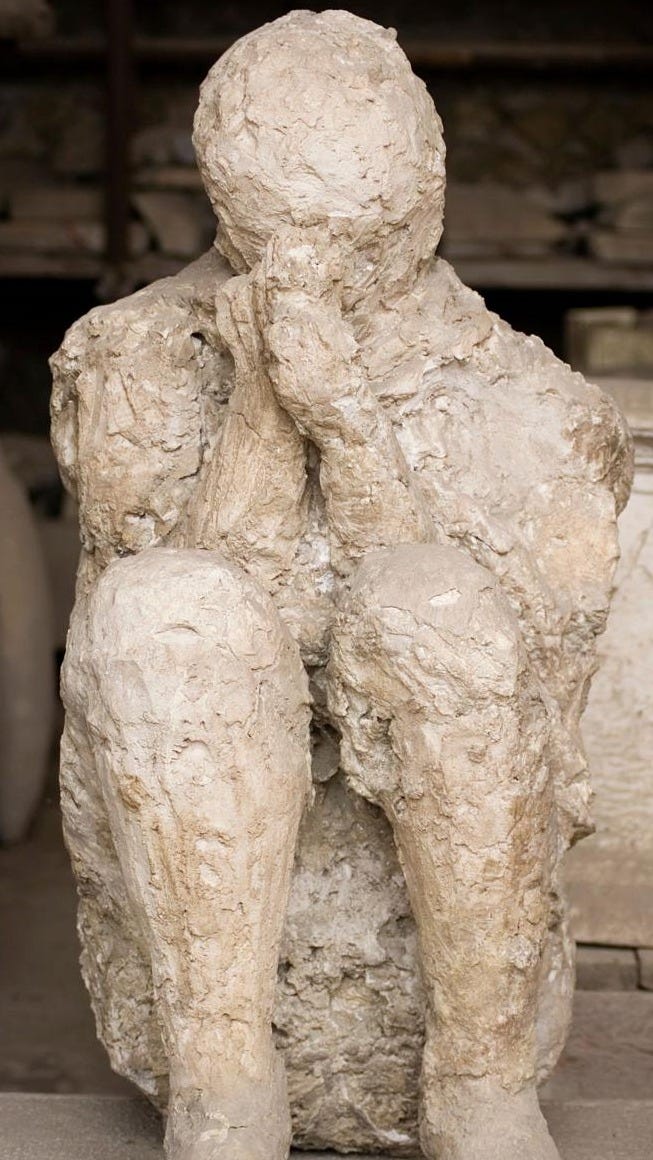
Flesh softened, collapsed, and sank into itself all over Pompeii. Clothing clung, then loosened, then vanished. Heat pressed in. Ash fell in thick, choking waves — hot, fine, and relentless— coating their skin, filling mouths, sealing eyes.
Most people walk through Pompeii and never see what’s actually there.
I write about details like this—clear, concrete, easy to miss.
Subscribe and I’ll send you a free report:
Top 5 Details Most People Miss in Pompeii
Over time, everything organic broke down, until all that remained was a hollow in the hardened ash — an exact negative of a human being caught in their final position.
In the 1800s, archaeologists realized what they were seeing. The voids were not random. They were shaped by people who had been there, bodies that had resisted for a moment and then perished.
They began pouring plaster into those empty spaces. Liquid filled the cavities, settled into every fold, every tension point, every last imprint. And the dead appeared again.
You can see fingers pressed hard into faces, as if trying to block the air. Mouths open, frozen mid-breath. Bodies twisted — not peacefully, but in motion, mid-reaction.
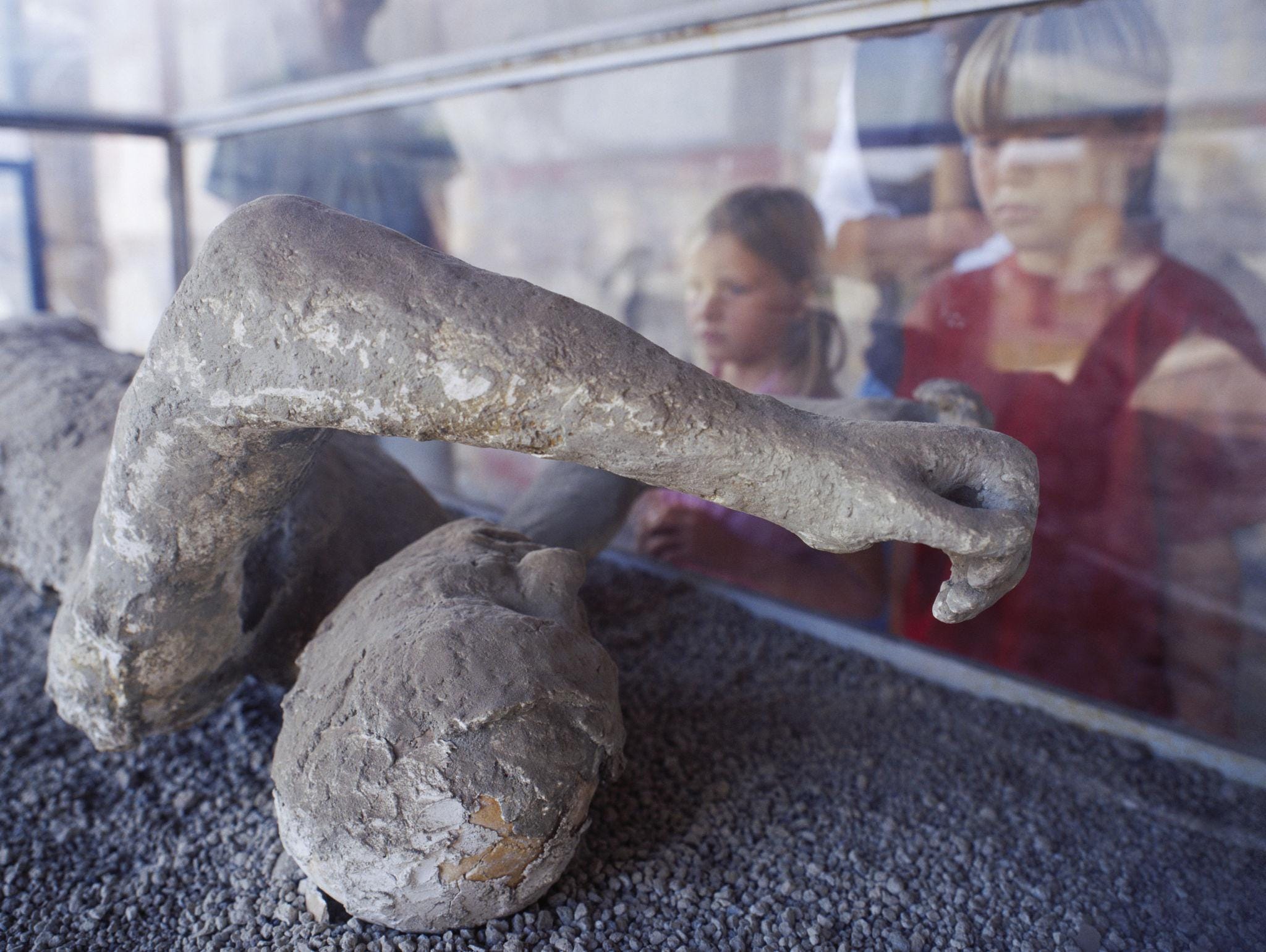
Some are hunched forward, shoulders tight, arms raised against the falling ash and burning gas, hands clamped over their noses and mouths.
Others stretch outward, reaching toward someone beside them, caught in the instinct to find another person in the dark.
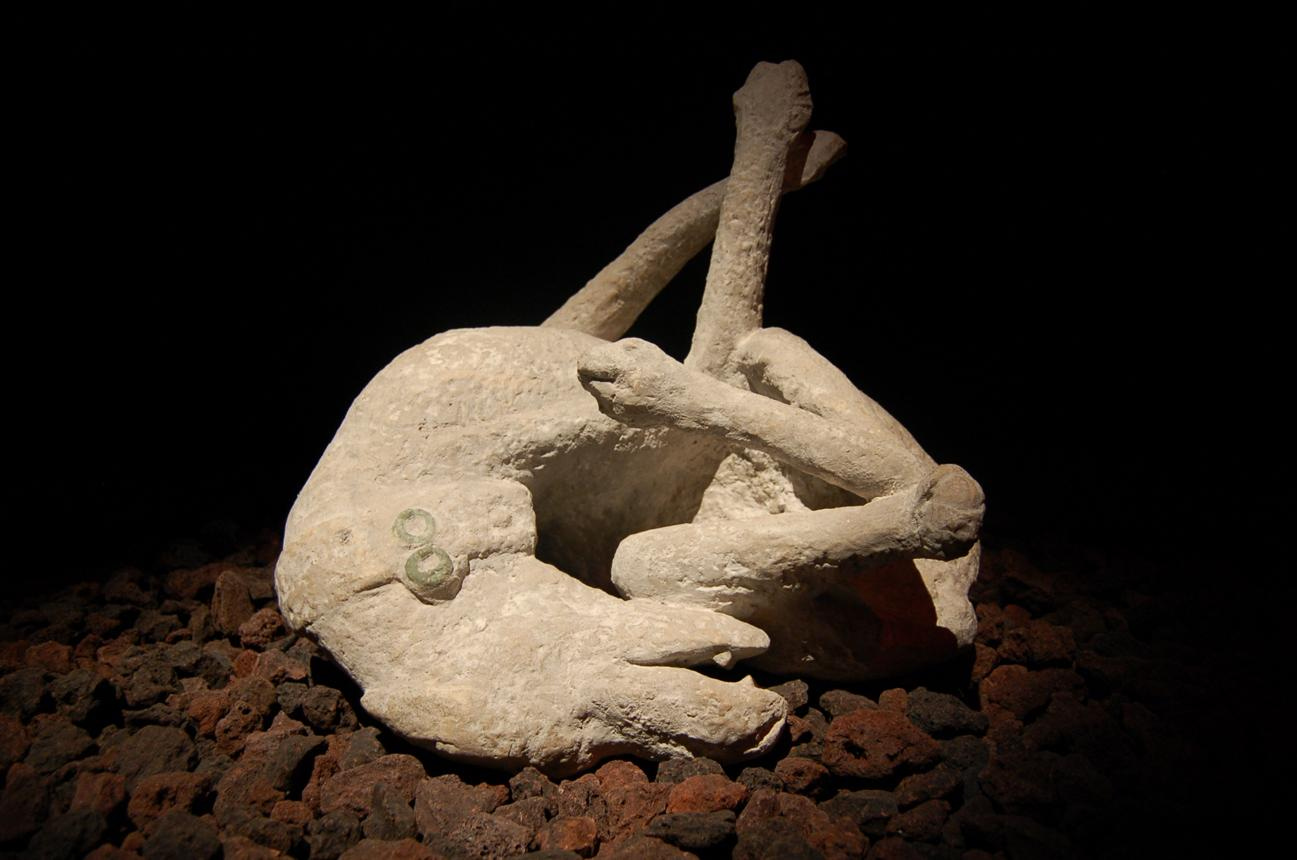
One famous cast shows a dog, still chained, its body arched and contorted, spine bent, jaws open as it struggled violently to break free. You can feel the chain's pull in its posture.
These are not statues that artists made. They are impressions formed in seconds, as ash fell, settled, and hardened around living people.
The air would have been thick, hot, nearly impossible to breathe. Movement slowed, then stopped. The bodies stayed just long enough to hold that shape.
Then they were gone, and all that remains is the empty void.
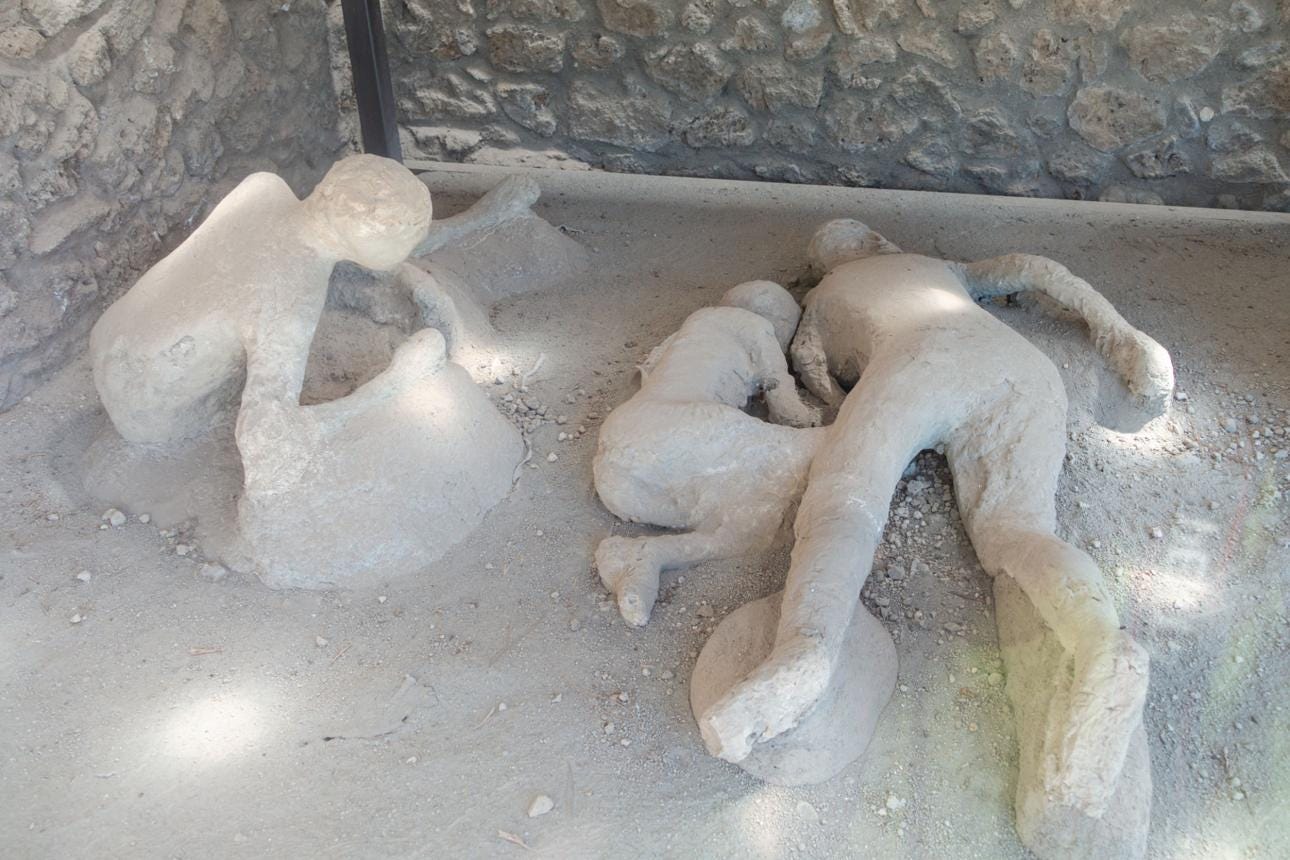
What remains is not the person. It is the moment they died, preserved with unsettling precision.
You are seeing the last movements these doomed people made before their death — the instinct to turn, to shield, to reach, to breathe. That is why the casts feel so immediate, so human.
Most people walk through Pompeii and miss what’s actually there.
I put together a short, focused report:
Top 5 Details Most People Miss in Pompeii.
It’s free. Subscribe below and I’ll send it to you.