
You Are Walking the Same Streets They Did in Pompeii
Stone streets, worn grooves, open doorways — you don’t picture it. You move through it.

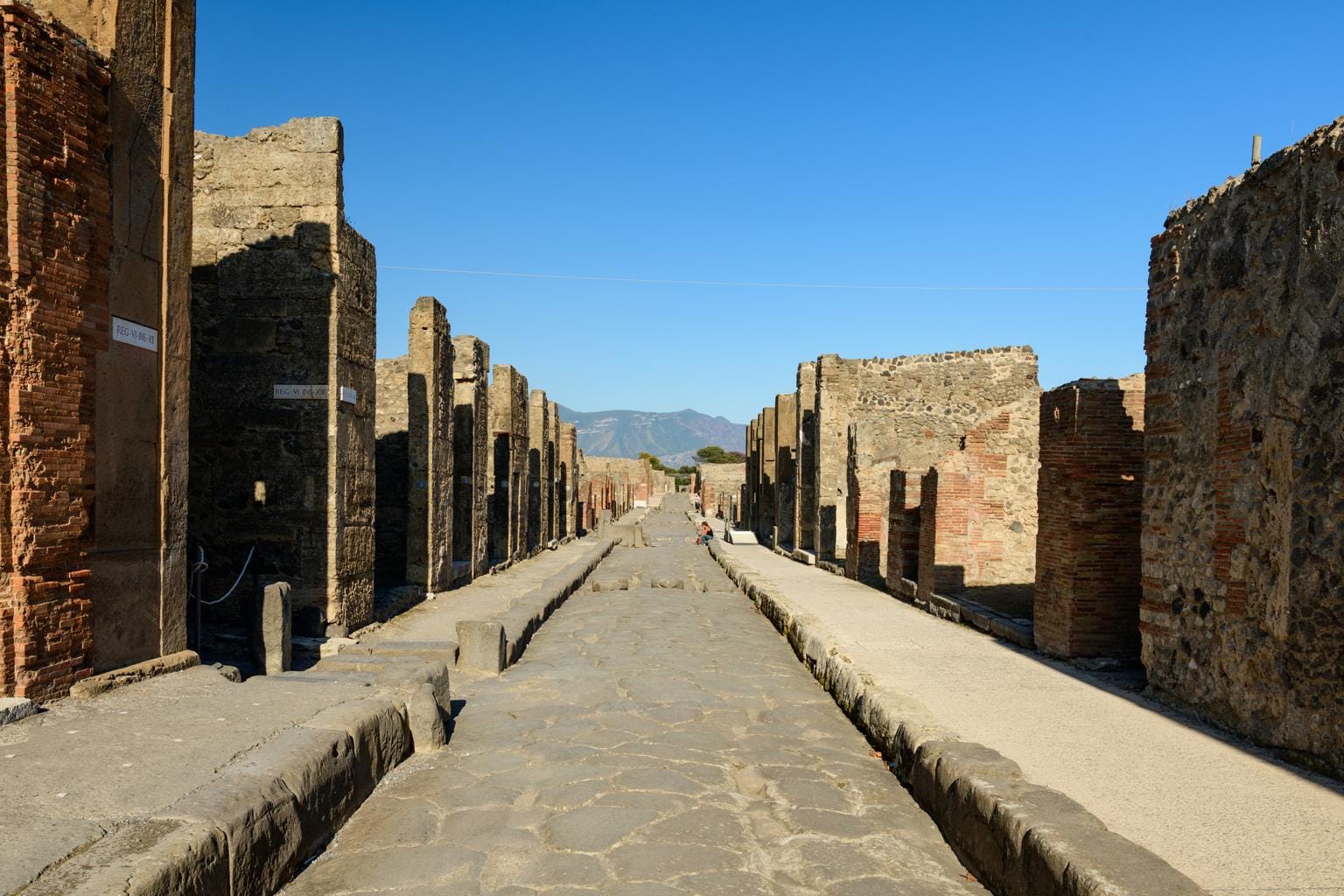
Walking Pompeii’s streets, it doesn’t feel like a ruin — at least not at first.
The road runs straight ahead, worn smooth underfoot. Stepping stones for pedestrians to avoid rain and muck.
Doorways open into empty rooms.
The walls rise on either side, holding the heat.
Most ruins feel broken.
Pompeii doesn’t.
The Acropolis of Athens — scattered columns.
The Roman Forum — broken columns and chunks of marble.
Tikal — overtaken by jungle.
True ruins demand imagination. Gray marble and stone reduced to fragments. Wind moves through open space where walls once stood. The past feels distant, incomplete — something you have to rebuild in your mind.
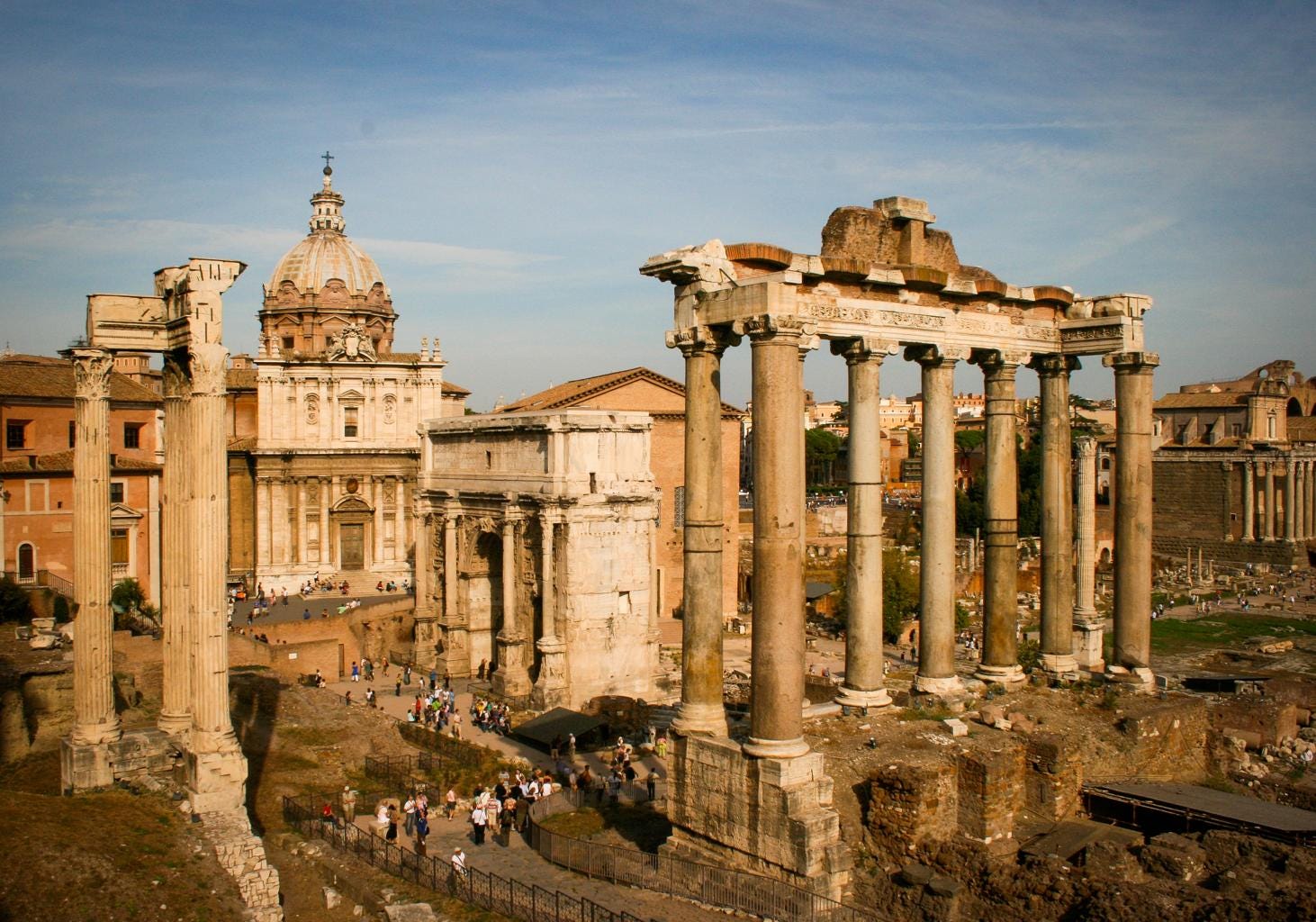
But Pompeii is different.
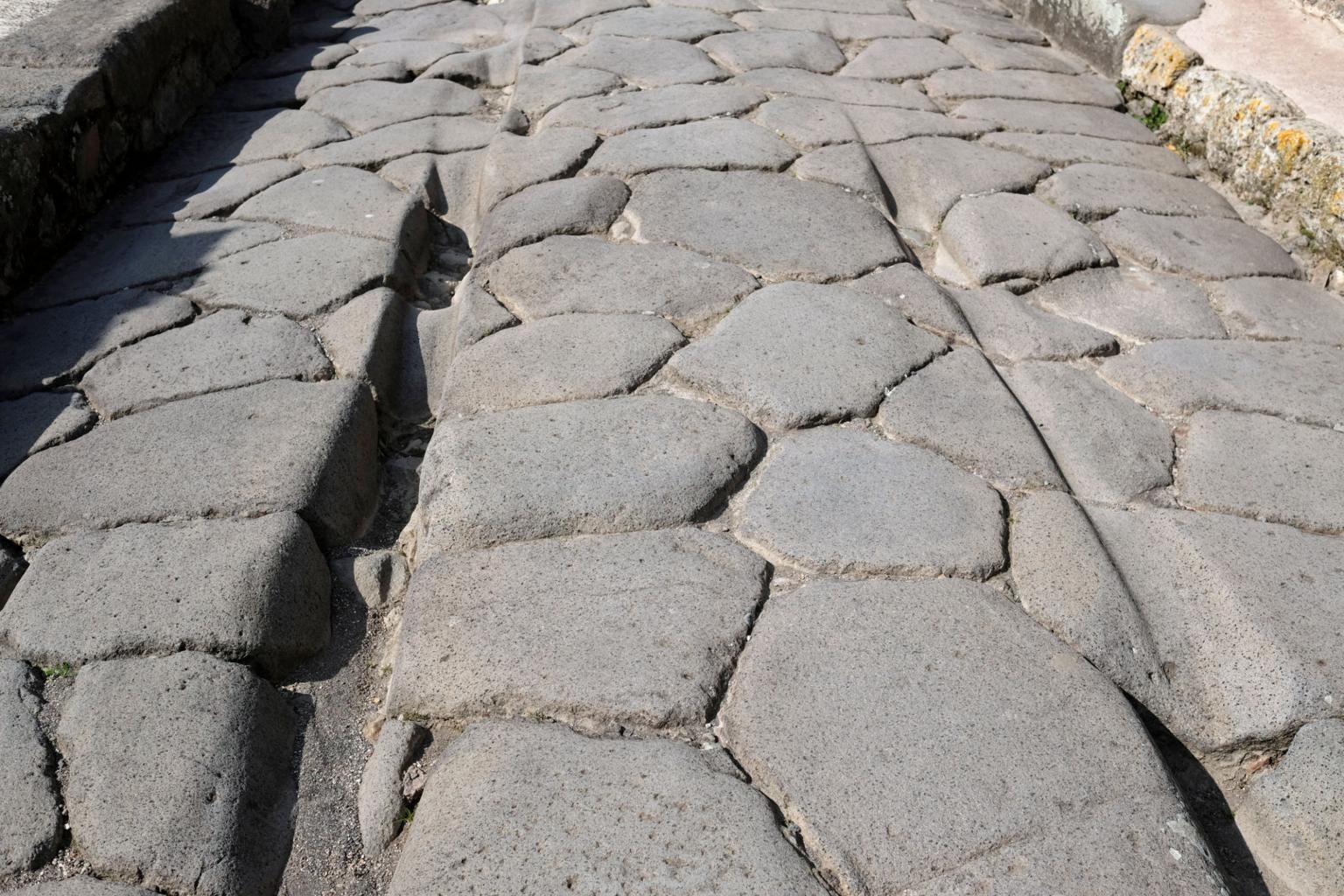
The streets are intact, laid with original cobblestones that shift slightly as I step. Deep grooves cut through the stone, worn down by centuries of clattering wagon wheels long before the city was buried.
Doorways remain — dark openings that feel as if they should still lead somewhere. The city’s grid is clear, stretching ahead in straight lines, with Mount Vesuvius looming in the distance.
Your footsteps echo as you walk. The sound doesn’t disappear into open air — it bounces back from stone and plaster. Dust lifts lightly with each step.
Graffiti lines many of the walls — names, markings, even crude jokes scratched into soft plaster. Small traces of people who once moved through these same streets.
The sun settles into the streets, warming the walls and the ground beneath you.
You pass what were once homes, small food stalls, and places where bread was baked and sold.
The smell of fresh bread, oil warming, something simmering slowly. The kind of food that filled these narrow streets every day.
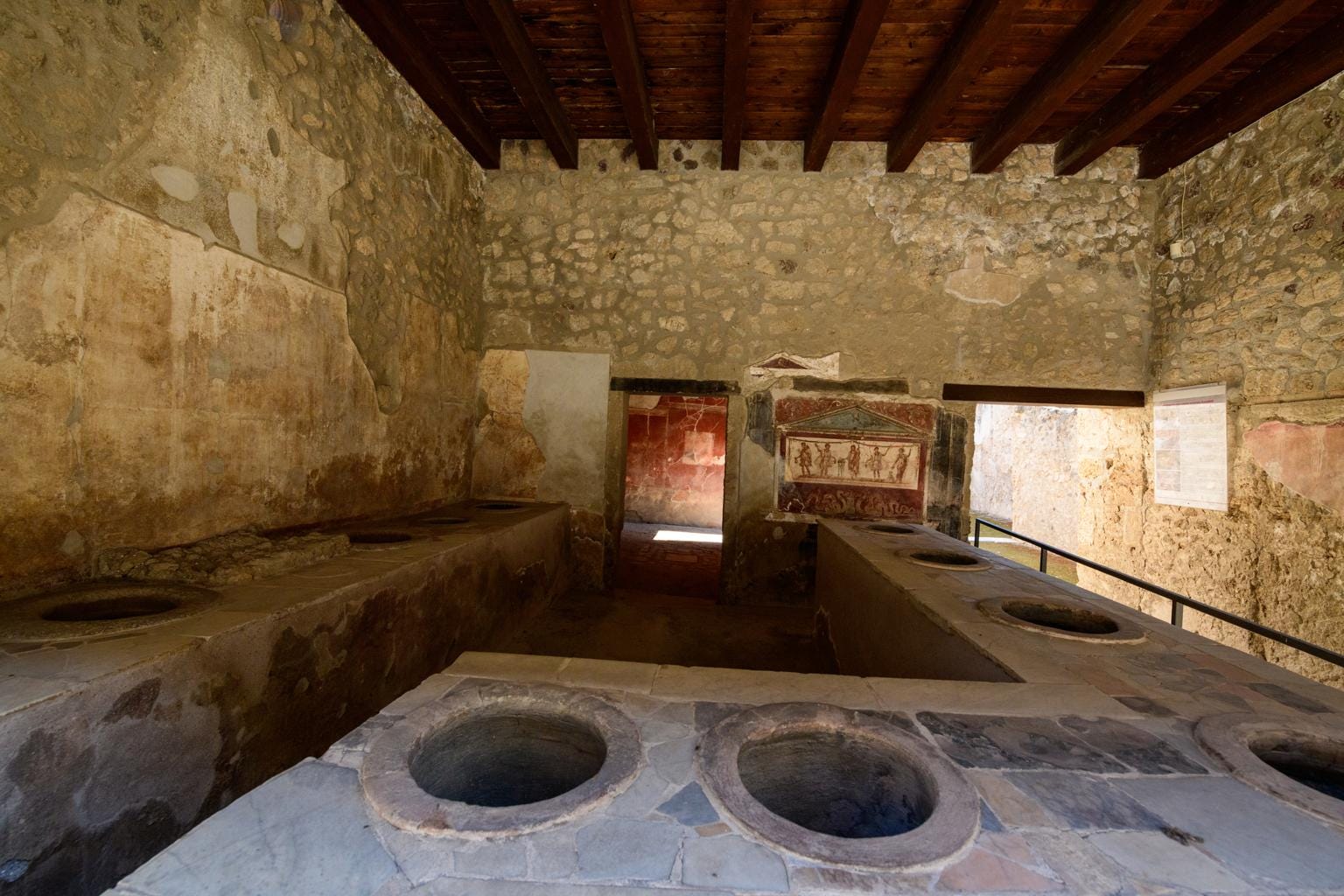
Someone hands a heavy bronze coin to a vendor for bread or stew — its edges worn smooth by decades of hands.
A figure in a simple tunic steps out into the street. Sandals scrape lightly against the stone. A voice calls out, just out of sight.
It feels like someone could turn the corner at any moment.
You don’t reconstruct Pompeii. You move through it.
It doesn’t feel ancient in the same way.
It feels interrupted.
In most ancient sites, you assemble the past from what’s left. In Pompeii, most of it is already there, laid out in front of you.
Pompeii is not just a ruin.
It’s a paused city — the day cut short, never finished.
More pieces like this → Unpaid Observer
If you enjoy place-based writing that brings history back to life, consider subscribing to Unpaid Observer.
Really it is fascinating!
I’ve never been to Pompeii. I worry it may be a little too sad for me to handle.