
Most of Ancient Rome Is Still Buried Under Your Feet
A second city lies beneath the streets of Rome — hidden in plain sight.

Prefer to listen? Audio version above.
Most of ancient Rome is still there.
It’s just buried under the modern city.
Beneath the sidewalks are cobblestone streets, brick walls — entire buildings that haven’t seen sunlight in centuries.
It didn’t disappear all at once.
It sank, layer by layer.
Buildings collapsed. Floods filled it in.
The Tiber left sediment.
New structures rose directly on top of the old.
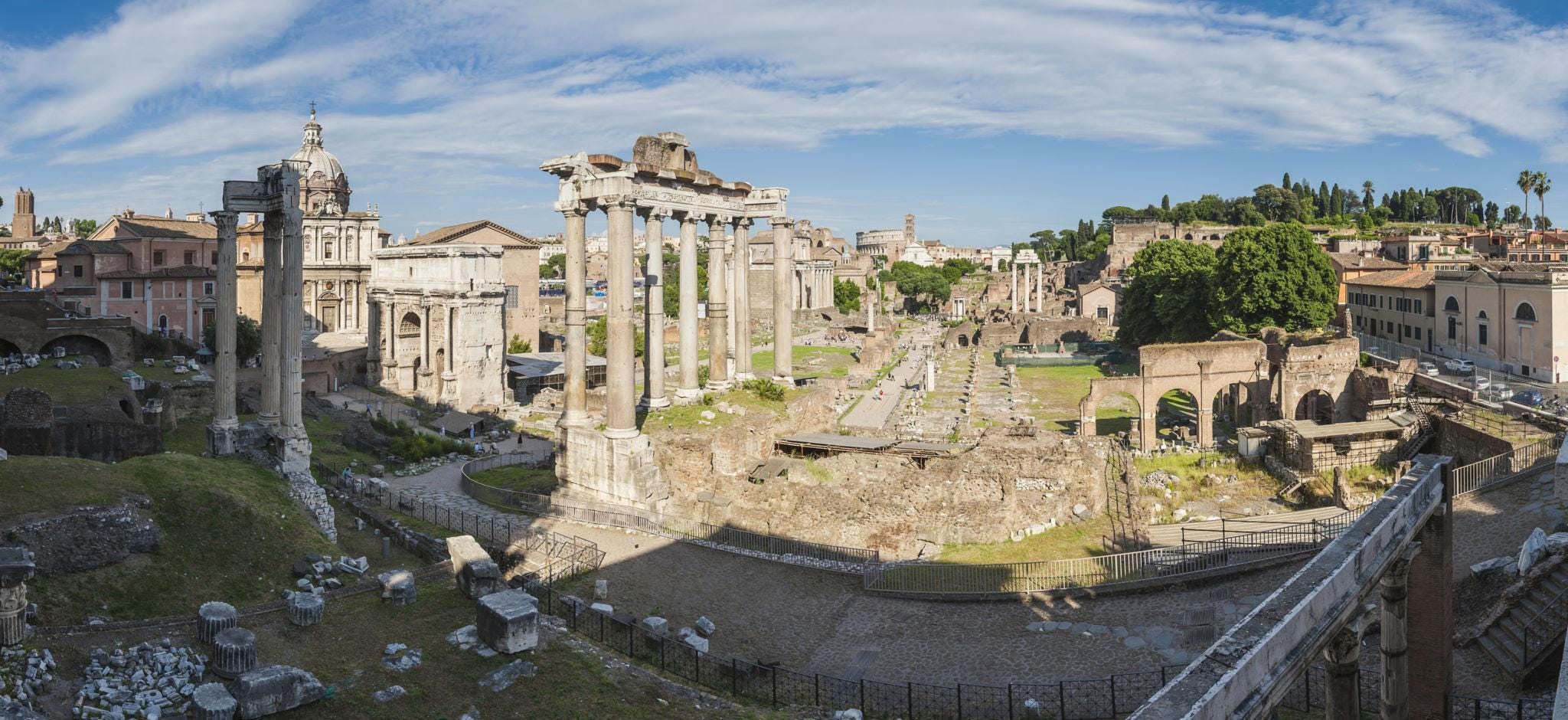
The Roman Forum you see today — once colorful — sits far below modern street level.
What looks like ruins — the Temple of Saturn, the Basilica of Maxentius, the rostra, the Senate House — once stood at ground level, at the center of Roman life.
In the earliest days of Rome, before the Republic, this area wasn’t even usable. It was a low, marshy valley between the hills, prone to flooding from the Tiber.
Over time, the Romans drained it.
They built one of the city’s earliest engineering works — the Cloaca Maxima — to drain the valley into the Tiber. The ground was stabilized and gradually transformed into Rome’s political and commercial center.
For centuries, this was where Rome gathered — and where events could turn brutal.
And then, inch by inch, it sank — not by falling, but by being buried.
After the Western Empire fell, the Forum lost its purpose. Buildings were abandoned, stripped for stone, or collapsed where they stood. Earthquakes tumbled weakened structures. Floods from the Tiber left layers of mud and debris.
Over time, the valley filled in, creating what is now a buried city of Rome beneath the surface.
The Forum disappeared. For a time.
By the Middle Ages, the area had been reduced to open ground — a place for grazing animals known as the Campo Vaccino, the “cow field.
What had once been the center of Roman life lay buried beneath it.
Fragments of ancient Rome still peeked through the soil — columns, stone, marble, and concrete that still hold together today. Locals knew they were remnants of the old city.
But little else.
It didn’t stay hidden.
During the Renaissance, a farmer fell through the ground on the Esquiline Hill and uncovered a buried palace — the remains of Emperor Nero’s Domus Aurea.
Artists began lowering themselves down inside.
Raphael and Michelangelo were among them — descending by rope into rooms that hadn’t been seen in over a thousand years.
The walls were still covered in delicate frescoes — strange figures, vines, mythical scenes.
They called them grottesche — because they thought they were exploring caves.
There’s more like this, if you want to follow along.
Even now, Rome reveals itself in pieces.
Dig for a foundation, a tunnel, a station — and the past is still there, waiting below.
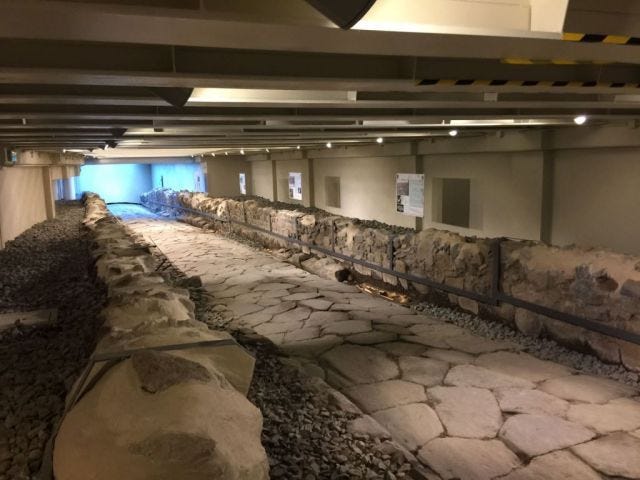
At the San Giovanni Metro Station, construction exposed layers of Roman history — roads, walls, everyday objects — stacked beneath the modern city.
Near Amba Aradam–Colosseum Station, excavations uncovered an entire military barracks complex, delaying the project for years as archaeologists worked through the site.
In Rome, building anything new often means uncovering something very old.
Rome was never truly lost.
It was covered by soil, brick, and debris — by layers over centuries — until it slipped out of view.
For a time. Even now, most of it remains below the surface — streets, buildings, entire sections that haven’t seen daylight in centuries. Only fragments return, uncovered occasionally.
When you walk through Rome, you’re not just moving through a modern city.
You’re walking above another one.
If you enjoy this kind of detail, subscribe for more of what most people walk past.
I‘ve heard a few times about Rome being compared to a „lasagna“. Pasta jokes aside, the many years of architecture and growth above Rome make this analogy relatively accurate. I didn’t see it mentioned but another fascinating example of this is the
https://www.rinascente.it/en/store-roma-via-del-tritone
It is a department store and in the lower levels you can see an old Aqueduct/ the street it was built over.
Many vestiges in Rome are still unexplored