
Look Closely — The Walls Around the Pantheon Reveal Something Older
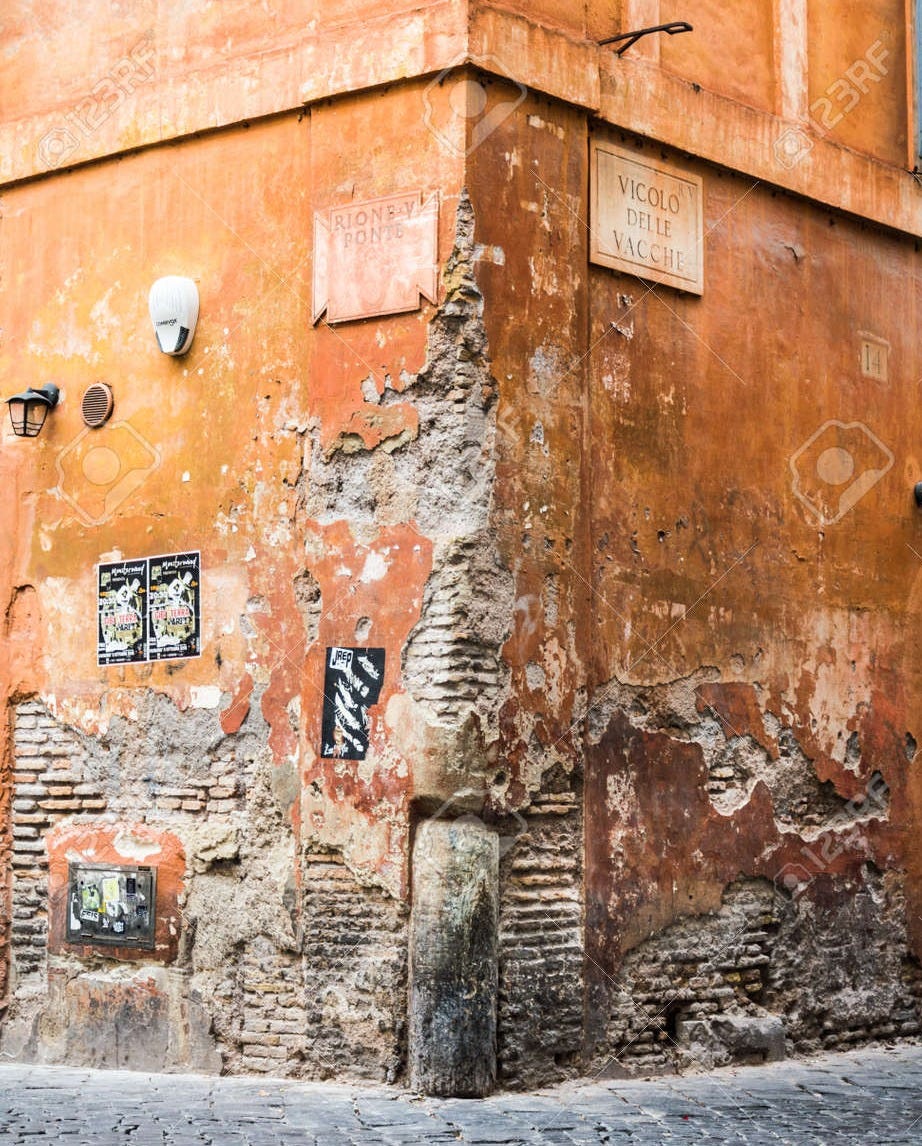
Layers of plaster give way to older brick beneath

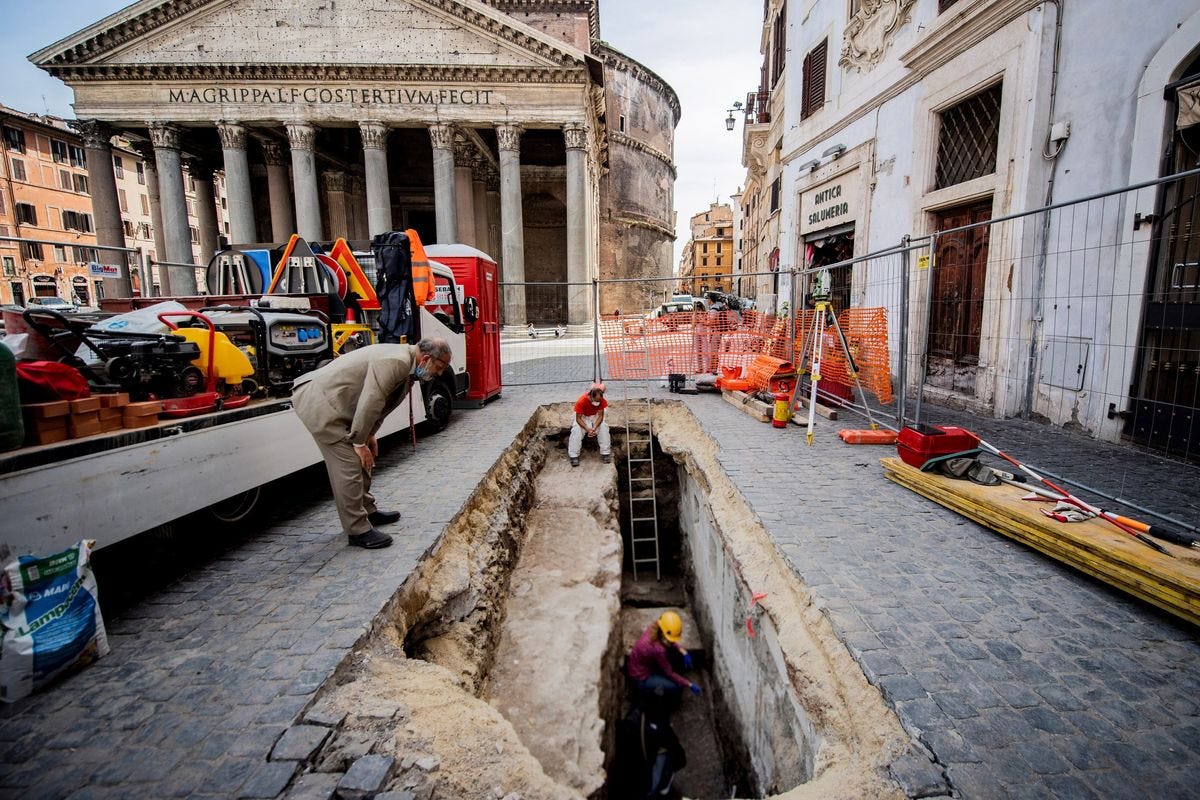
Meandering through the narrow streets around the Pantheon, the ground feels slightly off beneath your feet.
The dark stones tilt underfoot — worn smooth in the center, raised at the edges.
Your weight shifts with each uneven step, over stones shaped by centuries of passing feet, horses, and carts.
Rainwater still follows the same shallow grooves on the black stones underfoot.
A doorway on the next street leans just enough to stand out.
The frame pulls left. The wall beside it bows outward, then settles back.
Your hand touches the dark brick without thinking.
It isn’t decorative.
The bricks are set just behind the rest of the wall.
Darker. Longer. Thinner.
Laid in tighter rows.
Your fingers trace the edge where it drops back.
It doesn’t match the wall around it.
It belongs to an age far older.
You try to picture it —
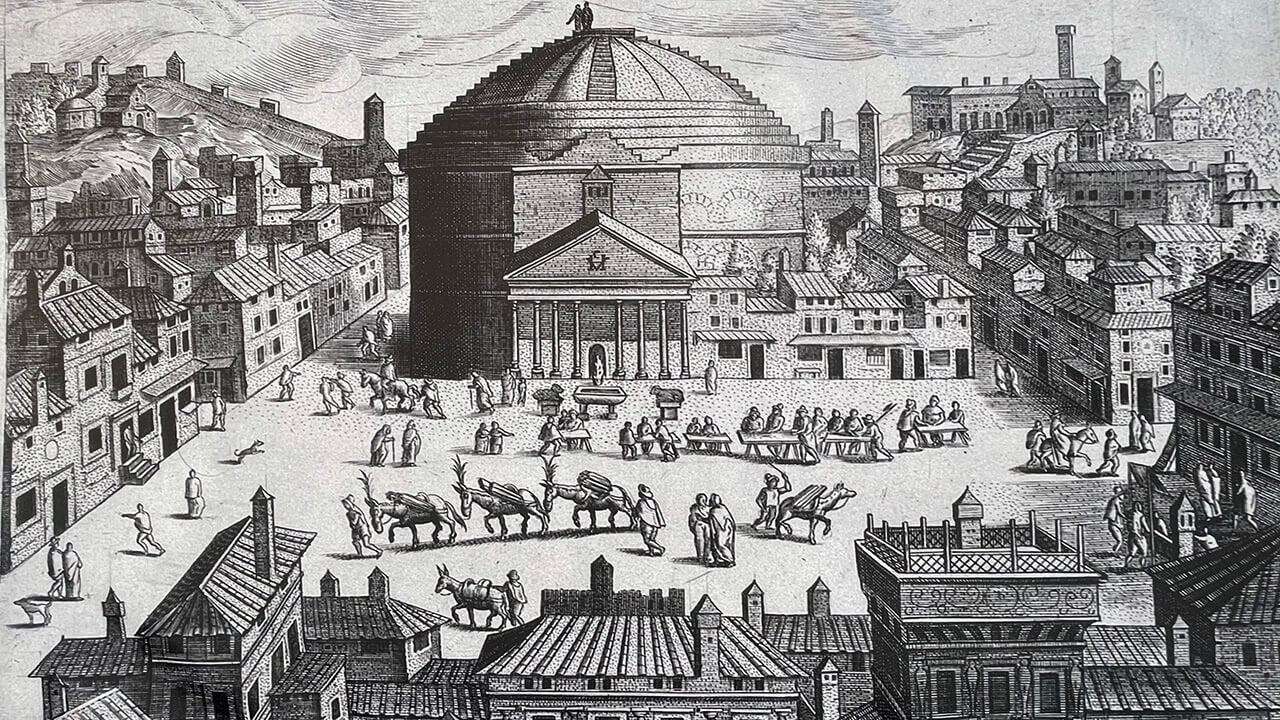
Carts cutting across the space in front of the old walls.
Wooden wheels striking stone, iron rims catching in the grooves.
Animals pulling through the same narrow approaches you just walked.
Buildings pressed tight against the walls—
leaning inward, crowding the space.
The Pantheon not standing apart from the city,
but surrounded — walls and streets tight against it.
Not the way it looks now
A few steps later, the yellow plaster breaks.
Not cleanly.
It flakes and curls at the edges —
thin layers pulling away from the wall.
Beneath it, the surface changes.
The color deepens.
The lines tighten.
Older brick — set harder, closer, more deliberate.
The outer layer is newer. Temporary.
This is what the wall is built on.
What it’s still resting on now.
The surface peels away. The structure stays.
No signs. No markers.
Just fragments of an old city not entirely covered.
Most people pass through without noticing.
But once you do, it becomes difficult to look away.
The present sits unevenly
on top of what came before.
And in a few small breaks in the wall —
if you look closely —
it’s still there.
If you notice small details like this, you may enjoy the rest of my writing.