
History You Can Still Feel - Rome, Pompeii, Venice, Olympia
Walking through Rome, Olympia, and the places where the past still feels close enough to touch.

Some places keep history behind half an inch of plexiglass. You’ve been there.
Museums. Archives. Packed crowds with smartphones raised. Climate-controlled rooms where the past is carefully preserved and politely explained.
But every once in a while you step into a place where history isn’t sealed away. It’s still there in the air, in the cracked stones beneath your feet, in the eerie feeling that the centuries have not fully left.
That’s what I look for when I travel.
I don’t keep a checklist of sights. I don’t follow guidebook highlights.
I look for moments when the past suddenly feels close enough for the five senses to notice.
I remember walking through the Roman Forum in the late afternoon in 2023. Crowds were thinning out. Sunlight was beginning to strike the columns, and the marble carried that pale Roman glow that photographs never quite capture.
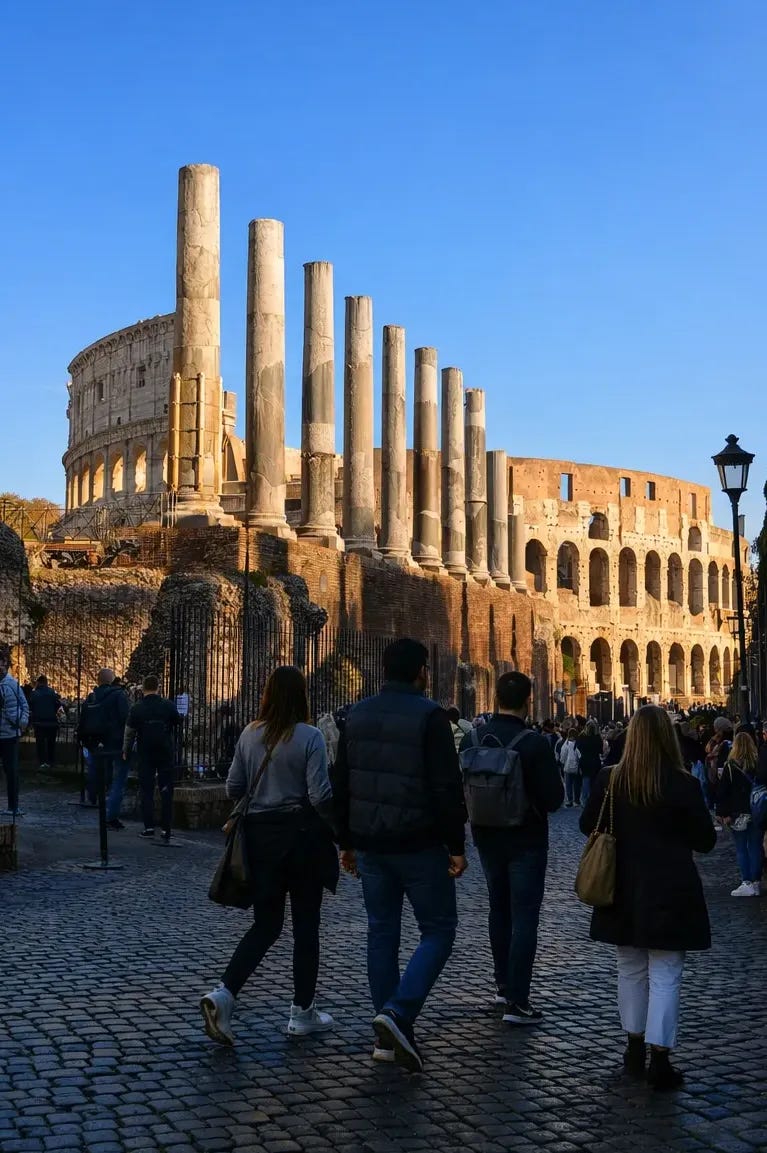
Two thousand years ago this was the center of an empire.
Senators debated laws here. Riots and executions unfolded nearby. Crowds gathered. Ambitions rose and fell in the shadow of those same stones.
Standing there, the distance between their world and ours didn’t feel very large.
It rarely does in the right places.
At the Trevi Fountain, sunlight catches the gold leaf and white marble in a way that makes the whole structure seem almost alive. Water moves endlessly through a design imagined centuries ago.
People toss coins over their shoulders and make small wishes.
The ritual is modern, but the setting is not.
You feel the long continuity of human hopes in a place like that.
Then there are the moments that surprise you.
The places where history suddenly strikes your eyes, ears, skin.
At Ancient Olympia, I stood at the starting line of the ancient stadion and looked down the 192-meter track where naked, oiled runners once set their toes into carved stone grooves.
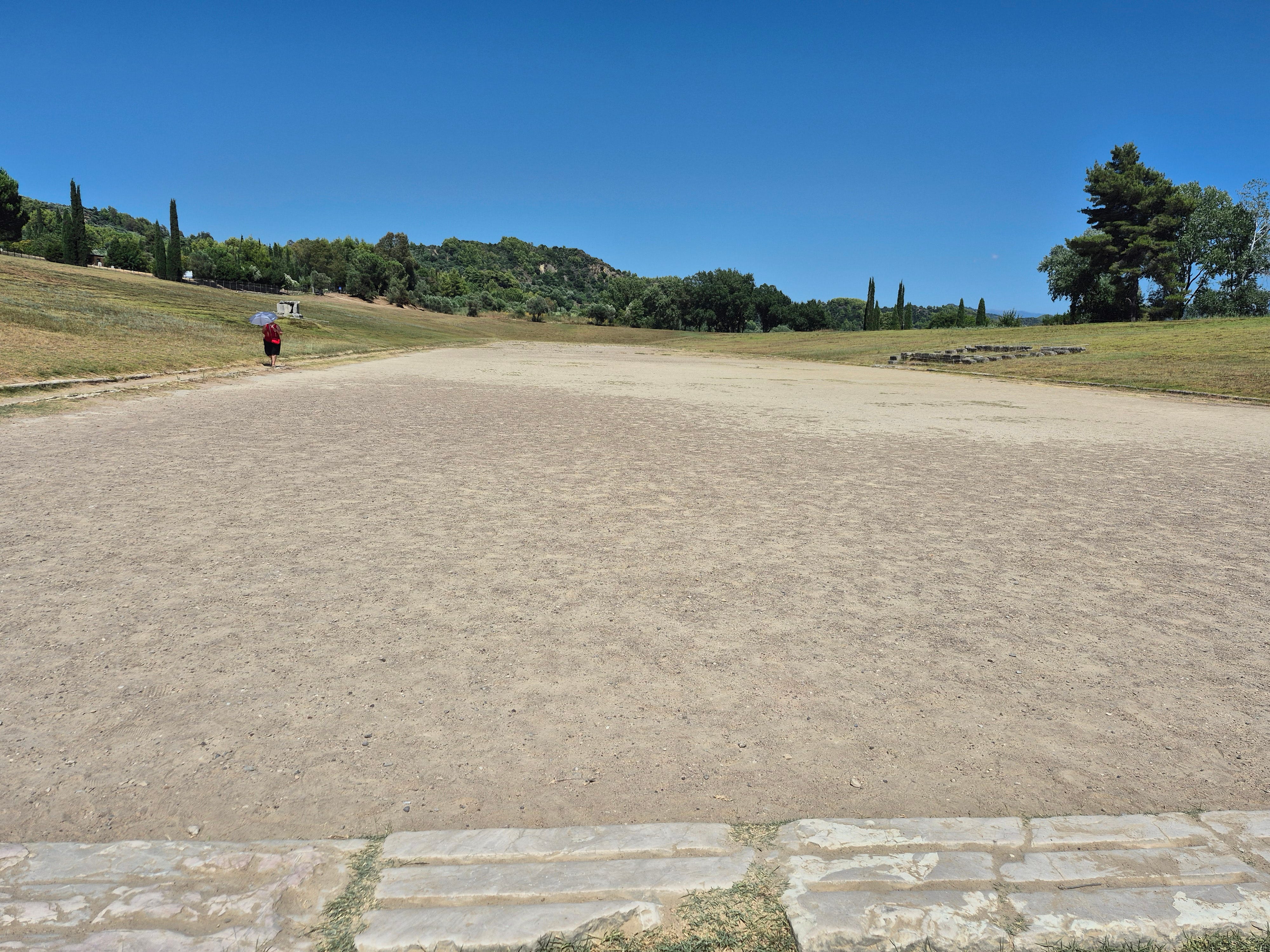
No grandstands. No cameras. No noise.
Just dust, silence, and the same stretch of pebbly earth where elite Greek athletes ran nearly three thousand years ago.
For a moment it didn’t feel ancient at all.
I felt as if the history was almost part of me. Or was I part of history?
Places like these remind me that history is not really gone. It lies layered beneath the present, waiting for a perceptive observer to notice it.
Cities grow. Buildings rise and fall. The world changes in ways the people of earlier centuries could never have imagined.
But the ancient stones remain with their stories. We can hear them if we listen carefully.
And sometimes, if you stand quietly long enough, the past feels less like something we study and more like something we briefly share.
That is the spirit behind Unpaid Observer.
I write about travel, history, and the strange moments when the past and present briefly overlap.
Walking through old cities. Listening to music in places where crowds gathered centuries ago. Standing where empires once stood and noticing what still lingers.
Not as a historian or a guide.
Just as someone paying attention.
If that kind of observation interests you, I hope you’ll subscribe and join me.
— Joe